

6: UNIVERSALITY : (A) Make a part or object (or system) perform multiple (several different) functions; thereby eliminating the need for other parts (or elements) or objects (or systems) (B) Introduce or use commonly (widely or universally) acceptable standards.
EXAMPLE: Sofa-cum-bed, Cycle-as-Wheelchair, Home-on-Wheels, Houseboat, Toothbrush (with inbuilt toothpaste disposal system in its handle), Child’s Car Safety Convertible into a Stroller, Internet Communication Protocols (HTML, XML, DHTML, HTTP) , Safety Standards
SYNONYMS: Multi-functionality, Universal, Standardization, One Element Performs Multiple Roles
ACB:
Universality principle refers to the concept of making a part, object, or system perform multiple functions, ideally unrelated or diverse functions, without compromising its primary purpose, thereby eliminating the need for other parts, elements, objects, or systems. This principle encourages the design and development of solutions that have the capability to serve several different purposes, use resources efficiently, reduce complexity and redundancy or the overall count of components. A system or component should be designed to perform not just its primary function but also additional, diverse functions. In business contexts, multi-functionality can be seen in products that offer various features or services, reducing the need for consumers to buy separate items. For example, smartphones act as phones, cameras, navigational devices, and more. This approach can attract a broader market and enhance the product’s value proposition. In technical systems, a common example is a tool or device with multiple functionalities.
By making a component or system serve multiple functions, it maximizes the efficient use of resources, reducing waste and redundancy. Designing components with multiple functions can lead to more compact systems, saving space and potentially reducing overall size and weight. Achieving multiple functionalities with a single design can contribute to cost reduction by eliminating the need for separate components or systems for each function. The key is to carefully analyze the functions involved, ensuring that they complement each other and do not lead to conflicts or compromises in performance. Applying this principle can stimulate innovative thinking by finding novel ways to combine functions that were traditionally considered separate. Systems designed with multi-functionality are often more adaptable to changing requirements or environments.
For instance, a Swiss Army Knife integrates multiple functions such as knife blades, scissors, screwdrivers, bottle openers, and more into a compact and versatile pocket-sized tool. Furniture (convertible) that can transform from one form to another, like sofa-beds or dining tables that become work desks. Devices like fitness trackers often incorporate multiple functions such as step counting, heart rate monitoring, sleep tracking, and notifications, offering users a comprehensive health monitoring solution. Appliances like food processors, which can perform tasks such as chopping, slicing, and blending, demonstrate the multi-functionality principle in kitchen equipment. Portable Water Purification Systems performing multiple functions like Filtration, purification, and sometimes storage. Enables access to clean drinking water in the field. Some security cameras not only capture video footage but also include analytics features like motion detection, facial recognition, and license plate recognition, enhancing their overall utility.
A bicycle that can be transformed into a wheelchair, combining two modes of transportation in a single system. A bicycle or child’s car that can be transformed into a stroller, providing multiple modes of transportation for different situations. All-Terrain Vehicles (ATVs) for Military Use i.e. transportation on various terrains, often equipped with weapon mounts. A mobile living space that combines the functions of a home and a vehicle, offering the convenience of both. A dwelling that also serves as a watercraft, integrating the functions of a house and a boat. A toothbrush that incorporates a mechanism for disposing of used toothpaste, reducing the need for separate disposal methods. Many office machines combine printing, scanning, and copying functionalities into a single device, providing a comprehensive solution for document handling.
Convertible laptops or 2-in-1 devices can function both as traditional laptops and as tablets, offering users flexibility in how they use the device. Some wearables, like smartwatches, combine timekeeping with health monitoring features such as heart rate tracking, sleep analysis, and fitness tracking. In-car navigation systems often provide not only navigation but also integrate entertainment features like music playback, hands-free calling, and even internet connectivity. These printers combine printing, scanning, copying, and sometimes faxing functionalities in a single device, streamlining office tasks.
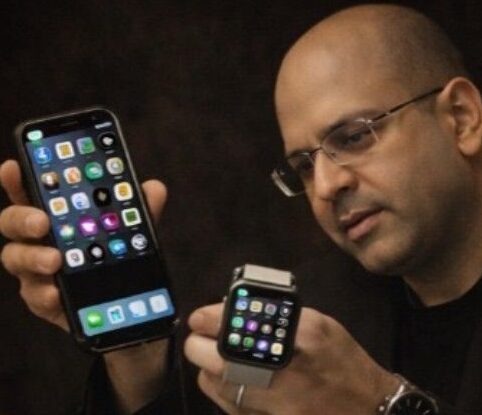
Modern smartphones are excellent examples of multi-functionality. They serve as phones, cameras, GPS devices, music players, internet browsers, and more, combining various functionalities into a single device. Hybrid vehicles use both internal combustion engines and electric motors to achieve fuel efficiency and reduced emissions. Buildings constructed using modular components that can serve various functions, from residential to commercial, display the Universality principle by adapting to different needs. Universal remotes can operate multiple devices, showcasing the principle’s application in simplifying user interactions.
Apple introduced the App Store, creating the app ecosystem for iPhones, on July 10, 2008, with the release of iOS 2.0. While Apple was not the first to have third-party applications on a mobile device, the App Store played a pivotal role in popularizing and revolutionizing the concept. Prior to the App Store, mobile phones had limited access to third-party applications, often pre-installed by the manufacturer or carrier. Apple’s introduction of the App Store brought a centralized platform for users to discover, download, and install a wide variety of applications created by developers worldwide.
The App Store enabled the creation and distribution of a diverse range of applications, from games and productivity tools to social networking and utilities. It fostered a vibrant developer community, encouraging innovation and creativity. Developers could reach a global audience without the need for complex distribution channels. Developers could monetize their applications through various models, including paid downloads, in-app purchases, and advertisements. The App Store streamlined the process of finding and installing applications, providing a seamless user experience. Users could easily browse, search, and install apps directly from their devices. Developers could release updates and improvements to their apps, ensuring that users could benefit from new features and bug fixes over time. Apple implemented a review process for submitted apps, enhancing security and quality control. While this sometimes led to delays in app approval, it helped maintain a certain level of quality and safety for users. The App Store’s success set a standard for other mobile platforms, and subsequently, various app ecosystems emerged for Android, Windows Phone, and other operating systems. The concept of a centralized app distribution platform has become a fundamental part of the smartphone experience, shaping the mobile industry’s landscape.
Currency or money can be associated with several principles depending on the context. Currency serves as a universal medium of exchange that is widely accepted for goods and services. It embodies the principle of universality by providing a common measure for value, facilitating transactions across various domains. In a more abstract sense, the concept of currency involves the transition to a micro-level or dynamicity or copying. Physical money, whether in the form of coins or paper bills, represents a condensed form of value that allows for efficient transactions compared to barter systems. The principles mentioned here are generalized connections and may not encompass all the aspects of the concept of currency and associated financial systems or products.
Virtualization is a technology that allows multiple operating systems to run on a single physical machine. It enables the creation of virtual instances or environments, each operating independently of the others. This is achieved through the use of a hypervisor or virtual machine monitor, which allocates resources and manages the interaction between the hardware and the virtualized operating systems. The concept of virtualization dates back to the 1960s. One of the early implementations was IBM’s CP-40 system, developed in the mid-1960s for the IBM System/360 Model 40. The idea evolved over the years, and modern virtualization technologies are widely used in data centers, server environments, and even on personal computers. The principles involved in virtualization aligns with this principle as well. Merging implies combining functionalities into a single system (combining multiple virtual instances on a single physical machine) and Universality implies making a system or solution applicable in a broader context (running multiple operating systems on the same hardware). Yes, the time-sharing model is still used in modern computing, although it has evolved alongside other computing paradigms. The concept of time-sharing was first developed in the 1960s, and it played a crucial role in making computing resources more accessible to multiple users.
Time-sharing was invented to address the issue of efficiently utilizing expensive and scarce mainframe computer resources. In the early days of computing, computers were large and costly, and the idea of allowing multiple users to share a single machine’s resources helped make computing more economically feasible. Today, while time-sharing may not be as prominent as it once was, the principles of sharing computing resources in a multi-user environment still persist. Cloud computing, virtualization, and distributed computing architectures have evolved from the foundational concepts of time-sharing, allowing for flexible resource allocation in modern computing environments. In the context of cloud computing, various users or applications share the same underlying hardware resources (such as servers, storage, and networking) through virtualization and resource pooling. This common use of resources allows for more efficient utilization and cost-effective sharing of computing infrastructure for various purposes or actions outcomes in a most economic manner for all its users.
The principles of consolidation and universality or multi-functionality share some common aspects, but they also have key differences. Both principles aim to enhance the efficiency of a system or product. They focus on optimizing the use of resources, whether it’s space, components, or functionalities. Both principles strive to minimize redundancy by integrating multiple functions or components into a unified system. However consolidation primarily focuses on combining similar or related functions into a single entity to simplify and streamline while universality/multi-Functionality encompasses a broader range, aiming to integrate diverse and sometimes unrelated functions into a single system.
Consolidation often involves combining elements that are closely related or have synergies, aiming for a more streamlined and compact design while universality/multi-functionality: Emphasizes incorporating a wide range of functions, sometimes unrelated, into a single system, providing versatility. In consolidation, functions integrated are usually related and contribute to a unified purpose. In Universality/Multi-Functionality, functions can be diverse, serving different purposes that may not be directly related but contribute to overall versatility. Consolidation tends to lean toward specialization by combining similar functions to excel in a specific area. Universality/Multi-Functionality embraces versatility by incorporating a variety of functions to address different needs. Consolidation is commonly applied to streamline and simplify existing systems, reducing complexity. Universality/Multi-Functionality is applied to create new systems with a wide array of capabilities, often providing solutions to diverse challenges. Consolidation combines various features of a phone into a consolidated communication device. Universality/Multi-Functionality integrates a phone with features like a camera, GPS, fitness tracker, and more.
Standards play a crucial role in interoperability by providing a common set of rules, guidelines, and protocols that enable different systems, devices, or applications to work together seamlessly. These standards facilitate interoperability across different healthcare systems. Implementing these standards helps healthcare organizations improve care coordination, enhance patient safety, and streamline data exchange between disparate systems. In healthcare, where diverse systems and devices need to exchange information, standards help ensure consistency, compatibility, and efficient communication:
HL7 (Health Level Seven): HL7 is a set of international standards for the exchange, integration, sharing, and retrieval of electronic health information. It defines messaging and document standards to facilitate interoperability. DICOM (Digital Imaging and Communications in Medicine): DICOM is a standard for transmitting, storing, and sharing medical images. It ensures that medical imaging devices from different manufacturers can exchange images and related information seamlessly. CDA (Clinical Document Architecture): CDA is a standard for the exchange of clinical documents, such as discharge summaries and progress notes. It provides a structure for the content of clinical documents, promoting interoperability in sharing patient information.
CCDA (Consolidated Clinical Document Architecture): CCDA is an HL7 standard that defines the structure and semantics of clinical documents for exchange. It is commonly used for electronic health record (EHR) data sharing. FHIR (Fast Healthcare Interoperability Resources): FHIR is a modern standard developed by HL7, designed for easier implementation and better support for web-based applications. It focuses on simplicity, flexibility, and interoperability. IHE (Integrating the Healthcare Enterprise): IHE is an initiative that promotes the use of established standards (such as HL7 and DICOM) to improve interoperability among healthcare information systems. It provides implementation guidelines for various healthcare domains. SNOMED CT (Systematized Nomenclature of Medicine Clinical Terms): SNOMED CT is a comprehensive clinical terminology that provides a common language for the exchange of clinical information. It supports the mapping of diverse medical terms to a standardized code set. LOINC (Logical Observation Identifiers Names and Codes): LOINC is a standard for identifying medical laboratory observations. It provides codes and names for a wide range of laboratory tests, making it easier to exchange and interpret laboratory results.
NCPDP (National Council for Prescription Drug Programs): NCPDP standards focus on the electronic exchange of pharmacy-related information, including medication orders, prescriptions, and billing information. ISO 13606 (OpenEHR): ISO 13606 is a standard that defines a communication model and data structure for sharing electronic health records. OpenEHR is an implementation of this standard, providing open specifications for EHR systems.
In the IT industry, various standards play a crucial role in ensuring compatibility, interoperability, and the efficient functioning of systems and technologies. These standards contribute to the seamless functioning and compatibility of IT systems, ensuring that different technologies and platforms can work together effectively. They also provide a foundation for secure and standardized communication and data exchange in the IT landscape:
TCP/IP (Transmission Control Protocol/Internet Protocol): The foundation of the internet, TCP/IP provides a standard for data transmission and communication between devices on a network. HTTP/HTTPS (Hypertext Transfer Protocol/Secure): HTTP is the standard for transferring hypertext documents on the web. HTTPS adds a layer of security through encryption. HTML (Hypertext Markup Language) and CSS (Cascading Style Sheets): Standards for creating and formatting web content. HTML defines the structure, while CSS controls the presentation.
JSON (JavaScript Object Notation): A lightweight data interchange format used for data exchange between server and client and for web APIs. XML (eXtensible Markup Language): A versatile markup language for encoding documents in a format that is both human-readable and machine-readable. REST (Representational State Transfer): An architectural style for designing networked applications. It uses standard HTTP methods for communication and is commonly used in web services. SOAP (Simple Object Access Protocol): A protocol for exchanging structured information in web services. It uses XML for message format and typically runs over HTTP. SQL (Structured Query Language): A standard language for managing and manipulating relational databases. SQL is widely used for querying, updating, and managing database systems.
ISO/IEC 27001 (Information Security Management System): A standard for information security management, providing a systematic approach to managing sensitive company information. ISO/IEC 20000 (IT Service Management): A standard for IT service management that outlines best practices for delivering high-quality IT services. LDAP (Lightweight Directory Access Protocol): A protocol used to access and manage directory information. It is often used for centralized user authentication and directory services. SSL/TLS (Secure Sockets Layer/Transport Layer Security): Protocols for securing communication over a computer network. They are commonly used in securing web transactions. OAuth (Open Authorization): A standard for authorization that allows third-party applications to access user data without exposing user credentials. IEEE 802.11 (Wi-Fi): A set of standards for implementing wireless local area networking (WLAN) communication. ISO 9001 (Quality Management System): A standard for quality management systems, providing a framework for organizations to demonstrate their commitment to quality.
The curse of knowledge bias can be associated with several principles, primarily those related to improving communication, simplifying systems, and considering the needs and perspectives of users. While this principle is primarily focused on technical problem-solving, its principles can also be applied to address cognitive biases and improve human-centered aspects of technical systems. This principle involves designing systems or solutions that are applicable across different contexts or user groups. In the context of the curse of knowledge bias, universality can be applied to develop technical systems and communication strategies that are inclusive and accessible to users with diverse backgrounds and levels of expertise.
There could be a need to create systems, performances, or operations that are universally acceptable and applicable across diverse contexts, conditions, usage scenarios, and user groups. This involves eliminating the curse of knowledge, where individuals with expertise may struggle to communicate effectively with those who lack that expertise, and introducing the Semmelweis effect, where new evidence or knowledge is embraced even if it contradicts established beliefs or practices. The overarching goal is to create systems or practices that are universally acceptable and applicable, regardless of specific contexts or user groups. By embracing principles of inclusivity, accessibility, and open-mindedness, individuals and organizations can overcome barriers to communication, understanding, and participation, fostering greater equity, diversity, and collaboration across diverse domains. Here are some examples across technical, social, and non-technical domains:
Technical Example – Universal Design: Universal design principles aim to create products, environments, and systems that are accessible and usable by people of all abilities, ages, and backgrounds. For instance, designing smartphone interfaces with intuitive icons, large text options, and voice command features benefits not only individuals with visual impairments but also older adults and users with limited dexterity. By incorporating universal design principles, products and technologies become more inclusive and user-friendly across diverse user groups. Social Example – Inclusive Education: Inclusive education practices seek to accommodate the diverse learning needs and abilities of all students within mainstream educational settings. Instead of segregating students based on their abilities or disabilities, inclusive classrooms adopt teaching strategies and curriculum adaptations that cater to varied learning styles and preferences. This approach benefits all students by fostering a supportive learning environment, promoting collaboration and empathy, and mitigating the stigma associated with special education. Non-technical Example – Cross-cultural Communication: Effective cross-cultural communication strategies enable individuals to interact respectfully and productively with people from different cultural backgrounds. By recognizing and respecting cultural differences in communication styles, values, and norms, individuals can bridge cultural divides, build trust, and avoid misunderstandings or conflicts. For example, international businesses may provide cultural sensitivity training to employees to navigate diverse cultural contexts and enhance collaboration and partnership opportunities globally.
The name “Baader-Meinhof phenomenon” originated from a similar occurrence experienced by a journalist who noticed the name “Baader-Meinhof” twice in close succession, despite having no prior knowledge of it. The phenomenon is not specific to any particular concept or object but can occur with anything that captures an individual’s attention. The Baader-Meinhof phenomenon, also known as frequency illusion or recency illusion, is a cognitive bias in which a person encounters a newly learned or recently noticed concept, idea, or object, and then begins to notice it everywhere. This phenomenon gives the illusion that the frequency of encountering the newfound concept has increased dramatically, even though it may have been present in one’s environment all along. The Baader-Meinhof phenomenon typically occurs when: Selective Attention: After becoming aware of something new, individuals tend to pay more attention to it consciously. This selective attention causes them to notice the concept more frequently when it appears in their environment. Confirmation Bias: Once a person notices a particular concept or object, they may unconsciously seek out confirmation of its prevalence, thereby reinforcing the perception that it is indeed appearing more frequently.
In technical systems and problem-solving contexts, the Baader-Meinhof phenomenon can manifest when individuals learn about a new technology, concept, or solution and then begin to notice its applications or occurrences more frequently. For example: After learning about a particular programming language or software tool, a developer may start noticing mentions of it in articles, forums, and online discussions more frequently. Upon studying a specific engineering principle or design methodology, engineers may begin to recognize its implementation in various systems and products they encounter. Following the introduction of a new manufacturing technique or material, individuals involved in production processes may start noticing its use in different products across industries. Understanding the Baader-Meinhof phenomenon can help individuals recognize and manage their cognitive biases, ensuring that they critically evaluate the significance and prevalence of newly encountered concepts or information. Additionally, it highlights the importance of continuous learning and awareness in adapting to evolving environments and technologies.
On the flip side, the Baader-Meinhof phenomenon can also alert individuals to potential risks or challenges associated with certain technologies or methodologies. After learning about a specific issue or vulnerability, individuals may start noticing instances where it could pose a risk to their technical systems, prompting them to take proactive measures to mitigate these risks. By repeatedly encountering reminders or communications close to actual events, individuals experience reinforcement of the information. This repetition strengthens the memory association and increases the likelihood of retaining the information in the long term.
The Barnum effect, also known as the Forer effect, is a psychological phenomenon where individuals perceive vague and general statements as highly accurate and personally meaningful, even though they could apply to a wide range of people. This effect is named after P.T. Barnum, the showman and circus owner, who famously said, “We’ve got something for everyone.” The term “Barnum effect” originates from P.T. Barnum, the famous American showman and circus owner known for his skill in attracting audiences and captivating them with sensational claims and attractions. The term “Forer effect” comes from psychologist Bertram Forer, who conducted a classic experiment demonstrating the tendency of individuals to accept vague and general personality descriptions as highly accurate and personally meaningful. Both terms refer to the same psychological phenomenon where individuals perceive vague and general statements as highly accurate and personally meaningful, even though they could apply to a wide range of people. This phenomenon underscores the tendency of individuals to see themselves in personality descriptions or feedback, even when the descriptions are general enough to apply to almost anyone. By addressing the Barnum effect proactively, individuals and organizations can improve the quality of decision-making, enhance the effectiveness of technical systems, and mitigate the risk of misinterpretation or misunderstanding. the Barnum effect and the Forer effect are indeed the same phenomenon, named after different individuals who contributed to its understanding.
In technical systems or problem-solving contexts, the Barnum effect can manifest in various ways: User Feedback: When gathering feedback on technical products or systems, individuals may interpret vague or general comments from users as highly relevant or insightful, even though they may not provide specific or actionable information for improvement. Performance Evaluation: In evaluating the performance of technical systems or processes, individuals may rely on vague or subjective criteria that can be interpreted in different ways, leading to inconsistent or biased assessments. Requirement Analysis: When defining requirements for technical projects or initiatives, individuals may use vague or ambiguous language that allows for multiple interpretations, leading to misunderstandings or discrepancies in expectations. Decision-Making: In making decisions about technical solutions or strategies, individuals may be influenced by vague or general statements from stakeholders or experts, attributing greater significance or validity to these statements than warranted.
To mitigate the impact of the Barnum effect in technical systems and problem-solving, it is essential to: Use clear and specific language when defining requirements, gathering feedback, and evaluating performance. Encourage critical thinking and skepticism when interpreting vague or general statements, particularly in situations where personal biases or subjective judgments may influence perception. Validate assumptions and conclusions through empirical evidence, objective criteria, or quantitative analysis to ensure accuracy and reliability. Foster a culture of transparency and open communication, where individuals feel comfortable questioning assumptions, seeking clarification, and challenging interpretations.
Subjective validation bias, also known as the personal validation effect or the Forer effect, is a cognitive bias where individuals consider information to be accurate or valid if it resonates with their personal beliefs or experiences. Individuals may resist feedback or criticism that challenges their proposed solutions or design choices, particularly if those critiques conflict with their subjective validation of the problem-solving approach. This can impede collaboration and hinder the iterative refinement of technical solutions. This bias occurs when people believe that vague and general statements are highly specific to them personally.
For example, if someone receives a horoscope reading that contains general statements like “you are a caring and compassionate person, but you can also be reserved in social situations,” they might believe that the reading accurately describes them, even though it could apply to many people. Subjective validation bias can lead individuals to perceive patterns or connections in unrelated events and to attribute significance to information that may lack empirical support. It often plays a role in pseudoscientific beliefs, such as astrology, psychic readings, and personality tests, where people find meaning in vague or ambiguous statements. This bias can have implications in decision-making, as people may rely on subjective validation when evaluating information or making judgments, leading to confirmation bias and reinforcing existing beliefs. Engineers or designers may be susceptible to accepting solutions or ideas that align with their pre-existing beliefs or intuitions, even if those ideas lack empirical evidence or rigorous testing. This can lead to the adoption of ineffective or suboptimal solutions based on subjective validation rather than objective analysis.
When reviewing data or experimental results, individuals may be more inclined to interpret findings in a way that confirms their hypotheses or expectations, rather than considering alternative explanations. This can result in overlooking critical information or dismissing contradictory evidence, hindering the accurate assessment of technical problems. Engineers or designers may unconsciously design systems or products based on personal biases or assumptions about user needs or preferences. This can lead to solutions that are tailored to subjective perceptions rather than objective requirements, potentially resulting in products that fail to meet user needs or expectations. Overall, subjective validation bias underscores the importance of critical thinking and skepticism in evaluating information, particularly when it aligns with one’s personal beliefs or experiences.
False Consensus Effect: The false consensus effect is the tendency for individuals to overestimate the extent to which others share their beliefs, attitudes, or opinions. In a technical context, this bias might lead designers or engineers to assume that their preferences or design choices are universally accepted, potentially resulting in the neglect of alternative perspectives or user requirements. When solving technical problems, individuals might underestimate the diversity of viewpoints or approaches, leading to a failure to consider innovative or unconventional solutions.
Halo Effect: The Halo Effect is a cognitive bias where a person’s positive qualities or attributes in one area influence the observer’s overall perception of that individual. In the context of designing a technical system, the Halo Effect might lead designers to overlook potential flaws or limitations in certain features or components if other aspects of the system are perceived positively. For example, if users are impressed by the aesthetics or user interface design of a technical system, they may tend to overlook usability issues or performance shortcomings. Similarly, when solving technical problems, individuals affected by the Halo Effect may give undue weight to positive outcomes associated with certain solutions or approaches, even if those outcomes are not directly related to the problem at hand. To mitigate this bias, designers and problem solvers should strive to evaluate each aspect of a technical system or problem independently, avoiding the tendency to let positive perceptions influence judgments in unrelated areas.
Anecdotal Fallacy: The anecdotal fallacy occurs when individuals rely on isolated anecdotes or personal experiences to make generalizations or draw conclusions about broader phenomena. In the context of designing a technical system, this bias might manifest as designers basing their decisions on individual user feedback or specific use cases without considering the broader needs or preferences of the target user population. Similarly, when solving technical problems, individuals might prioritize solutions based on anecdotal evidence of success in similar situations, without considering the full range of factors that may have contributed to those outcomes. This can lead to the development of technical systems or solutions that are not well-suited to the needs of the intended users or that fail to address the root causes of technical problems.
Functional Fixedness: Functional fixedness is a cognitive bias where individuals perceive objects or concepts as having a fixed or traditional function, limiting their ability to see alternative uses or solutions. In the context of designing a technical system, functional fixedness might lead designers to overlook innovative or unconventional uses of technology, resulting in rigid or limited designs. For example, if designers are fixated on the traditional function of a particular feature or component, they may fail to recognize its potential for adaptation or repurposing to meet evolving user needs. Similarly, when solving technical problems, individuals affected by functional fixedness may struggle to generate creative solutions or approaches that involve thinking outside the box. To mitigate this bias, designers and problem solvers should actively challenge assumptions about the fixed functions of technology and explore alternative possibilities for its use or application.
1: Mass of the moving object: [’17:Temperature’, ’22: Energy loss’]
2: Mass of the non-moving object: [’16: Action time of the non-moving object’, ’26: Amount of substance’, ’33: Convenience of use’]
4: Length of the non-moving object: [’22: Energy loss’]
5: Area of the moving object: [’15: Action time of the moving object’, ’26: Amount of substance’]
7: Volume of the moving object: [’11: Tension, Pressure’, ’15: Action time of the moving object’, ’21: Power’, ’25: Time loss’, ’39: Productivity’]
8: Volume of the non-moving object: [’17:Temperature’, ’21: Power’]
9: Speed: [’11: Tension, Pressure’]
11: Tension, Pressure: [‘7: Volume of the moving object’, ‘9: Speed’, ’28: Accuracy of measurement’]
12: Shape: [’19: Energy consumption of the moving object’, ’21: Power’]
13: Stability of the object: [’22: Energy loss’]
15: Action time of the moving object: [’19: Energy consumption of the moving object’, ’38: Level of automation’]
16: Action time of the non-moving object: [‘2: Mass of the non-moving object’, ’27: Reliability’, ’37: Complexity of control and measurement’]
17:Temperature: [‘1: Mass of the moving object’, ‘8: Volume of the non-moving object’]
18: Brightness, Visibility: [’10: Force’, ’15: Action time of the moving object’, ’22: Energy loss’, ’24: Information loss’, ’36: Complexity of the structure’]
19: Energy consumption of the moving object: [’15: Action time of the moving object’, ’21: Power’, ’30: Harmful external factors’, ’31: Harmful internal factors’]
20: Energy consumption of the non-moving object: [‘2: Mass of the non-moving object’, ’39: Productivity’]
21: Power: [‘7: Volume of the moving object’, ‘8: Volume of the non-moving object’, ’18: Brightness, Visibility’, ’19: Energy consumption of the moving object’, ’25: Time loss’]
22: Energy loss: [‘1: Mass of the moving object’, ‘2: Mass of the non-moving object’, ‘3: Length of the moving object’, ‘4: Length of the non-moving object’, ’13: Stability of the object’]
23: Material loss: [‘1: Mass of the moving object’, ‘2: Mass of the non-moving object’, ’18: Brightness, Visibility’, ’26: Amount of substance’]
25: Time loss: [’21: Power’, ’36: Complexity of the structure’]
26: Amount of substance: [‘1: Mass of the moving object’, ’23: Material loss’]
27: Reliability: [’16: Action time of the non-moving object’]
28: Accuracy of measurement: [‘7: Volume of the moving object’, ’11: Tension, Pressure’, ’12: Shape’, ’14: Strength’, ’15: Action time of the moving object’, ’17:Temperature’, ’18: Brightness, Visibility’, ’19: Energy consumption of the moving object’, ’21: Power’, ’26: Amount of substance’, ’32: Convenience of manufacturing’]
30: Harmful external factors: [’19: Energy consumption of the moving object’]
31: Harmful internal factors: [’19: Energy consumption of the moving object’]
32: Convenience of manufacturing: [’37: Complexity of control and measurement’]
33: Convenience of use: [‘2: Mass of the non-moving object’]
35: Adaptability: [‘1: Mass of the moving object’, ’14: Strength’, ’18: Brightness, Visibility’, ’39: Productivity’]
36: Complexity of the structure: [‘6: Area of the non-moving object’, ‘7: Volume of the moving object’, ’25: Time loss’]
37: Complexity of control and measurement: [‘2: Mass of the non-moving object’, ’16: Action time of the non-moving object’]
38: Level of automation: [’15: Action time of the moving object’]
39: Productivity: [‘7: Volume of the moving object’]
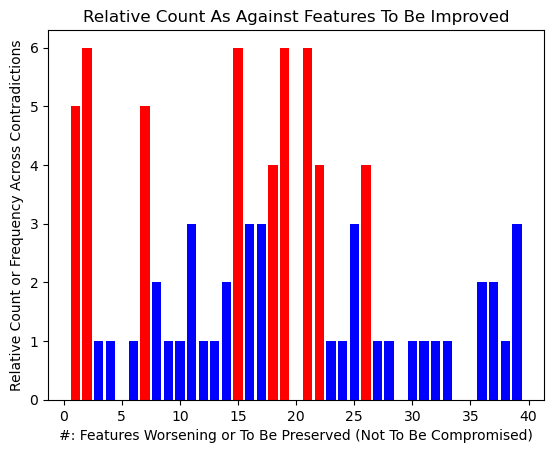
1/17 1/22 2/16 2/26 2/33 4/22 5/15 5/26 7/11 7/15 7/21 7/25 7/39 8/17 8/21 9/11 11/7 11/9 11/28 12/19 12/21 13/22 15/19 15/38 16/2 16/27 16/37 17/1 17/8 18/10 18/15 18/22 18/24 18/36 19/15 19/21 19/30 19/31 20/2 20/39 21/7 21/8 21/18 21/19 21/25 22/1 22/2 22/3 22/4 22/13 23/1 23/2 23/18 23/26 25/21 25/36 26/1 26/23 27/16 28/7 28/11 28/12 28/14 28/15 28/17 28/18 28/19 28/21 28/26 28/32 30/19 31/19 32/37 33/2 35/1 35/14 35/18 35/39 36/6 36/7 36/25 37/2 37/16 38/15 39/7
EXAMPLE: In the context of headphones, there is a need for users to have a device for listening to audio (e.g., music) and another device for making phone calls. Before the integration of speaking and listening capabilities in headphones, users typically had to use a dedicated headset for making phone calls or rely on the built-in speakers and microphone of their phones or laptops. The introduction of headphones with universality or multi-functionality addressed the inconvenience of carrying multiple devices or switching between different accessories. Users could now use a single pair of headphones for both listening to audio content and engaging in voice communication. This consolidation of different functions into a single device simplified the user experience and made it more convenient for individuals who wanted an all-in-one solution for their audio needs. The universality principle in this context addressed the traditional problem of the fragmented user experience, where separate devices were needed for distinct functions. The integration of speaking and listening capabilities in headphones streamlined the user’s interaction with audio devices, providing a more versatile and user-friendly solution.
Contradictions (33/2, 35/2, 35/39): The headphone with both a microphone and speaker serves as a unified audio device that enables users to both input and output audio (33). This design enhances its versatility, allowing users to seamlessly switch between phone calls and audio playback without the need for separate devices (35). Unifying these two separate functions in such a way that it does not impact the productivity (like switching time -39) and mass or weight of the headphone (2).
Solution: A headphone with both a microphone and speaker typically works based on the principles of audio input and output. The microphone component within the headphone captures sound waves from the user’s voice or ambient noise. These sound waves are converted into electrical signals by the microphone’s diaphragm or other transducer elements. The electrical signals, representing the audio input, are then transmitted through the headphone’s cable or wirelessly to a connected device (e.g., smartphone, computer). The connected device processes the incoming electrical signals, usually through audio processing circuits or software. Noise-canceling or noise-reduction technologies may be applied to improve the quality of the captured audio by reducing background noise. The processed audio signals are sent to the headphone’s speaker component. The speaker converts the electrical signals back into sound waves, producing the audio output that the user can hear. The sound waves are emitted through the headphone’s speakers, creating sound for the user.
During phone calls, the user’s voice is captured by the microphone, transmitted to the connected device, processed, and then sent back to the headphone for the user to hear through the speakers. For music or other audio playback, the headphone simply receives and plays back the processed audio signals without the need for a two-way communication loop. The headphone is designed to be compatible with various devices such as smartphones, computers, and other audio playback devices. Connection options may include wired connections (3.5mm audio jack) or wireless connections (Bluetooth, USB, etc.). The headphone may include controls for adjusting volume, answering or ending phone calls, and other functionalities. Additional features like touch controls, voice activation, or gesture recognition may be incorporated for user convenience.
The integration of a microphone and speaker in headphones addresses several contradictions, enhancing user experience and convenience. Headphones with integrated microphone and speaker simplify the user experience by combining multiple functions into a single device, maintaining ease of use while offering enhanced functionality. Users want the convenience of carrying fewer devices, but they also desire specialized tools for specific tasks (e.g., separate headphones and microphones). Headphones with both a microphone and speaker offer a unified solution for audio needs, reducing the need for users to carry multiple devices. Users seek versatile devices that can handle various audio functions, but they also value specialized tools that excel in specific tasks. The headphone design provides versatility by accommodating both listening to audio and engaging in voice communication, addressing the need for a multi-functional device. Users appreciate compact and lightweight designs, but they also desire devices with advanced features. The integration of microphone and speaker functionalities into headphones achieves a balance by maintaining a compact form factor while adding valuable features for communication. Headphones with a microphone and speaker streamline communication, allowing users to seamlessly transition from phone calls to audio playback without switching devices.
Users prefer wireless headphones for freedom of movement, but they may face challenges with tangled cables when using separate headphones and microphones. Wireless headphones (mechanics substitution) with integrated microphone and speaker components provide freedom of movement without the hassle of managing separate cables. To conclude, the design of headphones with both a microphone and speaker resolves contradictions related to convenience, versatility, simplicity, compactness, communication efficiency, and wirelessness, ultimately enhancing the overall user experience.