


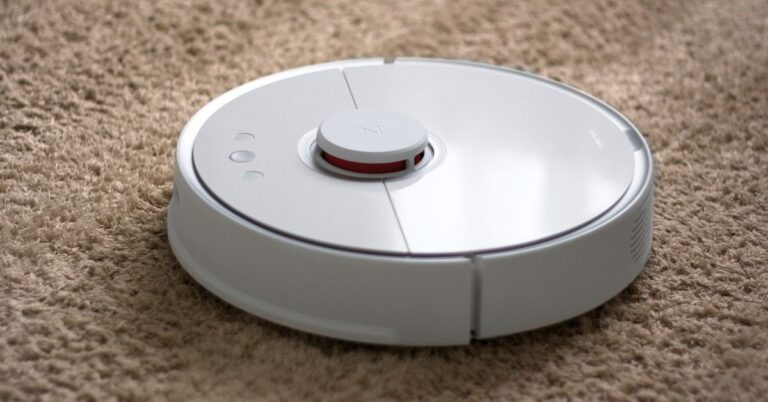
2: EXTRACTION (TAKING OUT, Extracting, Retrieving, Removing, Separating, Isolating, Zoning Out, Remove the essential element): (A) Extract the “redundant or disturbing or an interfering” part (or property) of an object (or system), (B) Extract only the “necessary or useful” part (or property) from an object (or system), (C) Extract only the desired (required or non-required) function (in terms of time or space or interaction or condition) from a system or object.
EXAMPLE: Separate Smoking Areas/Zones, Vacuum Cleaning, Chromatography, Flashlight, Automated Teller Machines, Split-ACs, Using Fiber Optics (& Frequency Based Separation or Extraction of Signals), Weeding Out, Film Editing etc
SYNONYMS: Extracting, Retrieving, Removing, Separating, Taking-Out. Extract the “disturbing or an interfering” part (or property) of an object (or system) [IP 2.1]. Extract only the “necessary or useful” part (or property) from an object (or system) [IP 2.2]. Extract only the desired (required or non-required) function (in time or space or condition) from a multi-functional system or object [IP 2.3]
ACB:
The concept of “extraction” in problem-solving refers to the process of isolating, retrieving, or separating specific elements, properties, or functions from a larger system, object, or context. It involves identifying and focusing on the essential components that are relevant to solving a particular problem or addressing a specific need. Extraction can be thought of as a way to simplify complex situations by honing in on what is necessary or valuable. Extracting the Disturbing or Interfering Part (Property) [IP 2.1] involves identifying and isolating elements or properties within a system that are causing disruption or interference. By extracting these troublesome components, you can eliminate or mitigate the issues they create, ultimately leading to smoother operation or improved performance. Extracting the Necessary or Useful Part (Property) [IP 2.2] implies isolating the elements or properties that are crucial for achieving a specific objective. By extracting only what is necessary or useful, you simplify the problem and avoid unnecessary complexity, making it easier to address the core challenge. Extracting the Desired Function from a Multi-Functional System or Object [IP 2.3] involves selecting and isolating a particular function from a system or object that serves multiple purposes. By extracting the desired function, you can tailor your approach to meet a specific requirement without being weighed down by irrelevant functions.
The overarching idea is to identify elements causing interference or inefficiency and find ways to separate them from the essential components or areas, ultimately enhancing the functionality or comfort of the system. Separation and extraction involves separating an interfering or unnecessary part from an object or isolating the necessary part to improve the overall system’s efficiency. Noise Reduction in a Car: A car engine generates a lot of noise that affects the overall comfort of passengers. Isolate the noisy engine from the passenger compartment using effective insulation materials or locate the engine in a separate compartment. Light Source in a Reading Lamp: The light source in a reading lamp produces heat, which can be uncomfortable during prolonged use. Use fiber optics or a light pipe to transmit light to the lampshade, keeping the heat-producing light source separate from the reading area. Cooking Odors in the Kitchen: Cooking generates strong odors that spread throughout the house. Install a powerful exhaust fan to separate and direct cooking odors outside, preventing them from permeating the entire living space. Traffic Noise in Urban Areas: High traffic noise disrupts the peace in urban residential areas. Implement noise barriers or vegetation belts along highways to segment and absorb the sound, reducing its impact on nearby neighborhoods. Workspace Privacy in an Office: Open office layouts can lead to distractions and reduced privacy for individual workers. Introduce modular cubicles or soundproof partitions to segment workspaces, providing employees with a more focused and private environment.
From a problem-solving perspective, the concept of extraction encourages a focused approach to tackling challenges. It helps in (a) Prioritization: By identifying and isolating the most relevant elements, you can allocate your resources and efforts more efficiently toward solving the problem. By using extraction, identify the core issues that are most impactful and need immediate attention. Extracting these core challenges allows us to prioritize their efforts and resources. Instead of applying a generic solution to a complex problem, one can extract the specific aspects of the problem they are equipped to address. One can identify and extract elements that cause distractions, delays, or inefficiencies in their processes. (b) Simplification: Extraction simplifies complex systems by breaking them down into manageable parts, allowing you to address each part individually. Companies sometimes offer a range of features or services that might not all be equally relevant to their target audience. By extracting the most necessary or useful features, they can create streamlined and more focused offerings that cater directly to customer needs. (c) Customization: Extracting specific functions or properties enables you to tailor your solutions to the unique requirements of the problem at hand. Each customer or market segment may have specific requirements. One can extract the desired functions or features that align with these requirements and offer customized solutions, increasing their value proposition. (d) Minimization of Harm such as Noise: Removing interfering or unnecessary elements reduces distractions and noise, allowing you to focus on the core issue. (e) Efficiency Enhancement: By working with a streamlined subset of information or functions, you can streamline your problem-solving process and achieve quicker results. By extracting unnecessary or non-value-adding elements, one can allocate resources more efficiently toward activities that directly contribute to growth and success.
Business can leverage the extraction principles to tackle challenges and seize opportunities by focusing on what is essential, simplifying complex situations, and customizing their solutions. In a competitive market, one can extract their unique strengths, differentiators, and innovative aspects. This helps in crafting a distinct brand identity and positioning. By extracting the specific regulatory requirements that apply to their industry, location, or product, one can ensure compliance without being overwhelmed by irrelevant regulations. When addressing opportunities, one can extract the specific needs, preferences, and pain points of their target audience. This enables them to tailor their marketing efforts and messages effectively.It’s a valuable technique for making problems more manageable, finding relevant solutions, and achieving effective outcomes.
The principle of extraction involves the identification and separation of essential elements from a larger context. It is a valuable problem-solving tool in both business and technical domains. By applying the extraction principle, contradictions and challenges can be addressed through the focused isolation and manipulation of key elements. Extracting relevant data and insights from complex datasets can streamline decision-making. Businesses can use data extraction tools to analyze trends, identify patterns, and make informed decisions based on accurate information.
A business might be struggling to effectively target its audience. Applying the extraction principle involves identifying distinct customer segments within the broader market and tailoring marketing strategies for each segment, resulting in more personalized and effective communication. In the business context, a contradiction might arise between providing a one-size-fits-all product and catering to specific customer needs. Applying the “Extraction” principle could involve identifying key features or benefits that resonate most with certain customer segments and creating targeted offerings for those segments. When a product is overloaded with features, it might become confusing for users. Extraction can help by identifying the core features that align with the product’s main value proposition, leading to a simpler and more user-friendly product.
Extraction can involve breaking down processes into discrete steps to identify bottlenecks or inefficiencies. This enables the optimization of individual steps for improved overall performance. A business might face a contradiction between marketing across a wide range of platforms and focusing efforts on the most effective ones. Applying “Extraction” could involve identifying the channels that yield the highest conversion rates or engagement and concentrating marketing efforts there. Businesses often face the challenge of allocating resources effectively. Extracting key data about resource utilization and identifying areas of over-allocation or under-allocation can lead to optimized resource allocation and cost savings. When there’s a contradiction between allocating resources broadly across multiple projects and achieving high-quality results, the “Extraction” principle could be applied to prioritize one or a few projects, allocating resources more intensely to ensure their success while deprioritizing less critical initiatives.
Ablation treatment for arrhythmia is a medical procedure used to treat abnormal heart rhythms (arrhythmias) by targeting and disrupting the abnormal electrical pathways or tissues causing the irregular heartbeats. The procedure involves the use of a catheter to deliver energy to specific areas of the heart, either through heat (radiofrequency ablation) or cold (cryoablation), to create scar tissue and block the abnormal electrical signals. Before the ablation procedure (prior action), the cardiologist conducts diagnostic tests, such as electrophysiology studies (EPS) or cardiac mapping, to identify the specific location and type of arrhythmia. During the ablation procedure, a thin, flexible tube called a catheter is inserted into a blood vessel (usually in the groin or arm) and guided to the heart. Multiple catheters may be used, depending on the complexity of the arrhythmia. Once inside the heart, the catheter is used to map the electrical activity of the heart and identify the precise location of the abnormal signals causing the arrhythmia.
In radiofrequency ablation (mechanics substitution) , a catheter with an electrode at its tip is used to deliver high-frequency electrical energy (radiofrequency) to the targeted tissue. This energy creates heat, which destroys or cauterizes the abnormal tissue responsible for the arrhythmia. Scar tissue forms as the treated area heals, blocking the abnormal signals. In cryoablation, the catheter releases a freezing agent (liquid nitrogen or nitrous oxide) at its tip. This extreme cold freezes the targeted tissue (partial or excessive action, parameter change), forming scar tissue as it thaws. The scar tissue interrupts the abnormal electrical pathways. Throughout the procedure (continuity of useful action), the cardiologist monitors the patient’s heart rhythm to ensure that the ablation is effectively eliminating the abnormal signals (extraction or taking out). Confirmation may involve inducing the arrhythmia intentionally and observing its response to the ablation. After the ablation, the patient is monitored in the recovery area. Some patients may experience temporary discomfort at the catheter insertion site. Patients typically undergo follow-up appointments to assess the success of the ablation and monitor for any recurrence of arrhythmia. Ablation treatment is commonly used for various types of arrhythmias, including atrial fibrillation, atrial flutter, supraventricular tachycardia (SVT), and ventricular tachycardia. The goal of the procedure is to restore a normal heart rhythm and improve the patient’s quality of life. The choice between radiofrequency ablation and cryoablation depends on the specific characteristics of the arrhythmia and the patient’s medical history.
A technical problem might involve a trade-off between the size of a component and its desired functionality. Applying the “Extraction” principle could mean isolating the critical functions of the component and optimizing it separately, allowing for a smaller overall size without sacrificing functionality. For instance, reverse osmosis is a water purification process that uses a semipermeable membrane to remove ions, molecules, and larger particles from drinking water. It is the opposite of the natural osmosis process. In reverse osmosis, water is forced through a membrane against its natural flow, leaving behind impurities. The membrane allows water molecules to pass while blocking contaminants, resulting in purified water. In a software development, codebases can become convoluted and hard to maintain. Applying the extraction principle involves breaking down complex functions or classes into smaller, focused modules, improving code readability and maintainability. In complex technical systems, components may not communicate effectively. Extracting and isolating the communication protocols and interfaces can help resolve integration issues and ensure seamless interoperability. In networking, when a system experiences connectivity issues, extraction can involve isolating and analyzing specific network segments to identify the source of the problem and resolve it more efficiently. Extraction involves identifying the core functionalities and user needs, simplifying the interface and improving user experience if complex user interfaces confuses the users.
False memory bias refers to the phenomenon where a person recalls events, details, or experiences that did not actually occur or were different from how they actually happened. This bias can lead individuals to confidently believe in and vividly recall false memories as if they were real. An example of false memory bias is the case of eyewitness testimony in criminal trials. Research has shown that eyewitnesses can be susceptible to false memory bias, leading them to incorrectly identify a suspect or provide inaccurate details about a crime scene. Factors such as leading questions, suggestive interviews, or exposure to misleading information can contribute to the formation of false memories in eyewitnesses. To address false memory bias in technical systems and designs, teams can implement rigorous documentation practices, maintain clear records of design decisions and changes, and regularly review and validate assumptions with empirical data or user feedback. Additionally, fostering open communication and collaboration within the team can help minimize the impact of false memories by facilitating discussions and clarifications about design choices and requirements.
One notable example of false memory leading to untoward incidents in the field of technology occurred in 2006 with the launch of the PlayStation 3 gaming console by Sony. During the development phase, Sony had originally planned to include backward compatibility with PlayStation 2 games, allowing users to play games from the previous console generation on the new system. However, as the launch date approached, technical challenges arose, and Sony decided to remove this feature to reduce manufacturing costs and simplify the design. Despite this decision, many consumers and gaming enthusiasts had formed a false memory or assumption that the PlayStation 3 would indeed be backward compatible with PlayStation 2 games. This belief was fueled by early marketing materials and statements from Sony executives that had initially promoted the feature. When the PlayStation 3 was released without backward compatibility, it led to disappointment and frustration among consumers who had been expecting the feature based on their false memories of earlier announcements. Some customers even filed lawsuits against Sony, alleging false advertising and breach of contract. This incident serves as a cautionary tale about the importance of managing customer expectations and clearly communicating changes to product features and specifications. It highlights how false memories or assumptions, whether unintentional or not, can have significant consequences for both consumers and companies in the technology industry.
In the context of false memory bias, the complexity of product or system can contribute to misunderstandings or false beliefs about the product features (missing or present). By applying this principle, one can selectively build disclaimers (messages) and reduce the likelihood of false memories or misconceptions among all concerned with the system. This helps in streamlining product parts or features, clarifying messaging, and minimizing ambiguity to ensure all have a clear and accurate understanding of the product’s capabilities and limitations.
The misinformation effect refers to the phenomenon where the introduction of inaccurate or misleading information after an event can distort or alter a person’s memory of that event. This effect highlights how external factors, such as misinformation provided by others or suggestive questioning, can influence an individual’s recollection of past experiences. Here’s a simplified example to illustrate the misinformation effect: Let’s say a group of people witnesses a car accident. After the accident, they are separately asked questions about what they saw. However, in one group, a bystander incorrectly suggests that the car ran a red light before the accident, even though it actually ran a green light. Later, when members of this group are asked about the traffic light, some may incorporate the misinformation they received and incorrectly recall seeing a red light, even though that was not the case. In this example, the introduction of misleading information (“the car ran a red light”) after the event influences the participants’ memories, leading to inaccuracies in their recollection of the event. Hence extracting false or avoiding misinformation or wrong information or irrelevant information and highlighting it precisely is important to preserve the correctness or right state or outcome of the system.
The curse of knowledge bias can be associated with several principles, primarily those related to improving communication, simplifying systems, and considering the needs and perspectives of users. While this is primarily focused on technical problem-solving, its principles can also be applied to address cognitive biases and improve human-centered aspects of technical systems. This principle involves removing unnecessary elements or complexity from a system. To mitigate the curse of knowledge bias, taking out can be applied to streamline technical documentation, user interfaces, or training materials, removing jargon, technical details, or features that are unnecessary or confusing to users.
Occam’s razor, also known as the principle of parsimony, is a philosophical and scientific principle that suggests the simplest explanation or solution is usually the best one. It is named after the medieval philosopher William of Ockham. In technical systems or problem-solving contexts, Occam’s razor can be applied in several ways: Modeling and Theory: When developing models or theories to explain complex phenomena, Occam’s razor advises favoring simpler explanations over more complicated ones, provided they adequately account for the observed data or evidence. This approach helps to avoid unnecessary complexity and minimizes the risk of overfitting or speculation. Hypothesis Testing: In scientific research and experimentation, Occam’s razor encourages researchers to prioritize hypotheses that make the fewest assumptions or require the simplest mechanisms to explain observed phenomena. This principle guides the formulation of testable predictions and hypotheses that are more likely to be falsifiable and robust. System Design: In engineering and design, Occam’s razor suggests favoring simpler and more straightforward solutions over complex ones, as they are often easier to implement, maintain, and troubleshoot. This approach can lead to more efficient and reliable technical systems that better meet the needs of end-users. Problem-Solving: In problem-solving and decision-making, Occam’s razor advises considering the simplest and most direct solutions first before exploring more complex or convoluted alternatives. By prioritizing simplicity and elegance, individuals can often achieve effective solutions with minimal resources or effort.
Occam’s razor is not a strict rule but rather a guiding principle that helps to guide reasoning and problem-solving processes. While simplicity is valued, it is essential to balance this with the need for accuracy, completeness, and relevance to the specific context or problem at hand. By applying Occam’s razor thoughtfully, individuals and organizations can streamline their approaches to problem-solving, increase efficiency, and achieve more elegant and effective solutions.
The law of triviality, also known as Parkinson’s Law of Triviality or the bike-shed effect, is a principle that suggests people tend to give disproportionate weight to trivial issues while neglecting more significant ones. The term originates from C. Northcote Parkinson’s book “Parkinson’s Law,” published in 1957. The concept is often illustrated by a hypothetical committee tasked with approving plans for a nuclear power plant. Despite the technical complexity and potential consequences of decisions regarding the power plant’s design and operation, members of the committee may spend a significant amount of time debating trivial matters such as the design and color of a bike shed for the plant’s employees.
The law of triviality bias arises due to several factors: Accessibility: Trivial issues are often easier to comprehend and discuss compared to complex or technical matters. As a result, people may gravitate towards discussing what they understand rather than delving into more challenging topics. Visibility: Trivial issues are often more visible or tangible, making them more salient in discussions. This can lead to a disproportionate focus on these issues at the expense of more critical matters that may be less immediately apparent. Personal interest: People may have personal preferences or biases that make them more inclined to engage with trivial issues that align with their interests or preferences. Social dynamics: Group dynamics can play a role in amplifying the focus on trivial matters. For example, individuals may seek validation or consensus from their peers by participating in discussions about trivial issues, leading to a spiral of attention away from more significant topics. Recognizing the law of triviality bias can help individuals and organizations allocate their time and resources more effectively by prioritizing discussions and decisions based on their importance rather than their perceived simplicity or visibility.
Reactance is a psychological phenomenon characterized by an individual’s resistance to being influenced, controlled, or constrained. It occurs when people feel that their freedom of choice or autonomy is threatened, leading them to react against attempts to limit or manipulate their behavior. Key characteristics of reactance include: Perceived Threat to Freedom: Reactance arises when individuals perceive an external threat to their sense of freedom, autonomy, or control. This threat may come from explicit instructions, rules, regulations, or persuasive attempts to influence their behavior. Negative Emotions: When faced with perceived threats to their freedom, individuals may experience negative emotions such as anger, frustration, defiance, or rebellion. These emotions motivate them to resist or push back against the perceived imposition.
Counter-Reaction: Reactance can lead to a counter-reaction aimed at restoring or asserting one’s freedom of choice. This may involve actively opposing or disregarding the controlling influence, engaging in behaviors that affirm independence, or rejecting the source of the perceived threat. Strength of Reactance: The intensity of reactance can vary depending on factors such as the importance of the threatened freedom, the perceived legitimacy of the controlling influence, and individual differences in personality and susceptibility to reactance. Reactance can manifest in various contexts, including interpersonal relationships, marketing and advertising, persuasion attempts, and social influence. For example, reactance may occur when a parent imposes strict rules on a teenager, when a government enforces regulations perceived as overly restrictive, or when consumers resist persuasive advertising tactics that attempt to manipulate their choices. Understanding reactance is important for effective communication, persuasion, and behavior change. Attempts to influence others must take into account the potential for reactance and strive to maintain individuals’ sense of autonomy and freedom while still encouraging desirable behaviors or outcomes. Otherwise, reactance may lead to resistance, defiance, or counterproductive behaviors.
The illusory truth effect is a cognitive bias that occurs when people are more likely to believe false information to be true after repeated exposure to it. This effect demonstrates how familiarity can increase the perceived truthfulness of a statement, regardless of its actual validity. This bias has important implications for persuasion, propaganda, and the spread of misinformation. For example, if people are repeatedly exposed to a false claim, such as “Eating carrots improves night vision,” they may eventually come to believe it, even if they initially knew it was untrue. This effect can occur because familiarity can lead to a sense of fluency, making information seem more credible or trustworthy.
The mere exposure effect is a psychological phenomenon where people tend to develop a preference for things they are exposed to repeatedly. In other words, familiarity breeds liking. This effect has been observed across various domains, including consumer behavior, interpersonal attraction, and decision-making. It suggests that even if people are initially neutral or indifferent toward something, repeated exposure can lead to increased positive feelings or preferences for that thing. For example, research has shown that people tend to rate faces, songs, or words as more likable or attractive when they are exposed to them multiple times, even if they cannot consciously recall the exposure. Advertisers often leverage the mere exposure effect by repeatedly exposing consumers to brand messages or logos to increase brand familiarity and preference.
Mood-congruent memory bias is a psychological phenomenon in which individuals are more likely to recall memories that are consistent with their current mood or emotional state. This bias suggests that when people are in a particular mood, they tend to retrieve memories that match or reinforce that mood, while memories that contradict or are incongruent with their mood may be less accessible. Here’s how mood-congruent memory bias works: Positive Mood: When individuals are in a positive mood, they are more likely to recall positive memories, such as past successes, happy experiences, or pleasant events. These memories tend to be more accessible and vivid, contributing to a positive feedback loop that reinforces their current mood. Negative Mood: Conversely, when individuals are in a negative mood, they are more likely to recall negative memories, such as past failures, sad experiences, or traumatic events. These memories may be more salient and dominant in their thoughts, further intensifying their negative mood.
Mood-congruent memory bias can have significant implications for various aspects of cognition, emotion, and behavior: Emotional Regulation: The bias can influence how individuals regulate their emotions by affecting the types of memories they retrieve and focus on. For example, people may inadvertently ruminate on negative memories when they are feeling sad, which can prolong or exacerbate their negative mood. Perception of the Self and Others: Mood-congruent memory bias can shape individuals’ perceptions of themselves and others by influencing the memories they recall about their own behaviors and the behaviors of others. For instance, someone in a positive mood may recall more positive memories about themselves and others, leading to a rosier view of themselves and the world. Decision-Making: The bias can impact decision-making processes by influencing the memories individuals retrieve when evaluating potential choices or assessing risks. For example, someone in a fearful mood may overestimate the likelihood of negative outcomes based on their recall of past negative experiences. Recognizing the influence of mood-congruent memory bias can help individuals better understand their own thought processes and emotional responses. By being aware of this bias, individuals can take steps to mitigate its effects, such as engaging in mood-regulation strategies, challenging negative thinking patterns, and seeking out diverse perspectives and experiences.
Selective perception is a cognitive bias that involves filtering and interpreting information based on one’s own beliefs, attitudes, and expectations. It refers to the tendency of individuals to selectively attend to and perceive information that aligns with their existing beliefs or preferences while ignoring or distorting information that contradicts them. Key aspects of selective perception include: Filtering Information: Individuals affected by selective perception filter incoming information based on their pre-existing beliefs, values, and interests. They are more likely to pay attention to information that confirms their existing beliefs or supports their desired outcomes, while disregarding or downplaying information that challenges or contradicts them. Confirmation Bias: Selective perception is closely related to confirmation bias, which is the tendency to seek out, interpret, and remember information in a way that confirms one’s preconceptions. Confirmation bias reinforces selective perception by influencing how individuals process and interpret information, leading to a reinforcement of existing beliefs and attitudes. Influence on Decision-Making: Selective perception can significantly influence decision-making processes by shaping how individuals evaluate options, assess risks, and make choices. By selectively attending to information that supports their preferred course of action, individuals may overlook alternative perspectives or solutions, leading to biased or suboptimal decisions. Impact on Interpersonal Communication: Selective perception can also impact interpersonal communication by affecting how individuals interpret and respond to messages from others. People may selectively perceive communication in a way that confirms their own beliefs or biases, leading to misunderstandings, conflicts, and breakdowns in communication.
To mitigate the effects of selective perception, individuals can: Be mindful of their own biases and tendencies to selectively perceive information. Seek out diverse perspectives and information sources to gain a more balanced understanding of issues. Practice active listening and empathy to better understand the perspectives and experiences of others. Challenge assumptions and preconceptions by critically evaluating information and considering alternative viewpoints. By being aware of selective perception and actively working to mitigate its influence, individuals can improve their decision-making processes, enhance interpersonal communication, and foster a more open-minded and inclusive approach to understanding the world.
Naive cynicism refers to a cognitive bias where individuals exhibit an overly skeptical or distrustful attitude towards information, beliefs, or intentions, often without sufficient evidence or justification. Unlike informed skepticism, which involves critically evaluating information based on rational inquiry and evidence, naive cynicism involves a reflexive dismissal or distrust of ideas or perspectives perceived as insincere, dishonest, or untrustworthy. Key aspects of naive cynicism include: Unwarranted Distrust: Naive cynics tend to approach information with a default assumption of skepticism or disbelief, regardless of its credibility or validity. They may be quick to reject information or viewpoints that do not align with their preconceived beliefs or expectations, without critically evaluating the evidence or reasoning behind them. Confirmation Bias: Naive cynicism can be reinforced by confirmation bias, which is the tendency to seek out, interpret, and remember information in a way that confirms one’s pre-existing beliefs or suspicions while ignoring or discounting contradictory evidence. Naive cynics may selectively attend to information that reinforces their cynical worldview, further entrenching their distrustful attitudes. Negative Attribution Bias: Naive cynics may exhibit a negative attribution bias, where they attribute negative motives or intentions to others’ behavior, even when there is no clear evidence to support such attributions. This bias can contribute to a pervasive sense of distrust and suspicion towards others’ actions or communications. Impact on Relationships and Communication: Naive cynicism can have detrimental effects on interpersonal relationships and communication by fostering an atmosphere of distrust, suspicion, and hostility. Individuals affected by naive cynicism may be reluctant to trust others, leading to breakdowns in communication, collaboration, and cooperation. Mitigating Naive Cynicism: To mitigate the effects of naive cynicism, individuals can cultivate a more balanced and open-minded approach to evaluating information and interacting with others. This may involve practicing critical thinking skills, seeking out diverse perspectives, and maintaining a healthy skepticism that is informed by evidence and reasoned inquiry rather than reflexive distrust. By being aware of naive cynicism and its potential pitfalls, individuals can strive to adopt a more nuanced and discerning attitude towards information and interpersonal interactions, promoting constructive dialogue, understanding, and trust in their relationships and communities.
Recency Illusion bias occurs when individuals overestimate the importance of recent events or information compared to historical data. In designing a technical system, recency illusion might lead designers to focus excessively on the latest trends or technologies without considering their long-term viability or compatibility with existing systems. When solving technical problems, this bias might cause individuals to prioritize recent incidents or solutions without adequately considering past experiences or alternative approaches.
Argument from Fallacy bias involves the erroneous belief that a proposition is false simply because it is based on a fallacious argument. In a technical context, this bias might lead individuals to reject valid solutions or ideas because they were proposed using flawed reasoning or logic. This could result in the dismissal of innovative approaches or the failure to recognize the potential value of unconventional solutions.
Effort Justification: Effort justification occurs when individuals attribute greater value or significance to outcomes that require significant effort or investment. In designing a technical system, this bias might lead designers to perceive solutions that require extensive development or implementation as inherently superior, even if simpler or more cost-effective alternatives exist. When solving technical problems, individuals might be reluctant to abandon or modify solutions that they have invested significant time or resources in, leading to a bias towards maintaining the status quo.
1: Mass of the moving object: [‘7: Volume of the moving object’, ‘9: Speed’, ’22: Energy loss’, ’33: Convenience of use’, ’34: Convenience of repair’]
2: Mass of the non-moving object: [‘6: Area of the non-moving object’, ‘8: Volume of the non-moving object’, ’14: Strength’, ’16: Action time of the non-moving object’, ’30: Harmful external factors’, ’34: Convenience of repair’, ’38: Level of automation’]
3: Length of the moving object: [’22: Energy loss’, ’25: Time loss’]
4: Length of the non-moving object: [‘8: Volume of the non-moving object’, ’29: Accuracy of manufacturing’, ’33: Convenience of use’]
5: Area of the moving object: [‘1: Mass of the moving object’, ’10: Force’, ’13: Stability of the object’, ’17:Temperature’, ’23: Material loss’, ’29: Accuracy of manufacturing’, ’31: Harmful internal factors’, ’37: Complexity of control and measurement’, ’39: Productivity’]
6: Area of the non-moving object: [‘2: Mass of the non-moving object’, ’13: Stability of the object’, ’16: Action time of the non-moving object’, ’26: Amount of substance’, ’29: Accuracy of manufacturing’, ’30: Harmful external factors’, ’37: Complexity of control and measurement’]
7: Volume of the moving object: [‘1: Mass of the moving object’, ’18: Brightness, Visibility’, ’24: Information loss’, ’25: Time loss’, ’29: Accuracy of manufacturing’, ’31: Harmful internal factors’, ’39: Productivity’]
8: Volume of the non-moving object: [‘4: Length of the non-moving object’, ’10: Force’, ’12: Shape’, ’27: Reliability’, ’37: Complexity of control and measurement’, ’39: Productivity’]
9: Speed: [‘1: Mass of the moving object’, ’17:Temperature’, ’21: Power’, ’31: Harmful internal factors’, ’34: Convenience of repair’]
10: Force: [‘8: Volume of the non-moving object’, ’15: Action time of the moving object’, ’38: Level of automation’]
11: Tension, Pressure: [’13: Stability of the object’, ’17:Temperature’, ’22: Energy loss’, ’30: Harmful external factors’, ’31: Harmful internal factors’, ’34: Convenience of repair’, ’37: Complexity of control and measurement’]
12: Shape: [‘8: Volume of the non-moving object’, ’19: Energy consumption of the moving object’, ’21: Power’, ’30: Harmful external factors’, ’34: Convenience of repair’]
13: Stability of the object: [‘1: Mass of the moving object’, ‘5: Area of the moving object’, ’11: Tension, Pressure’, ’22: Energy loss’, ’23: Material loss’, ’34: Convenience of repair’, ’35: Adaptability’, ’36: Complexity of the structure’]
14: Strength: [’31: Harmful internal factors’, ’33: Convenience of use’, ’36: Complexity of the structure’]
15: Action time of the moving object: [‘3: Length of the moving object’, ‘7: Volume of the moving object’, ’10: Force’, ’18: Brightness, Visibility’, ’27: Reliability’]
16: Action time of the non-moving object: [’35: Adaptability’]
17:Temperature: [‘9: Speed’, ’11: Tension, Pressure’, ’21: Power’, ’30: Harmful external factors’, ’31: Harmful internal factors’, ’35: Adaptability’, ’36: Complexity of the structure’, ’38: Level of automation’]
18: Brightness, Visibility: [‘2: Mass of the non-moving object’, ‘7: Volume of the moving object’, ’15: Action time of the moving object’, ’38: Level of automation’, ’39: Productivity’]
19: Energy consumption of the moving object: [’10: Force’, ’12: Shape’, ’18: Brightness, Visibility’, ’31: Harmful internal factors’, ’36: Complexity of the structure’, ’38: Level of automation’]
20: Energy consumption of the non-moving object: [’18: Brightness, Visibility’, ’30: Harmful external factors’]
21: Power: [‘9: Speed’, ’10: Force’, ’12: Shape’, ’17:Temperature’, ’28: Accuracy of measurement’, ’29: Accuracy of manufacturing’, ’30: Harmful external factors’, ’31: Harmful internal factors’, ’34: Convenience of repair’, ’38: Level of automation’]
22: Energy loss: [‘3: Length of the moving object’, ’13: Stability of the object’, ’23: Material loss’, ’30: Harmful external factors’, ’31: Harmful internal factors’, ’34: Convenience of repair’, ’38: Level of automation’]
23: Material loss: [‘5: Area of the moving object’, ’13: Stability of the object’, ’22: Energy loss’, ’33: Convenience of use’, ’34: Convenience of repair’, ’35: Adaptability’]
24: Information loss: [‘8: Volume of the non-moving object’]
25: Time loss: [‘3: Length of the moving object’, ‘7: Volume of the moving object’]
26: Amount of substance: [‘6: Area of the non-moving object’, ’13: Stability of the object’, ’28: Accuracy of measurement’, ’34: Convenience of repair’]
27: Reliability: [‘8: Volume of the non-moving object’, ’15: Action time of the moving object’, ’30: Harmful external factors’, ’31: Harmful internal factors’]
28: Accuracy of measurement: [’10: Force’, ’26: Amount of substance’, ’35: Adaptability’, ’38: Level of automation’]
29: Accuracy of manufacturing: [‘4: Length of the non-moving object’, ‘6: Area of the non-moving object’, ‘7: Volume of the moving object’, ’19: Energy consumption of the moving object’, ’21: Power’, ’22: Energy loss’, ’36: Complexity of the structure’]
30: Harmful external factors: [‘2: Mass of the non-moving object’, ‘6: Area of the non-moving object’, ’11: Tension, Pressure’, ’17:Temperature’, ’20: Energy consumption of the non-moving object’, ’21: Power’, ’22: Energy loss’, ’24: Information loss’, ’27: Reliability’, ’32: Convenience of manufacturing’, ’33: Convenience of use’, ’34: Convenience of repair’]
31: Harmful internal factors: [‘5: Area of the moving object’, ‘7: Volume of the moving object’, ’11: Tension, Pressure’, ’14: Strength’, ’17:Temperature’, ’19: Energy consumption of the moving object’, ’21: Power’, ’22: Energy loss’, ’27: Reliability’, ’37: Complexity of control and measurement’, ’38: Level of automation’]
32: Convenience of manufacturing: [’30: Harmful external factors’, ’33: Convenience of use’, ’35: Adaptability’]
33: Convenience of use: [‘1: Mass of the moving object’, ’11: Tension, Pressure’, ’21: Power’, ’22: Energy loss’, ’23: Material loss’, ’28: Accuracy of measurement’, ’30: Harmful external factors’, ’32: Convenience of manufacturing’]
34: Convenience of repair: [‘1: Mass of the moving object’, ‘2: Mass of the non-moving object’, ‘7: Volume of the moving object’, ’12: Shape’, ’13: Stability of the object’, ’14: Strength’, ’21: Power’, ’23: Material loss’, ’26: Amount of substance’, ’28: Accuracy of measurement’, ’30: Harmful external factors’]
35: Adaptability: [‘3: Length of the moving object’, ’16: Action time of the non-moving object’, ’17:Temperature’, ’23: Material loss’]
36: Complexity of the structure: [‘2: Mass of the non-moving object’, ’13: Stability of the object’, ’14: Strength’, ’17:Temperature’, ’19: Energy consumption of the moving object’, ’22: Energy loss’, ’28: Accuracy of measurement’]
37: Complexity of control and measurement: [‘5: Area of the moving object’, ‘6: Area of the non-moving object’, ‘8: Volume of the non-moving object’, ’18: Brightness, Visibility’, ’31: Harmful internal factors’, ’33: Convenience of use’]
38: Level of automation: [’10: Force’, ’17:Temperature’, ’19: Energy consumption of the moving object’, ’21: Power’, ’30: Harmful external factors’, ’31: Harmful internal factors’]
39: Productivity: [‘7: Volume of the moving object’, ‘8: Volume of the non-moving object’, ’15: Action time of the moving object’, ’32: Convenience of manufacturing’, ’37: Complexity of control and measurement’]
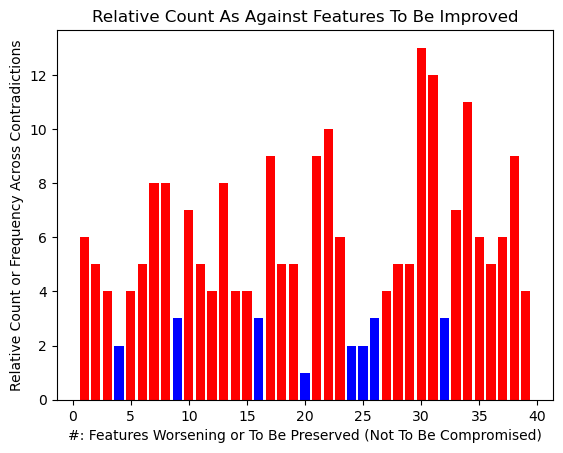
1/7 1/9 1/22 1/33 1/34 2/6 2/8 2/14 2/16 2/30 2/34 2/38 3/22 3/25 4/8 4/29 4/33 5/1 5/10 5/13 5/17 5/23 5/29 5/31 5/37 5/39 6/2 6/13 6/16 6/26 6/29 6/30 6/37 7/1 7/18 7/24 7/25 7/29 7/31 7/39 8/4 8/10 8/12 8/27 8/37 8/39 9/1 9/17 9/21 9/31 9/34 10/8 10/15 10/38 11/13 11/17 11/22 11/30 11/31 11/34 11/37 12/8 12/19 12/21 12/30 12/34 13/1 13/5 13/11 13/22 13/23 13/34 13/35 13/36 14/31 14/33 14/36 15/3 15/7 15/10 15/18 15/27 16/35 17/9 17/11 17/21 17/30 17/31 17/35 17/36 17/38 18/2 18/7 18/15 18/38 18/39 19/10 19/12 19/18 19/31 19/36 19/38 20/18 20/30 21/9 21/10 21/12 21/17 21/28 21/29 21/30 21/31 21/34 21/38 22/3 22/13 22/23 22/30 22/31 22/34 22/38 23/5 23/13 23/22 23/33 23/34 23/35 24/8 25/3 25/7 26/6 26/13 26/28 26/34 27/8 27/15 27/30 27/31 28/10 28/26 28/35 28/38 29/4 29/6 29/7 29/19 29/21 29/22 29/36 30/2 30/6 30/11 30/17 30/20 30/21 30/22 30/24 30/27 30/32 30/33 30/34 31/5 31/7 31/11 31/14 31/17 31/19 31/21 31/22 31/27 31/37 31/38 32/30 32/33 32/35 33/1 33/11 33/21 33/22 33/23 33/28 33/30 33/32 34/1 34/2 34/7 34/12 34/13 34/14 34/21 34/23 34/26 34/28 34/30 35/3 35/16 35/17 35/23 36/2 36/13 36/14 36/17 36/19 36/22 36/28 37/5 37/6 37/8 37/18 37/31 37/33 38/10 38/17 38/19 38/21 38/30 38/31 39/7 39/8 39/15 39/32 39/37
EXAMPLE: Consider the needs and preferences of both smokers and non-smokers. Create a solution that balances the rights of individuals to smoke with the rights of others to enjoy a smoke-free environment. Designated smoking zones provide a compromise by allowing smokers to engage in their preferred activity without subjecting non-smokers to secondhand smoke. This way, both groups can coexist in shared public spaces without one group significantly impacting the comfort of the other. The concept of having separate smoking zones, particularly in environments like airports, can be considered an application of the “Extraction” principle in addressing a contradiction related to smoking and non-smoking preferences in public spaces.
Contradiction (33/30): Allow individuals to smoke in public spaces (convenience of use – 33) while ensuring the comfort and health of non-smokers (harmful external effects -30) who prefer a smoke-free environment.
Solution: Identify Excessive Components. Analyze the public space and the conflicting needs of smokers and non-smokers. Identify the activity of smoking as a potential source of discomfort for non-smokers. Extract or segregate the activity of smoking into designated smoking zones, removing it from the general public space. Create distinct areas where individuals who wish to smoke can do so without affecting those who prefer a smoke-free environment. In airports, designated smoking zones are often located in isolated areas or designated smoking rooms. Smokers can go to these specific areas to smoke, isolating the activity from the general non-smoking public space. Design smoking zones to be well-ventilated and equipped with proper filtration systems to minimize the impact of secondhand smoke. Ensure that non-smokers are not exposed to the negative effects of smoking while maintaining the freedom of smokers to engage in their preferred activity. Smoking zones in airports may be equipped with ventilation systems that direct smoke away from the general areas and provide a contained space where smoke can be filtered before being released outside. This minimizes the discomfort and health impact on non-smokers. The concept of having separate smoking zones in public spaces, such as airports, is an application of the “Extraction” principle. It addresses the contradiction between the desire to allow individuals to smoke in public and the need to maintain a smoke-free environment for non-smokers. By extracting the activity of smoking and confining it to designated areas, this solution aims to find a balance that accommodates both preferences in shared spaces.