Inventive Principles

Inventive Principles are a key concept within TRIZ (Theory of Inventive Problem Solving), a systematic problem-solving methodology developed by Russian inventor and scientist Genrich Altshuller. Altshuller, along with his colleagues, analyzed a vast number of patents to identify patterns and commonalities in the inventive solutions. From this analysis, they derived a set of Inventive Principles that could be applied to solve problems and generate creative solutions. TRIZ is based on the idea that there are universal principles and patterns that underlie inventive solutions across different domains and industries. By understanding and applying these principles, innovators can overcome challenges and create more efficient, effective, and elegant solutions to problems. The Inventive Principles serve as a set of guidelines or heuristics that help individuals think systematically about how to approach and solve problems. 

Genrich Altshuller initially identified 40 Inventive Principles in TRIZ. These principles provided a set of guidelines or heuristics for approaching and solving problems. Over time, as TRIZ evolved and more insights were gained from the analysis of inventive solutions, the list of Inventive Principles expanded. The additional principles were meant to offer a more comprehensive set of strategies for addressing a wider range of problems. The total number of principles in later different versions of TRIZ, as being practiced by its practitioners, is assumed to have increased to 76 or even more. To a great extent, these are either extensions of original principles or off-shoots (like sub-principles or defined as 76 inventive standards) or varied interpretation and granular categorization (context sensitive). However, each principle or inventive standard represents a general solution approach that has proven effective in various inventive situations. The goal of TRIZ and its Inventive Principles is to accelerate the problem-solving process by leveraging the collective knowledge embedded in patents and inventive solutions. It encourages users to look beyond traditional problem-solving methods and consider innovative, often counterintuitive approaches.

Some of the key aspects of Inventive Principles in TRIZ include: Contradictions: TRIZ emphasizes resolving inherent contradictions within a system to achieve improvements. These contradictions often involve conflicting requirements or characteristics that must be addressed simultaneously. Ideality: Striving for an ideal solution, where all desirable functions are present without any drawbacks, is a central concept. Inventors are encouraged to move toward an ideal state. Patterns of Evolution: TRIZ identifies common patterns of technological evolution and innovation. Understanding these patterns can guide inventors in predicting future developments. 40 Principles: The original 40 Inventive Principles provide specific guidance on how to overcome contradictions and improve systems. Each principle is associated with a general approach or technique. Su-Field Analysis: TRIZ employs Su-Field Analysis, a method for analyzing the relationships between a system (Su), the object being acted upon (Field), and the action or force applied. 

Overall, the Inventive Principles in TRIZ provide a structured framework for problem-solving, fostering creativity and innovation by drawing on the accumulated knowledge of inventive solutions from diverse fields. TRIZ research originally uncovered  40 inventive strategies or principles capable of challenging and eliminating contradictions and conflicts. These principles are most effectively used as brainstorm focus devices – with users trying to make connections between their situation and the recommended directions suggested by the principles. The 40 principles are described below but before that there are certain axioms related to them as follows: (1) Single principle may be valid for eliminating more than one contradiction (2) A contradiction may be resolved using more than one principle (3) There is no direct link between an invention and the principles (4) An invention has an application context (which determines the primary and secondary functions), state of evolution, set of ideality values (for each primary function at each state of evolution) and the underlying construction (i.e., resources) to deliver the primary function (5) Each invention evolves over a period denoted by its state of evolution (based on the change in the ideality value for a primary function (not just mere modification or reconstruction of the invention) (6) An invention has primary and secondary functional objectives in each application context, and it is the application context that decides which functions (out of many being delivered) constitutes the primary functional objective for the invention (7) An invention may have one or more contradictions dictated by its construction (which are application context sensitive) (8) An invention may use one or more principles to resolve the same contradiction (9) It is highly probable that a contradiction elimination thinking process using more than one valid principle may dictate (or leads to or satisfies) the same construction for the invention (10) Mostly the application context dictates the primary function, and it is pre-determined or known to the inventor prior to the construction of the invention (introduction of universality is usually an after thought to improve the ideality laterally) (11) What contradictions may emerge from the construction of invention strongly depend upon the application context and the changing conditions around it (12) What states of evolution may emerge or become feasible strongly depend upon the changes in the network of value dictated or determined by the system (or construction of invention) hierarchy? (13) It is the application context and/or the state of evolution that determine the potential principles to serve as trigger to solve problems or evolve the invention by reconstruction (14) A minimal construction or reconstruction is the underlying ideality objective for any invention

Inventive Principles

1. Segmentation : Divide an object or system into independent parts. 2. Taking Out or Extraction or Isolation: Remove or separate a particular part or property from an object or system.  3. Local Quality: Change an object or system’s structure to have different properties in different places.  4. Asymmetry: Change the shape or properties of an object or system to make it more functional.  5. Merging or Consolidation: Combine two or more objects or systems to improve their functionality.  6. Universality: Make a part or object perform multiple functions.  

7. Nested Doll or Nesting: Place one object inside another or embed systems within each other.  8. Anti-weight: Compensate for the weight of an object or system by adding a counterweight.  9. Prior or Preliminary Counteraction (Anti-Action): Counteract harmful factors before they can cause damage. 10. Prior or Preliminary Action: Use the available energy in an object or system before it is needed.  11. Beforehand Cushioning or Cushioning in Advance: Use part of an object or system to accomplish a task or amplify an existing action. 12. Equipotential(ity): Make all parts of a system or object work at the same potential.  

13. Other Way Round of Do It In Reverse: Reverse the action or process of an object or system.  14. Spheroidality or Curvature: Change the shape of an object or system from linear to curved or vice versa.  15. Dynamics: Change an object or system’s state or movement.  16. Partial or Excessive Actions Achieve slightly less or slightly more of the desired effect (or action) from the object (or system), if it is difficult to obtain exactly 100% of the desired effect. 17. Another Dimension: Move an object or system into a different dimension (e.g., move it in time or space).  18. Mechanical Vibration: Introduce vibrations into an object or system.

19. Periodic Action: Make an object or system perform a periodic action.  20. Continuity of Useful Action: Keep an object or system working continuously. 21. Skipping or Rushing Through: Skip an unnecessary stage in a process.  22. Blessing in Disguise: Turn a harmful factor into a useful one.  23. Feedback: Introduce feedback loops to control and optimize processes.  24. Intermediary or Mediator: Use an intermediary carrier object or system to perform an action.

25. Self-Service: Make an object or system perform its own maintenance or improvement.  26. Copying: Duplicate a useful object or process.  27. Cheap Short-Living Objects: Use inexpensive, disposable objects in place of more expensive ones.  28. Mechanics Substitution: Replace a mechanical system with a different type of mechanism.  29. Pneumatics and Hydraulics: Use air or liquid pressure to perform a task.  30. Flexible Shells and Thin Films: Use flexible structures or films to improve a system’s properties. 

31. Porosity or Porous Materials: Make an object or system porous to allow certain substances to pass through.  32. Changing Color or Using Colors: Change the color of an object or system to indicate a change in state.  33. Homogeneity: Make an object or system more homogeneous to improve its properties.  34. Discarding and Recovering: Discard waste products and recover useful substances.  35. Parameter Changes: Change the physical state of an object or system.  36. Phase Transitions: Use phase transitions (e.g., solid to liquid) to achieve a desired result. 

37. Thermal Expansion: Use thermal expansion to achieve a specific effect.  38. Strong Oxidants: Use strong oxidizing agents to improve a process.  39. Inert Atmosphere: Use an inert atmosphere to prevent unwanted reactions.  40. Composite Materials: Use composite materials to improve the properties of an object or system. 

1: SEGMENTATION (Assemble-Disassemble, Fragmentation, Decentralization) : (A) Divide an object (or system) into independent parts (to work in tandem or counterbalance each other), (B) Make an object (or system) be sectional (or modular), (C) Make an object (or system) easy to assemble (putting together) or disassemble (separating or taking apart), (D) Increase the degree of an object’s (or system’s) fragmentation or segmentation, (E) Use repetitive or multiple units of action if there are strict limits on increasing per unit function (or characteristics like size or weight etc) connected with an action, transit to micro-level.

EXAMPLE: Modular Furniture, Centralization (e.g., Mainframe) versus Decentralization (e.g., Personal Computers), Multi-Pin Connector, Goal-oriented Team, Multi-Plane Window, Measurement Scale (with increased precision), Serrated Knives (to improve cutting performance), Multi-I/O operations in case of limited memory, Molecular Beam Epitaxy.

Read More: SEGMENTATION

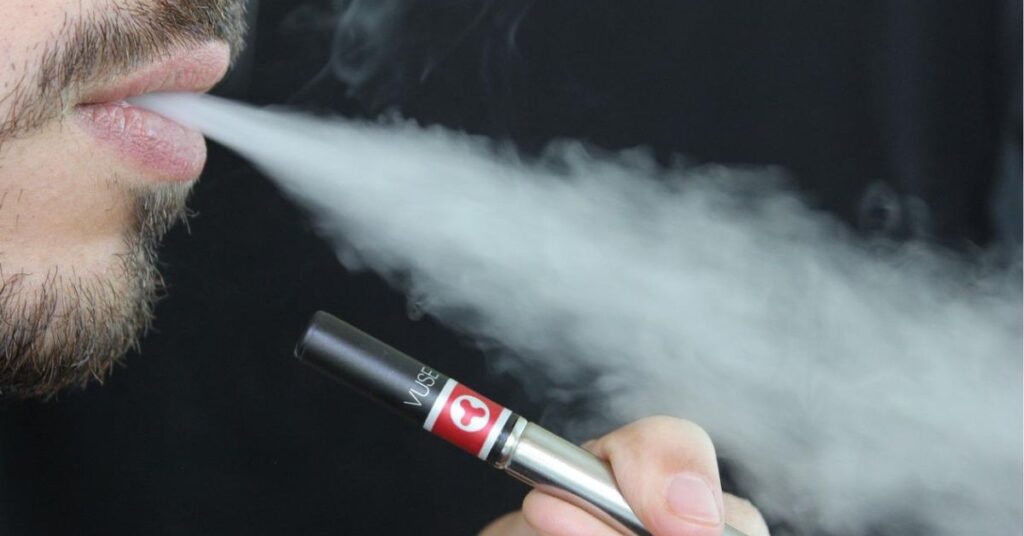
2: EXTRACTION (TAKING OUT, Extracting, Retrieving, Removing, Separating, Isolating, Zoning Out): (A) Extract the “redundant or disturbing or an interfering” part (or property) of an object (or system), (B) Extract only the “necessary or useful” part (or property) from an object (or system), (C) Extract only the desired (required or non-required) function (in terms of time or space or interaction or condition) from a multi-functional system or object.

EXAMPLE: Separate Smoking Areas/Zones, Vacuum Cleaning, Chromatography, Flashlight, Automated Teller Machines, Split-ACs, Using Fiber Optics (& Frequency Based Separation or Extraction of Signals), Weeding Out, Film Editing.

Read More: EXTRACTION

3: LOCAL QUALITY: Change an object’s (or system’s) structure or property from uniform (or homogeneous) to non-uniform (or heterogeneous), Change an object’s (or system’s) external environment from uniform (or homogeneous) to non-uniform (or heterogeneous), Make each (different) part of an object (or system) perform a different useful function, Make a part of an object (or system) perform a direct opposite function (in time or space) or with respect to its other parts, Make each part of a system to function in a locally optimized condition, Let each part of an object (or system) to be placed in conditions most suitable for its function/action.

Example: Grip support on tools, Bakelite holders in heating utensils, Aerodynamics protrusions, using water     for         sharpening        or contouring glass edges, Corrosion Protection Coatings, Swiss-Army Knife, Color Box, Pencil with eraser, hammer with nail puller, Photo chromatic Lenses, Night-vision viewfinder, Refrigerated drugs or medicines.

Read More: LOCAL QUALITY

4: ASYMMETRY: Replace symmetrical form (s) with asymmetrical form (s), Vary the degree of asymmetry, if an object (or system) is already asymmetrical, change an object’s (or system’s) or property or form to suit the asymmetry in the external environment

Example: Electric furnace with asymmetrically placed electrodes, Encryption System, Key- Lock, Contact Lens, Spectacles, Bulb- Socket (Threads), Ergonomic Seat (Back)

Read More: ASYMMETRY

5: CONSOLIDATION (MERGING, Combining, Integrating): Consolidate homogeneous (identical, related) objects in space or objects destined for contiguous operations or functions, consolidate homogeneous (identical, related) or contiguous operations or functions in time (to act together at same time)

Example:  Bifocal  Lens, Networked           Personal       Computers, Microprocessors (IC), Lawn Mover with Grass Collector, Venetian, or Vertical Blinds

Read More: CONSOLIDATION

6: UNIVERSALITY (Multi-functionality, Universal, Standardization): Make a part or object (or system) perform multiple (several different) functions; thereby eliminating the need for other parts (or elements) or objects (or systems), Introduce or use commonly (widely or universally) acceptable standards.

Example: Sofa-cum-bed, Cycle-as-Wheel Chair, Home-on-Wheels, Houseboat, Toothbrush (with inbuilt toothpaste disposal system in handles), Bicycle or Child’s Car Safety Convertible into Stroller [E6 IP 6.1], Internet Communication Protocol (HTML, XML, DHTML, HTTP,), Safety Standards (ISI)

Read More: UNIVERSALITY

7: NESTING (NESTED DOLL, Hierarchical, Multi-Level, Multi-Layer, Recursion, Loops): Place (embed or position or put) an object (or system) inside another. And so on in recursive manner, Pass an object (or system) through the cavity of another object (or system).

Example: Door-within-a-door, Stacked Chairs, Telescoping/Extendable Antenna, Suspended oil storage reservoir (that stores different products in a single unit), Nested Doll, Zoom Lens, Sewing Thread, Needle, Keyring, Lead Pencil, Capillary Action (e.g., in candles), Toilet Roll, Catheter is passed through sheath during angioplasty, Seat-Belt Retraction Mechanism, Retractable Aircraft landing Gear, Mercury Thermometer

Read More : NESTING

8: COUNTERWEIGHT (ANTI-WEIGHT) : Compensate the weight of an object (or system) by combining or merging with another object (or system) that provides a lifting or counterbalancing or supporting forces, compensate for the weight of an object (or system), with the forces present in the external environment (e.g., use aerodynamic, hydrodynamic, buoyancy and other forces) to provide a lift or counterbalancing force. 

Example: Advertising (hydrogen/helium filled) Air Balloons, Magnetic Levitation, Floating Paint Brush, Racing Cars with rear wing, Hydrofoils in Ships, Life Saving Floats, Using Foaming Agents (into a bundle of logs to make it float better)

Read More : COUNTERWEIGHT

9: PRIOR COUNTERACTION (PRELIMINARY ANTI-ACTION): Preload counter tension/stress or perform a counter action to an object (or system) to compensate (or prevent) excessive and undesirable stress (or harmful effects)

Example:  Reinforced Concrete, Masking Tapes for Painting, Pre- stressed Bolts, Pre-shrunk Cloths, Car’s Rear Window (tempered glass with pre- compressed surface under tension)

Read More : PRIOR COUNTERACTION

10: PRIOR ACTION (PRELIMINARY ACTION): Perform required change (before it is needed) to an object (or system) either fully or partially in advance, Place or arrange objects (or systems) in advance such that they can come into action from the most convenient location and when needed. 

Example: Sterilized Surgical Instruments, Pre-Cooked Food or Ready Meals, Reusable Components, Pre-Assembled Sub- Assemblies, Post-It, Postal Stamps, Pre- Pasted/Printed Wall Papers, Fire Extinguishers (in proximity of fire prone areas), Road Signs, Telephone Directory

Read More: PRIOR ACTION

11: CUSHIONING IN ADVANCE (BEFOREHAND CUSHIONING,  Emergency Measures, Fallback Options, Design for Failures): (A) Compensate for the relatively low reliability of an object (or system) with emergency measures (or fallback or countermeasure or back-up) prepared in advance (B) Incorporate a preemptive measure or protective feature into a design to avoid or minimize potential issues that may arise during the operation or use of a system.

EXAMPLE: Plastic coating for liquid containers, Back-up Parachutes, Spares, Fire Extinguishers, Air Bags, Quarantine, Vaccination, Immunity Enhancing Drugs, Impact Resistance Packaging, Redundant Parts, Data Back-up, Power Bank, Magnetic Anti-Theft Tags, Emergency Oxygen Masks in Aircrafts. Prior to installing a pipeline across and beneath a road, it is advisable to install a specialized casing for the protection of the future pipeline.

Read More: CUSHIONING IN ADVANCE

12: EQUIPOTENTIAL(ITY): (A) Change the conditions of the operation or characteristics of the object (or system) in such a way that the object (or system) doesn’t need to be lifted/raised or lowered e.g. rolling heavy cylindrical objects on the plane surface instead of lifting it up for the transportation.or (B)  significantly reduce the need of energy consumption for the operation by equalizing or neutralizing the forces acting upon an object (or system).

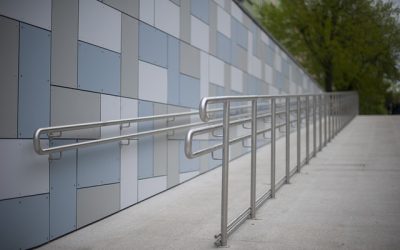
EXAMPLE: Wheelchair Ramps, Mid-air Fueling, Spring Enforced Parts,  Garage Pits for Car Maintenance, Canal Locks, Skillet Conveyor, Upskilling (Training)

Read More:  EQUIPOTENTIAL(ITY)

13: DO IT IN REVERSE (THE OTHER WAY AROUND, Inversion, Upside-Down, Inside-Out, Inversion) : Implement an opposite action (i.e. heating instead of cooling) as against the desired action dictated by the problem, Make the moveable part of an object (or system) or external environment, stationary (or fixed) – and the stationary (or fixed) part moveable, Turn an object (or system) upside-down or inside-out or use other side or property or function than it is originally designed for

Example: Home Delivered Food, Battery Driven Screw Drivers, Moving Sidewalk (transporting standing people), Process of Emptying Containers, Double-sided Wears or Linens (can be used inside-out)

Read More:  DO IT IN REVERSE

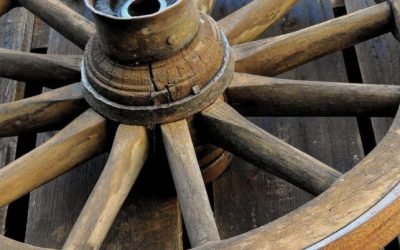
14: SPHEROIDALITY (CURVATURE, Curve, Curvilinear): Replace linear parts and edges with curved parts, flat surfaces with spherical surfaces, and cube shapes with ball shapes, use rollers, balls, domes, arches, spirals or in general spherical objects, Replace linear motion with rotational motion. Replace ‘back and forth’ motion with a rotating one. (Or vice-versa), Introduce or utilize centrifugal force.

Example: Push/Pull versus Rotary Control Switches, Paper Sheets versus Running Rolls, Ball Point Pens (smooth ink distribution), Arches & Domes in Architectures, Screw versus Nail, Threaded Cap versus Push-In Stopper, Ferris Wheel, Pulley System, Bicycle Pedaling, Mixer, Grinder, Washing Machine Dryer

Read More: SPHEROIDALITY

15: DYNAMICITY (Dynamization, Relative Motion): (A) Alter or adjust the characteristics of an object (or system or process) or its external environment, to gain optimal performance at each stage of its operation, (B) make an immobile or rigid object (or system or process), movable or interchangeable (or adjustable/adaptable/flexible), (C) Divide an object into elements capable of changing their position relative to each other

EXAMPLE: Adjustable Mirrors, Steering Wheel and Seats in Vehicles, Multi-Step Transformer, Toothbrush Bristles, Drinking Straws, Road Dividers, “Butterfly” Computer Keyboard, Scissors, Foldable Knife, Retractable Aircraft landing Gear

Read More: DYNAMICITY

16. PARTIAL OR EXCESSIVE ACTION (More or Less, Slightly Less or Slightly More, Partial or Overdone) : (A) Achieve slightly less or slightly more of the desired effect (or action) from the object (or system), if it is difficult to obtain exactly 100% of the desired effect (or action) or (B) build margins for errors or deviations or buffers in objects (or systems) or introduce tolerance limits or design an object to work within set tolerance limits or introduce or use more than one instance of object (or system) , at an expense, for continuity in case of failure or improving reliability of the system.

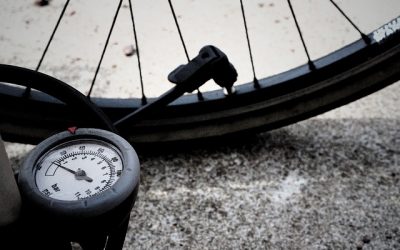
EXAMPLE: Eye Lens Power, Extra Packaging, Safety Margins, Dip or Spray Painting, Air Pressure in Tires, “Buy 1+1 Free” Campaigns (partial gains while promotion or preempting competition for suppliers and excessive for customers at the same time), Top-Off/Up (under or over) Fillings

17: TRANSITION TO NEW DIMENSION (ANOTHER DIMENSION, New Dimension): Transition from one dimension to another, utilize multi-level composition (or stacking or layering) of objects (or systems), Incline (or turn) an object or place on its side, Utilize the opposite or another side of a given object (or system), Project optical lines into neighboring areas, or onto the reverse side of an object.

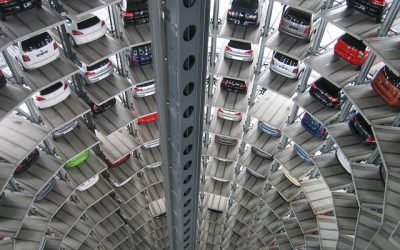
Example: Clip versus Pins, Coiled or Spiraled wires, Spiral Staircase, Infra-red Computer Mouse (space versus surface), Vertical Car Parks, CD Rack, Inclined Bi-Cycle Stand, Dumping Truck, Music Tape/Cassette, Advertisements on Reverse Side of Tickets/Coupons, BacK-2-Back Printed Circuit Board, Light Reflectors

18: MECHANICAL VIBRATION (Vibrate, Oscillate): Utilize frequency or set an object (or system) into oscillation, Increase the frequency of oscillation or vibration (to ultrasonic), use the resonance frequency of an object (or system), Replace mechanical vibration with piezo vibration, use ultrasonic vibrations in conjunction with an electromagnetic field

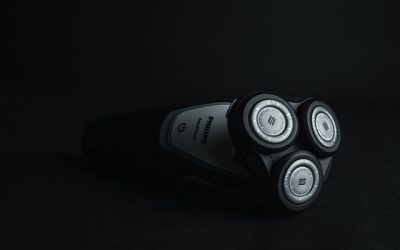
Example: Vibrating Blades of Electric Shaver, Acoustic or Agitated Cooking, Stethoscope, using radar guns to measure speed of cars on road, Use Vibration for Distribution or Segregation, Ultrasonic Cleaning, Ultrasonic Welding, Resonation for Rapid Cleaning, Gall Stone or Kidney Stone Removal, Quartz Crystal, Mixing Alloys (in Induction Furnace)

19: PERIODIC ACTION: Replace a continuous action with a periodic or pulsating one, change the frequency of periodic action, use pauses between impulses to provide additional (or different) useful action

Example: Pulsating Water Sprinklers, Pulsating Bicycle Light, Repetitive Directional Hammering, Ambulance Siren, Alerting or Warning Lamps, Morse Code, Preventive Maintenance, Recharging

Read More: PERIODIC ACTION

20. CONTINUITY OF USEFUL ACTION (Steady Useful Action): Carry out an action without a break. All parts of the objects should constantly operate at full (or optimal) capacity, all the time, remove (or reduce) idle or intermediate or non-productive action (or motion or work) or harmful factors

Example: Flywheel, 24 Hours Pharmacy, UPS, Park- n-Fly, Revolving Doors, Digital Media with Random Access (instead of linear), Automated Reconciliation, Self-Loading Rifles.

21: RUSHING THROUGH (SKIPPING, Hurry): Perform harmful and hazardous operations at a very high speed or perform an action with a very high speed or for a very short time to eliminate or reduce harmful and hazardous effect on the object (or system) or its environment

Example: Flash Photography, Laser Eye Correction, Explosive Excavation, High Speed Drills (to avoid heating of surfaces), Cut plastic faster before it decomposes or disorients or deforms

Read More: RUSHING THROUGH

22: CONVERT HARM INTO BENEFITS (BLESSING IN DISGUISE, Benefit from Harm): Utilize (or transfer or direct) harmful factors – especially environmental – to an object (or system) to obtain a positive effect, remove (or reduce or sensitivity to) one harmful factor by combining it with another harmful factor, Increase the degree of harmful action to such an extent that it ceases to be harmful.

Example: Recycled Paper, Biofuel, Organic Fertilizers, Red Birth Mark Removal Introducing Green Pigments, High Decibel Music Note Superimposed over Noise, Explosive Excavation

23. FEEDBACK: Introduce feedback or facilitate detection or measurement, If the feedback already exists change (or reverse or adjust) it

Example: Automatic Temperature, Pressure and Volume Measurement/ Detectors/ Control Devices – Thermostat, River/ Reservoir/ Tank Water Marks, Budget, Automated (& Signal Sensitivity Driven) instead of Manual Control – Auto Pilot

Read More: FEEDBACK

24: MEDIATOR (INTERMEDIARY): Use (or introduce) an intermediary object (or system) to transfer or carry out an action, connect the object (or system), temporarily to another object (or system) that can be easily removed or separated after its use

Example: Food Preservatives, Chisel (between object and hammer), Teflon (on pans, passes heat (action) to the object, and imparts non- stickiness property), Pot-Holders, Post-It, Paper Clips, Catalysts

Read More: MEDIATOR

25: SELF-SERVICE (Self-X): Make an object (or system) to service (or organize) itself and carry out supplementary and repair operations, Make an object (or system) use waste material or energy

Example: Self-Balancing Wheel, Self-Cleaning Filters, Halogen Lamps, Biofuel, Dynamo, Organic Fertilizers

Read More: SELF-SERVICE

26: COPYING: Use a simplified, simulated, and inexpensive copy or model of an object (or system) in place of a complex, fragile, expensive, inconvenient to operate original object (or system), Use optical image or copy or reflection or projections instead of an object (or system) in original, use an infrared or ultraviolet copy instead of using visible optical image of an object (or system)

Example: Imitation Jewelry, Paper Models, CAD-CAM, Prototypes, Dummies in Crash Testing, Cadavers or Simulated Patients, Computer Simulation, Audio- Video Tutorials versus Seminars, Image Snapshots (for counting, detection, or analysis etc), Measuring speed of birds using video, Sonograms, Space Surveillance, Data Transfer (Infrared), Infra-red guns to measure speed instead of movie/video, Intruder Alarm Systems

Read More: COPYING

27: DISPOSE (CHEAP SHORT-LIVING OBJECTS, Cheap Disposable): Replace an expensive object with a cheap one (with or without introducing multiplicity), compromising other properties (i.e., longevity, durability)

Example: Diapers, Disposable Plastic Cups, Mousetraps, Match Sticks, Disposable Cameras/Pens, Ice (in ice box) instead of refrigerator

Read More: DISPOSE

28: MECHANICAL SYSTEM REPLACEMENT (MECHANICS SUBSTITUTION, Another Sense, Replacement of Mechanical System): Replace a mechanical means with an optical, acoustical, thermal or olfactory system i.e. sensory (visual, acoustic, touch, taste, smell), Introduce or use a field (electric, magnetic or electromagnetic etc) inside or to interact with an object (or system), Replace field that are: (a) Stationary with Mobile, (b) Fixed with Varying with time, (c) Random with Structured, Use fields in conjunction with field activated (e.g. ferromagnetic) objects (or systems)

Example: Color Code based part identification and assembling, use a bad smelling compound to alert users of leakage instead of a mechanical or electrical sensor, Field Activated Switches, Mixing Two Powdered Particles (charging each with electro-statically opposite charges), MRI Scanners, Thermoplastic Metal Coating in Electromagnetic Field

29: PNEUMATICS AND HYDRAULICS (Pneumatics and Hydraulics Construction): Replace solid parts of an object (or system) with a gas or liquid. These parts can then use pneumatic (using gas) or hydrostatic (using liquid) cushions/principles.

Example: Hovercraft, Inflatable Mattresses

30: FLEXIBLE SHELLS AND THIN MEMBRANES (Flexible Membranes, Flexible Thin Films or Shells): Replace customary inflexible solid constructions with flexible membranes or then films or shells, Isolate an object (or system) from its potentially harmful external environment with flexible membranes or thin films or shells.

Example: Stretchable Wears, Sails, Steel Foils (for packaging), Tea Bags, Sunscreen Lotions, Hydrodynamic Bearings, Protective Masks (on liquid or solid surfaces to protect from environmental hazards like heat or temperature or wind or dust etc)

31: POROUS MATERIALS: (A) Make an object (or system) porous or add supplementary porous elements (inserts, covers, etc.). (B) Fill the pores (cavities, holes or voids) in advance with some substance, if an object (or system) is already porous.

EXAMPLE: Foam Metals, Sponge Cleaners, Medicated Swabs, Gel Filled Porous Material (in seats, mattresses etc), Porous Metal Mesh (to wick excess of solder from the joint), Air FIlters, Bubble Wraps For Packing,

Read More: POROUS MATERIALS 

32. CHANGING COLOR (USE OF COLORS, COLOR CHANGES, Change Optical or Visual Properties or Appearance): (A) Change the color of an object (or system) or its environment (from fixed mono color to fixed multi-color to variable multi-color to use of variable spatial-temporal full spectrum colors matching with the changing environment), (B) Change the degree of translucency of an object (or system) or its environment (from fixed opaque to fixed partially translucent to fixed partially transparent to fixed fully transparent to variable spatial temporal transparency), (C) Use color additives to observe an object (or system) or process which is difficult to see (or observe) otherwise employ emissive or luminescent traces or trace atoms if such colored additives are already used in the object (or system)

EXAMPLE: Camouflage, Photo Chromatic Glass, Traffic Signals, Safe Lights in Photographic Dark Rooms, Bandage, Water Curtains (with color additives), Fluorescent Signs or Additives, UV Spectroscopy, Use of Colored Tags/Labels/Status

Read More: CHANGING COLOR

33: HOMOGENEITY (Uniformity): Make objects (or systems) interacting with main object (or system) using same material or similar (or matching) properties (or behavior) as the main (or primary) object (or system).

Example:  Tire and Tube, Medicine and Capsule, Bottle and Cap, Book Cover & Bookmark, Leather Shoes, Diamond Cutters

Read More : HOMEGENEITY

34: DISCARDING AND RECOVERING (Rejecting and Regenerating, Charge and Discharge, Design for Reusability): Reject (or discard, dissolve, evaporate, melt, disappear, appear to disappear etc) an element of an object (or system) after its intended function is achieved or is rendered useless after an operation, restore (or recover or regenerate or return etc) used-up parts or its characteristics (directly or indirectly) during an operation. Need based assembling-disassembling of system, Make use of object (or system) or its characteristics as temporary part of the main system.

Example: Bio-degradable Packaging Material, Rocket Boosters, Bullet Castings, Medicine Capsules, Inductors, Capacitors (or any other transient energy accumulator or dispensing element), Rechargeable Batteries, Self- sharpening lawn mover blades, Self-cleaning tapes, Performance Based Roles

35: PARAMETER CHANGE (Transformation of Properties): Change the physical state of the object (or system) or its parts, Change the concentration or density of the object (or system) or its parts, Change the degree of flexibility of the object (or system) or its parts, Change the temperature or volume or shape or weight or size or pressure or any characteristics of the object (or system) to optimize the effect/objective of the system.

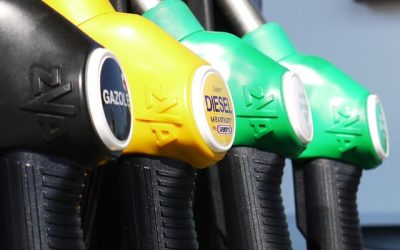
Example: Ice or Sugar Cubes, Washing Detergent Cubes, Freezing the liquid centers of filled candies and then dipping into melted chocolate, Transporting petroleum, oxygen and nitrogen as liquid instead of gas, Liquid Soaps , Alcoholic Beverages, Medicines, Seal-Ink, Vulcanized Rubber , Adjustable Dampers, Thermostat, Liquid-Liquid Separation, Flat or Deflated Tires (for improved grip on sandy terrains), Raising the temperature above the Curie point to convert a ferromagnetic substance to a paramagnetic substance

Read More: PARAMETER CHANGE

36: PHASE TRANSITION: Make use of the phenomena of phase change or effects developed during such change (i.e., a change in the volume, the liberation or absorption of heat etc)

Example: Freezing Water (& using expansion as effect), Boiling (& using latent heat or different boiling points for desired effect e.g., liquid-liquid separation, heat pump uses the heat of vaporization and heat of condensation of a closed thermodynamic cycle to deliver useful function, Melting (& using physical effect or change in dimensions, volume as effect e.g., wax candles)

Read More: PHASE TRANSITION

37: THERMAL EXPANSION (Relative Change): Use expansion or contraction of material by changing its temperature (as in transformation of properties), Use various materials with different coefficient of thermal expansion transformation of properties in conjunction with composite material)

Example:  Shape Memory Alloys, Bi-metallic Strips (in Thermostats)

Read More: THERMAL EXPANSION

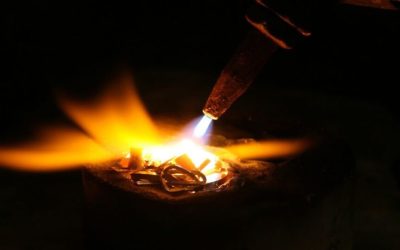
38: OXIDATION (STRONG OXIDANTSAccelerated Oxidation, Enriched Environment) : Principle of “strong oxidants” is related to the use of substances with powerful oxidizing properties to address and solve problems in innovative ways. In the context of TRIZ, oxidants are substances that facilitate oxidation reactions, where a substance loses electrons. In inventive problem-solving, the principle of strong oxidants suggests considering the introduction or utilization of substances with strong oxidizing properties to improve a system, process, or product. Oxidation reactions can lead to various effects, such as the removal of impurities, enhancement of certain properties, or changes in chemical compositions. It implies making transition from one level of oxidation to the next higher level if that helps resolve an inherent contradictions (a) Ambient atmospheric air to oxygenated (b) Oxygenated to pure oxygen (c) Oxygen to ionized oxygen (d) Ionized oxygen to ozoned oxygen (e) Ozone oxygen to ozone (f) Ozone to singlet oxygen

Example: Scuba diving with Nitrox, Oxy-Acetylene torch, treatment of wounds Ionize air to trap pollutants in air cleaner, speed up chemical reactions by ionizing the gas before

Read More: OXIDATION

39: INERT ENVIRONMENT (Calm Environment, Inert Atmosphere, Design for Environmental Sustenance): Replace a normal environment with an inert one, introduce a neutral substance or inert additives into an object (or system) or its environment, Carry out a process in a vacuum.

Example: Electric Bulbs (using Argon), Sound Absorbing Panels, Dampers, using fire retarding substances in or around objects prone to fire, Increasing the volume of powdered detergent by adding inert ingredients, Electron-beam welding in vacuum, Vacuum Packing

Read More: INERT ENVIRONMENT

40: COMPOSITE MATERIAL: Replace homogeneous or uniform materials (or objects or systems) with composite ones

Example: Aircraft Structures like Wings to provide high strength at low weight, Composite epoxy resin/carbon fiber golf club shafts, Fiberglass surfboards

Read More: COMPOSITE MATERIAL

REFERENCES

“And Suddenly the Inventor Appeared: TRIZ, the Theory of Inventive Problem Solving” by Genrich Altshuller: This book, written by the creator of TRIZ, provides an introduction to the theory and its principles.

“TRIZ for Engineers: Enabling Inventive Problem Solving” by Karen Gadd: Karen Gadd’s book is a practical guide to applying TRIZ principles for engineers and problem solvers.

“Simplified TRIZ: New Problem Solving Applications for Technical and Business Professionals” by Kalevi Rantanen and Ellen Domb: This book offers a simplified approach to TRIZ, making it accessible for technical and business professionals.

“TRIZ: The Right Solution at the Right Time: A Guide to Innovative Problem Solving” by Yuri Salamatov: Yuri Salamatov provides insights into applying TRIZ principles in various problem-solving scenarios.

“40 Principles: TRIZ Keys to Innovation” by Genrich Altshuller: This book delves into the 40 inventive principles of TRIZ, providing examples and applications.

“TRIZics: Teach yourself TRIZ, How to Invent, Innovate and Solve ‘Impossible’ Technical Problems Systematically” by Gordon Cameron: A self-teaching guide that helps individuals learn and apply TRIZ concepts for inventive problem-solving.

“TRIZ Power Tools Job #1: Clarity, Decision Making, and Problem-Solving” by Ellen Domb: Ellen Domb explores how TRIZ tools can enhance clarity, decision-making, and problem-solving in various contexts.

“Business TRIZ: The Theory of Inventive Problem Solving for Business & Management” by Valeri Souchkov: This book adapts TRIZ principles for business and management applications, providing a bridge between engineering and management thinking.

“The Innovator’s Toolkit: 50+ Techniques for Predictable and Sustainable Organic Growth” by David Silverstein, Philip Samuel, and Neil DeCarlo: While not exclusively about TRIZ, this book includes TRIZ and other innovation tools to help businesses foster organic growth.

“TRIZ: Through the Eyes of an American TRIZ Specialist” by Dana W. Clarke Sr.: Dana W. Clarke provides insights into TRIZ and its application in the American context.

Leave a Comment

Your email address will not be published. Required fields are marked *