


19: PERIODIC ACTION: (A) Replace a continuous action with a periodic or pulsating action respectively, (B) Change the frequency and/or amplitude of an existing periodic action (C) Use pauses or breaks in between periodic impulses to provide another or additional (or different) useful action
SYNONYMS: Pulsating Action, Rhythmic Action, Synchronization, Cyclicity, Regularity, Discipline, Routine, Controlled Activation and Deactivation, Repeat in cycles
EXAMPLE: Pulsating Water Sprinklers, Pulsating Bicycle Light, Repetitive Directional Hammering, Ambulance Siren, Alerting or Warning Lamps, Morse Code, Preventive Maintenance, Recharging Periodically, Repetitive Hammering, Modulated (Multi-Frequencye and Multi-Amplitude) Siren or Signals, Flash Lights, Cardio-Pulmonary Respiration (CPR), Traffic Light Frequency (Based On Density & Velocity of Vehicles), Heart Pacemakers (for arrhythmic patients), Variable Speed Wind Turbines, Pulse Oximeters, Randomized Algorithms in Computing.
ACB:
The principle of “Periodic Action” is based on the idea of introducing periodic or rhythmic actions in a system to achieve a desired result or to improve the system’s efficiency, control, and performance while addressing specific challenges or objectives. The periodic action can help optimize the functioning of a system by providing regular, controlled, or synchronized operations. The principle suggests incorporating regular or periodic processes into a system to achieve a specific purpose. Periodic actions can be employed to optimize the behavior of a system by ensuring that certain operations occur at regular intervals. By introducing periodicity, it’s possible to enhance the efficiency of a system, making it more reliable, predictable, or controlled. The principle may involve synchronizing different elements or components within a system to work in harmony through periodic actions. Periodic actions can be used to minimize energy consumption by activating or deactivating certain processes at specific intervals. Introducing periodic actions may help mitigate or counteract undesirable effects within a system by implementing corrective measures at regular intervals. The principle may involve creating rhythmic or cyclical patterns in the functioning of a system to achieve a desired outcome. Periodic actions can be employed to balance forces, counteract negative influences, or maintain equilibrium within a system.
At an abstract level, it involves the introduction of regular, rhythmic, or cyclical processes into a system to achieve specific objectives or to improve the overall performance of the system. This principle leverages the concept of periodicity to optimize the behavior, efficiency, and functionality of a system. The principle suggests introducing regular patterns or cycles into the operation of a system. This regularity helps bring order and predictability to the system’s behavior. Rhythmic or periodic actions are applied to enhance the system’s functioning. The goal is to optimize the performance of the system by incorporating controlled and synchronized actions. Periodic activation and deactivation of certain processes within the system. This approach allows for efficient energy utilization and resource management by turning processes on and off at specific intervals.
Achieving harmony and synchronization among different components or elements. The synchronization of actions enhances coordination, balance, and cooperation within the system. Introducing periodic measures to counteract or mitigate undesirable effects. By addressing issues at regular intervals, the system can maintain a desired state or correct deviations from the optimal performance. Implementing cyclical patterns in the system’s behavior. The creation of cyclical patterns supports specific functions, processes, or responses that contribute to the system’s goals. Periodic adjustments to balance forces or actions within the system. This helps maintain equilibrium, preventing the system from drifting into undesired states. Adaptively optimizing the system’s operation based on periodic assessments or feedback. The system can dynamically adjust its behavior in response to changing conditions, ensuring continued optimization.
This principle can applied to resolve technical and business contradictions by introducing rhythmic or cyclical processes. In a manufacturing process, there is a need for high-speed operation to increase productivity, but high-speed operation leads to excessive wear and tear on machinery. Implementing periodic maintenance cycles or downtime intervals, where the machinery operates at a slower pace or is temporarily shut down for maintenance. Periodic maintenance allows for necessary repairs and replacements, reducing wear and tear. Downtime may temporarily reduce productivity, but the long-term benefits include extended equipment life and improved reliability.
A retail business aims to keep its shelves well-stocked to meet customer demand, but excess inventory ties up capital and may lead to losses due to perishable goods. Implementing a periodic inventory management system, where stock levels are regularly assessed, and excess or perishable items are identified and discounted or removed from inventory. Frequent assessments prevent overstocking, reduce holding costs, and minimize losses due to perishable items. Periodic adjustments may lead to occasional stockouts, but these can be managed with efficient restocking strategies.
A heating system needs to maintain a constant temperature in a space, but the constant operation leads to high energy consumption. Implementing a periodic heating and cooling cycle, where the system operates at full capacity to reach the desired temperature and then periodically turns off or reduces output to maintain the temperature within a specified range. Reduced energy consumption during periodic cooling intervals without sacrificing the overall temperature control. There may be slight temperature fluctuations during cooling intervals, but these can be minimized with proper system design.
A software development team aims to deliver frequent updates to meet market demands for new features, but constant updates may lead to user fatigue and disruption. Implementing a periodic release schedule, where major updates are released at regular intervals, and minor updates or bug fixes are addressed through periodic patches. Users can anticipate and prepare for major updates, reducing disruption. Periodic patches address minor issues more efficiently. The release schedule may not align with urgent user needs, but this can be managed through careful planning and communication.
Recall or retrieve action or information actively with spacing effects for robustness, long term (memory) retention, engagement, usability, self-regulation, feedback, performance reinforcement, and assurance (introduce testing effects). The Testing Effect, also known as the Retrieval Practice Effect, is a cognitive bias that refers to the phenomenon where actively retrieving information from memory through testing or practice enhances long-term retention and retrieval of that information compared to passive study alone. When individuals actively recall information from memory during testing or practice sessions, it strengthens the connections between neurons associated with that information. This process, known as consolidation, helps encode the information more effectively in long-term memory. Each time information is successfully recalled, its retrieval strength increases. This heightened retrieval strength makes it easier to access and retrieve the information in the future.
The Testing Effect is particularly effective when practice sessions are spaced out over time rather than massed together. Spacing out practice sessions allows for better retention and transfer of knowledge to long-term memory. Engaging in retrieval practice also improves individuals’ awareness of what they know and don’t know, leading to more effective study strategies and better self-regulation of learning (Metacognitive Awareness). The Testing Effect demonstrates that actively engaging in retrieval practice during learning leads to better long-term retention and retrieval of information compared to passive methods.
Actively testing prototypes of a technical system allows designers and engineers to identify strengths, weaknesses, and areas for improvement early in the design process. By actively engaging with prototypes and collecting feedback, designers can iteratively refine the system to better meet user needs and requirements. This active engagement with simulation results helps identify design flaws, optimize performance, and make informed design decisions. Actively involving users in the testing process provides valuable insights into user needs, preferences, and pain points, leading to improvements in innovation and optimization. Actively seeking feedback from stakeholders and end-users, analyzing performance data, and incorporating lessons learned into future iterations of the system ensures ongoing enhancement and refinement.
The Testing Effect embodies the idea of receiving periodic feedback on system performance and (regular but spaced out) user interaction to identify areas for improvement. Implementing feedback mechanisms allows designers to continuously evaluate and refine their designs based on real-world data and user input.
One real-world example of how the Testing Effect has been incorporated into a product feature is with the Tesla Autopilot system, a semi-autonomous driving feature available in Tesla vehicles. Tesla regularly releases over-the-air software updates to improve the functionality and performance of its vehicles, including enhancements to the Autopilot system. These updates are first rolled out to a small subset of Tesla owners, often referred to as “early access” or “beta” testers. By deploying updates to a limited number of vehicles initially, Tesla can collect real-world driving data and feedback from a diverse range of environments and driving conditions. This data allows Tesla to identify and address potential issues or edge cases that may not have been encountered during internal testing. For example, Tesla’s Autopilot relies on a combination of sensors, cameras, and machine learning algorithms to navigate and respond to its surroundings. Through the Testing Effect, Tesla can analyze how the system performs in various scenarios, such as different weather conditions, road types, and traffic patterns.
Based on the feedback and data collected from early access testers, Tesla can refine and optimize the Autopilot system to improve its accuracy, reliability, and safety. Subsequent software updates can then be deployed to the broader Tesla fleet, incorporating these improvements and enhancements. This iterative process of testing, feedback collection, and refinement allows Tesla to continuously enhance the capabilities of its Autopilot system, ultimately leading to a safer and more reliable driving experience for Tesla owners. Additionally, by leveraging real-world data and user feedback, Tesla can stay agile and responsive to evolving road conditions and regulatory requirements.
The spacing effect is a cognitive phenomenon that refers to the finding that information is better remembered when it is studied or practiced over spaced intervals of time, rather than being studied or practiced all at once (massed practice). In other words, spacing out learning sessions over time leads to better long-term retention and recall compared to cramming information into a single study session. The spacing effect bias, therefore, is not a term commonly used. However, if we were to interpret it in a general sense, it could refer to a cognitive bias where individuals underestimate the benefits of spaced practice and instead rely on massed practice, despite evidence indicating that spaced practice leads to better learning and memory retention. This bias might manifest in various ways, such as: Preference for Cramming: Some individuals may have a tendency to cram information into a single study session, believing that intense, concentrated study will lead to better learning outcomes. They may overlook or underestimate the benefits of spacing out study sessions over time. Overconfidence in Immediate Performance: People might feel confident in their ability to recall information immediately after a massed practice session, leading them to believe that they have mastered the material. However, they may later experience difficulty in retaining the information over the long term. Underestimation of Long-Term Retention: Individuals may underestimate the importance of spaced practice in facilitating long-term memory retention. They may not appreciate the cumulative benefits of revisiting and reinforcing information over time. To overcome the spacing effect bias, it’s important for individuals to recognize the advantages of spaced practice and incorporate it into their learning and study routines. This might involve breaking study sessions into shorter, spaced intervals, actively reviewing material at regular intervals, and utilizing techniques such as spaced repetition to enhance long-term retention. By leveraging the spacing effect, individuals can optimize their learning and memory performance.
Restraint bias, the empathy gap effect, and impulse control and attention are all related concepts that shed light on how individuals perceive and regulate their behaviors, particularly in relation to self-control and impulsivity. When considered together, these concepts highlight the complex interplay between cognitive biases, attentional processes, and self-regulation mechanisms in shaping individuals’ behaviors. Restraint bias may lead individuals to underestimate the influence of visceral impulses, while the empathy gap effect further complicates their ability to fully comprehend and empathize with their own impulsive states. Meanwhile, impulse control and attention serve as crucial factors in regulating behavior and managing impulses effectively. Understanding these dynamics can provide insights into how individuals perceive and navigate their behaviors, particularly in contexts where self-control and impulsivity play significant roles.
Restraint Bias: Restraint bias refers to the tendency for individuals to overestimate their ability to control impulsive behavior. This bias leads people to believe they have stronger self-control than they actually do, which can result in underestimating the influence of visceral impulses on their behavior. For example, someone may believe they can resist the temptation to indulge in unhealthy food, but their actions may indicate otherwise due to the underestimation of the power of their impulses. The inflated belief in one’s self-control or restraint can lead to greater exposure to temptation and increased impulsiveness. This bias has a relevance to people falling to addiction and not able to recover owing to underestimated self-control over impulses to be satiated leading to more eposure to drugs. In short, someone might engage in addictive behaviors such as drug use because they believe they can resist any potential addiction. In reality, this overestimation of self-control may lead to vulnerability to addictive behaviors.
Empathy Gap Effect: The empathy gap effect deals with individuals having difficulty appreciating the power of visceral impulses on their behavior. This effect highlights the challenge people face in empathizing with their own impulsive states when they are not currently experiencing them. The concept of a “cold-to-hot empathy gap” suggests that individuals underestimate the impact of visceral impulses when they are in a “cold” state, meaning they are not currently experiencing those impulses. For example, when someone is not hungry, they may underestimate the influence of hunger on their behavior. This underestimation occurs because individuals have difficulty empathizing with their own impulsive states when they are not currently experiencing them. One explanation for the cold-to-hot empathy gap is the restricted memory for visceral experiences. While individuals may be able to recall past impulsive states, they struggle to fully recreate or empathize with the sensations and motivations associated with those states when they are not currently experiencing them. This restricted memory makes it challenging for individuals to appreciate the power of their impulses in driving behavior when they are in a different state.
Impulse Control and Attention: Studies have shown that individuals’ beliefs about their capacity for self-control influence their actual impulse control behavior. The less attention an individual pays to something, the less control they have over whatever they are doing. People tend to display higher levels of impulse control when they believe they have a stronger sense of self-control over their environment. Additionally, attention plays a crucial role in regulating behavior and managing impulses. Focusing attention on oneself can lead to successful self-control, while less attention to certain cues may result in decreased control over behavior. Self-control engages conflict between competing pressures, pressures that can be brought on by situational or internal prompts from the environment.
Integrating insights from restraint bias, the empathy gap effect, and impulse control and attention into the design process can lead to technical systems that are more intuitive, user-friendly, and resilient to human factors. By recognizing the limitations of human self-control and the tendency to underestimate the influence of visceral impulses, designers can incorporate features that mitigate the impact of impulsive behavior on technical systems. For example, designing user interfaces with clear and intuitive controls can help users maintain better impulse control when interacting with complex systems, providing contextual cues or reminders within technical interfaces can help users maintain focus and attention even when experiencing cognitive load, designing systems with clear feedback mechanisms can help users recognize and correct errors before they escalate, providing users with strategies for managing cognitive load, maintaining focus, and regulating impulsive behavior can enhance their ability to interact with complex systems safely and effectively.
Confirmation bias is a cognitive bias where individuals tend to search for, interpret, favor, and recall information in a way that confirms their preexisting beliefs or hypotheses. This bias can lead people to selectively notice information that supports their existing views while ignoring or dismissing information that contradicts them. Confirmation bias can affect various aspects of life, including decision-making, problem-solving, and interpersonal interactions. Here are a few examples: Political Beliefs: People may selectively seek out news sources or social media content that aligns with their political beliefs, reinforcing their existing views and ignoring opposing perspectives. Medical Diagnosis: A doctor may focus on symptoms or test results that confirm their initial diagnosis while overlooking evidence that suggests an alternative explanation. Interpersonal Relationships: In arguments or debates, individuals may cherry-pick evidence or interpret statements in a way that supports their own position while disregarding contradictory evidence. Scientific Research: Researchers may unintentionally design studies or interpret data in a way that confirms their hypotheses, potentially leading to biased results. Overcoming confirmation bias requires awareness and conscious effort. Strategies to mitigate confirmation bias include seeking out diverse sources of information, considering alternative viewpoints, actively challenging one’s own assumptions, and fostering an open-minded attitude towards new evidence. Additionally, peer review processes in science and critical thinking skills training can help reduce the impact of confirmation bias in research and decision-making.
Cue-dependent forgetting, also known as retrieval failure, is a phenomenon in memory recall where a person is unable to retrieve a memory because the appropriate retrieval cues or prompts are not available. This type of forgetting occurs when the retrieval context at the time of recall is different from the encoding context at the time the memory was formed. In other words, the absence of the right cues or triggers makes it difficult to access stored information, even though it may still be stored in memory. Key aspects of cue-dependent forgetting include: Context-Dependent Memory: Cue-dependent forgetting is closely related to the concept of context-dependent memory, which suggests that memory retrieval is more effective when the retrieval context (environment, mood, state) matches the encoding context in which the memory was initially formed. When the retrieval context is different from the encoding context, retrieval cues may be less effective in triggering memory recall. Encoding Specificity Principle: Cue-dependent forgetting is consistent with the encoding specificity principle, which states that memory recall is more likely to be successful when the retrieval cues match the specific details or features of the original encoding context. This principle emphasizes the importance of context and cues in memory retrieval processes. Types of Retrieval Cues: Retrieval cues can take various forms, including contextual cues (e.g., environmental cues, mood), semantic cues (e.g., related words or concepts), and sensory cues (e.g., smells, sounds). The effectiveness of retrieval cues depends on their relevance to the encoded information and their ability to activate associated memory traces. Real-World Implications: Cue-dependent forgetting has practical implications for everyday memory tasks, such as studying for exams or recalling past events. To enhance memory retrieval, individuals can try to recreate the original encoding context or use retrieval cues that are associated with the encoded information. Techniques such as context reinstatement or mnemonic strategies can help improve memory recall by providing relevant cues to facilitate retrieval. By understanding cue-dependent forgetting and the role of retrieval cues in memory recall, individuals can adopt strategies to enhance memory performance and minimize forgetting. These strategies involve creating appropriate retrieval contexts and using effective cues to access stored information more efficiently.
The context effect, also known as context-dependent memory, refers to the phenomenon where memory recall is influenced by the context or environment in which information was learned or encoded. This effect suggests that memory retrieval is more effective when the retrieval context matches the encoding context in which the memory was initially formed. Key aspects of the context effect include: Environmental Context: The context effect occurs when the physical environment or situational cues present during encoding serve as retrieval cues for memory recall. For example, memories formed in a particular room, during a specific activity, or in the presence of certain sensory stimuli may be better recalled when individuals are in similar contexts during retrieval. Encoding Specificity Principle: The context effect is consistent with the encoding specificity principle, which posits that memory recall is more successful when the retrieval cues match the specific details or features of the original encoding context. This principle emphasizes the importance of context in memory encoding and retrieval processes. State-Dependent Memory: In addition to environmental context, the context effect can also be influenced by internal states, such as mood, emotions, or physiological conditions. Memories formed under certain emotional states or physiological conditions may be better recalled when individuals are in a similar state during retrieval. Practical Implications: The context effect has practical implications for various aspects of everyday memory tasks, such as studying for exams, remembering past events, or improving learning and retention. To enhance memory retrieval, individuals can try to recreate the original encoding context or use retrieval cues that are associated with the encoded information. Techniques such as context reinstatement, environmental manipulation, or mood induction can help improve memory recall by providing relevant cues to facilitate retrieval. By understanding the context effect and its influence on memory retrieval, individuals can adopt strategies to optimize memory performance and minimize forgetting. These strategies involve creating appropriate retrieval contexts and leveraging contextual cues to access stored information more effectively.
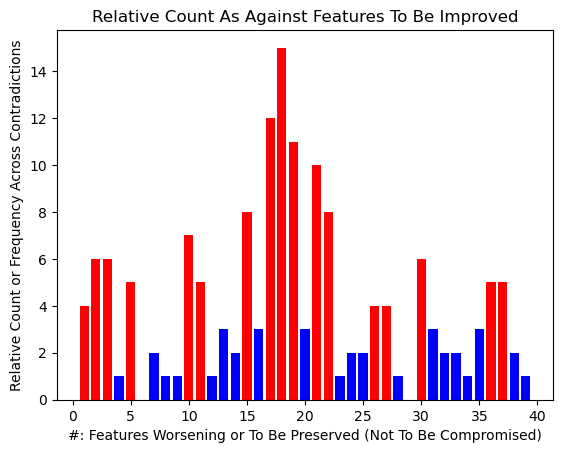
1: Mass of the moving object: [’13: Stability of the object’, ’18: Brightness, Visibility’, ’22: Energy loss’, ’38: Level of automation’]
2: Mass of the non-moving object: [’10: Force’, ’16: Action time of the non-moving object’, ’17:Temperature’, ’18: Brightness, Visibility’, ’20: Energy consumption of the non-moving object’, ’21: Power’, ’22: Energy loss’, ’26: Amount of substance’, ’30: Harmful external factors’, ’35: Adaptability’]
3: Length of the moving object: [’15: Action time of the moving object’, ’17:Temperature’, ’36: Complexity of the structure’]
5: Area of the moving object: [’10: Force’, ’18: Brightness, Visibility’, ’19: Energy consumption of the moving object’, ’21: Power’]
6: Area of the non-moving object: [’16: Action time of the non-moving object’]
8: Volume of the non-moving object: [‘2: Mass of the non-moving object’, ‘3: Length of the moving object’, ’30: Harmful external factors’]
9: Speed: [’10: Force’, ’15: Action time of the moving object’, ’18: Brightness, Visibility’, ’21: Power’, ’22: Energy loss’, ’26: Amount of substance’]
10: Force: [‘3: Length of the moving object’, ‘5: Area of the moving object’, ’15: Action time of the moving object’, ’19: Energy consumption of the moving object’, ’21: Power’, ’37: Complexity of control and measurement’]
11: Tension, Pressure: [’15: Action time of the moving object’, ’17:Temperature’, ’27: Reliability’, ’36: Complexity of the structure’]
12: Shape: [’17:Temperature’]
13: Stability of the object: [‘7: Volume of the moving object’, ’19: Energy consumption of the moving object’, ’32: Convenience of manufacturing’]
14: Strength: [’18: Brightness, Visibility’, ’19: Energy consumption of the moving object’]
15: Action time of the moving object: [‘1: Mass of the moving object’, ‘3: Length of the moving object’, ‘5: Area of the moving object’, ‘7: Volume of the moving object’, ’10: Force’, ’11: Tension, Pressure’, ’17:Temperature’, ’18: Brightness, Visibility’, ’21: Power’, ’37: Complexity of control and measurement’, ’39: Productivity’]
16: Action time of the non-moving object: [‘2: Mass of the non-moving object’, ’17:Temperature’]
17:Temperature: [‘3: Length of the moving object’, ‘4: Length of the non-moving object’, ’11: Tension, Pressure’, ’12: Shape’, ’15: Action time of the moving object’, ’16: Action time of the non-moving object’, ’19: Energy consumption of the moving object’, ’27: Reliability’, ’28: Accuracy of measurement’, ’38: Level of automation’]
18: Brightness, Visibility: [‘1: Mass of the moving object’, ‘3: Length of the moving object’, ‘5: Area of the moving object’, ‘9: Speed’, ’10: Force’, ’14: Strength’, ’15: Action time of the moving object’, ’17:Temperature’, ’19: Energy consumption of the moving object’, ’25: Time loss’, ’26: Amount of substance’, ’30: Harmful external factors’, ’31: Harmful internal factors’, ’32: Convenience of manufacturing’, ’33: Convenience of use’, ’35: Adaptability’]
19: Energy consumption of the moving object: [‘5: Area of the moving object’, ’13: Stability of the object’, ’14: Strength’, ’17:Temperature’, ’18: Brightness, Visibility’, ’21: Power’, ’25: Time loss’, ’27: Reliability’, ’33: Convenience of use’]
20: Energy consumption of the non-moving object: [‘2: Mass of the non-moving object’, ’18: Brightness, Visibility’, ’31: Harmful internal factors’, ’37: Complexity of control and measurement’]
21: Power: [‘2: Mass of the non-moving object’, ‘5: Area of the moving object’, ’15: Action time of the moving object’, ’18: Brightness, Visibility’, ’19: Energy consumption of the moving object’, ’24: Information loss’, ’26: Amount of substance’, ’27: Reliability’, ’30: Harmful external factors’, ’35: Adaptability’, ’36: Complexity of the structure’, ’37: Complexity of control and measurement’]
22: Energy loss: [‘1: Mass of the moving object’, ‘2: Mass of the non-moving object’, ’17:Temperature’, ’24: Information loss’, ’34: Convenience of repair’]
24: Information loss: [’18: Brightness, Visibility’, ’21: Power’, ’22: Energy loss’]
25: Time loss: [’18: Brightness, Visibility’, ’19: Energy consumption of the moving object’]
27: Reliability: [’11: Tension, Pressure’, ’19: Energy consumption of the moving object’]
28: Accuracy of measurement: [’17:Temperature’]
29: Accuracy of manufacturing: [’10: Force’, ’17:Temperature’]
30: Harmful external factors: [‘8: Volume of the non-moving object’, ’18: Brightness, Visibility’, ’21: Power’, ’23: Material loss’, ’36: Complexity of the structure’, ’37: Complexity of control and measurement’]
31: Harmful internal factors: [‘1: Mass of the moving object’, ’18: Brightness, Visibility’, ’20: Energy consumption of the non-moving object’, ’36: Complexity of the structure’]
32: Convenience of manufacturing: [’11: Tension, Pressure’, ’22: Energy loss’]
33: Convenience of use: [’22: Energy loss’]
34: Convenience of repair: [’22: Energy loss’]
35: Adaptability: [‘2: Mass of the non-moving object’, ’19: Energy consumption of the moving object’, ’21: Power’]
36: Complexity of the structure: [‘3: Length of the moving object’, ’11: Tension, Pressure’, ’13: Stability of the object’, ’21: Power’, ’30: Harmful external factors’, ’31: Harmful internal factors’]
37: Complexity of control and measurement: [’10: Force’, ’15: Action time of the moving object’, ’20: Energy consumption of the non-moving object’, ’22: Energy loss’, ’30: Harmful external factors’]
38: Level of automation: [’17:Temperature’, ’18: Brightness, Visibility’]
39: Productivity: [’18: Brightness, Visibility’, ’19: Energy consumption of the moving object’]
1/13 1/18 1/22 1/38 2/10 2/16 2/17 2/18 2/20 2/21 2/22 2/26 2/30 2/35 3/15 3/17 3/36 5/10 5/18 5/19 5/21 6/16 8/2 8/3 8/30 9/10 9/15 9/18 9/21 9/22 9/26 10/3 10/5 10/15 10/19 10/21 10/37 11/15 11/17 11/27 11/36 12/17 13/7 13/19 13/32 14/18 14/19 15/1 15/3 15/5 15/7 15/10 15/11 15/17 15/18 15/21 15/37 15/39 16/2 16/17 17/3 17/4 17/11 17/12 17/15 17/16 17/19 17/27 17/28 17/38 18/1 18/3 18/5 18/9 18/10 18/14 18/15 18/17 18/19 18/25 18/26 18/30 18/31 18/32 18/33 18/35 19/5 19/13 19/14 19/17 19/18 19/21 19/25 19/27 19/33 20/2 20/18 20/31 20/37 21/2 21/5 21/15 21/18 21/19 21/24 21/26 21/27 21/30 21/35 21/36 21/37 22/1 22/2 22/17 22/24 22/34 24/18 24/21 24/22 25/18 25/19 27/11 27/19 28/17 29/10 29/17 30/8 30/18 30/21 30/23 30/36 30/37 31/1 31/18 31/20 31/36 32/11 32/22 33/22 34/22 35/2 35/19 35/21 36/3 36/11 36/13 36/21 36/30 36/31 37/10 37/15 37/20 37/22 37/30 38/17 38/18 39/18 39/19
EXAMPLE: The core problem solved by sensor-based light operation, especially in the context of street lighting systems, is the efficient utilization of energy while maintaining adequate illumination levels. Traditional street lighting systems often face challenges related to unnecessary energy consumption during periods of sufficient natural light, resulting in increased operational costs and environmental impact. Sensor-based light systems address this issue by introducing automation and adaptability to the lighting infrastructure. Traditional street lights operate continuously, consuming energy even during daylight or when the illumination is not required. Fixed-time lighting schedules in traditional systems do not adapt to changes in weather conditions, seasonal variations, or sudden increases in ambient light. Fixed-time lighting may result in inefficient resource utilization, with energy being consumed when illumination is not essential. Continuous operation may lead to higher maintenance costs and more frequent replacements of bulbs or components. Continuous illumination during periods of low demand contributes to adverse effects on the environment apart from adding to the cost of operation.
Contradiction (20/18): Reduce the energy consumption or requirements (20) without compromising on the brightness or visibility (18)
Solution: The periodic action principle allows the light to turn on only when darkness reaches a certain level, reducing energy consumption by aligning operation with actual illumination needs. Sensor-based systems incorporate light sensors that detect ambient light levels. When sufficient natural light is present, the street lights can dim or turn off, reducing energy consumption during periods of low demand. Sensors, such as photocells or infrared detectors, enable the street lights to adjust their intensity or switch on/off based on real-time environmental changes. This adaptability ensures that the lighting system responds dynamically to varying conditions. By reducing the operating hours through sensor-based control, the wear and tear on components are minimized. This can extend the lifespan of bulbs and other elements, leading to reduced maintenance costs over time. The periodic action principle enables automatic adaptation to changing darkness levels without the need for manual intervention, providing convenience and efficiency.
Sensor-based systems can dim or turn off lights when the ambient light levels are sufficient. This helps making lighting infrastructure more environmentally friendly. Sensor-based systems optimize resource utilization by aligning the operation of street lights with actual lighting needs. This ensures that energy is used efficiently, reducing waste and associated costs. In summary, sensor-based light operation in street lighting systems addresses the core problem of inefficient energy consumption by introducing adaptability, automation, and real-time responsiveness to ambient light conditions. This leads to improved energy efficiency, reduced operational costs, and a more environmentally sustainable approach to street lighting.