

29: PNEUMATICS AND HYDRAULICS (Pneumatics and Hydraulics Construction): (A) Replace solid parts of an object (or system) with inflated parts filled with a gas or liquid or foam. These parts can then use pneumatic (using gas) or hydrostatic (using liquid) cushions/principles. (B) Reduce weight using bouyancy or floating properties of the environment (C) Use negative or atmosphere pressure
EXAMPLE: Hovercraft, Inflatable Mattresses, Water-filled barriers used for flood control or as temporary barriers during events, Air-cushioned packaging materials to protect fragile items during shipping, Submersible vessels or submarines that control their buoyancy by adjusting the amount of water in ballast tanks, Floating platforms for offshore structures that utilize buoyancy to support heavy loads, Vacuum-sealed food packaging to extend shelf life and prevent spoilage, Vacuum grippers in robotic systems for picking up and holding objects with varying shapes, Foam fire extinguishers that use a combination of liquid foam and gas to suppress fires, Foam-filled cushions or padding for impact absorption in sports equipment or automotive applications etc
SYNONYMS: Pneumatics and Hydraulics Construction
ACB:
“Pneumatics and Hydraulics” principle suggests using gases or liquids (pneumatics or hydraulics) to perform various functions within a system. Both pneumatic (gas-based) and hydraulic (liquid-based) systems are known for their ability to transmit energy efficiently and perform mechanical work. Pneumatics and hydraulics involve the use of gases or liquids to transmit power and control mechanical components within a system. Fluid-based systems are known for their ability to efficiently transmit power over long distances without the need for complex mechanical linkages. Pneumatic and hydraulic systems are often used in automation and control applications. The pressure of gases or liquids can be manipulated to control the movement of various components in a controlled and precise manner.
In some cases, using fluids can reduce wear and friction compared to traditional mechanical systems, leading to increased reliability and longevity. Practical applications of this principle might include pneumatic or hydraulic actuators in machinery, hydraulic brakes in vehicles, hydraulic lifts, pneumatic tools, and various automated systems that rely on fluid power.
The inflatable life jacket, also known as an aircraft safety jacket or life vest, relies on a gas inflation system to provide buoyancy in the water. While various inventors and designers have contributed to the development of life jackets over the years, one notable figure associated with its invention is Peter Markus. Peter Markus, a German inventor, is credited with the invention of the inflatable life jacket in the 1920s. In 1928, Markus patented his design for an inflatable life jacket that could be rapidly inflated using a gas canister. Peter Markus’s design marked a significant advancement in life jacket technology, and modern inflatable life jackets continue to incorporate improvements in materials, design, and activation mechanisms to enhance safety in various environments, including aviation and maritime activities.
The key innovation of Markus’s design was the use of a gas canister to quickly inflate the life jacket when needed. This allowed for swift deployment and ensured that individuals could have a buoyant device readily available in emergency situations. The life jacket typically consists of an outer covering (made of durable and water-resistant materials) and an inflatable bladder. The bladder is connected to a gas cylinder or canister containing a compressed gas, such as air or a mixture of gases.
Inflatable life jackets can have manual or automatic activation mechanisms. Manual activation involves pulling a cord or toggling a lever to release the gas into the bladder. Automatic activation is triggered by contact with water, which activates a mechanism to release the gas. When the activation mechanism is triggered, the compressed gas is released from the canister into the inflatable bladder. This rapid inflation provides buoyancy to the individual wearing the life jacket. Once inflated, the life jacket provides buoyancy to keep the wearer afloat in the water. The bladder is designed to encircle the wearer’s upper body, helping to keep their head above water.
Inflatable life jackets often come with adjustable straps and fittings to secure the jacket comfortably around the wearer. This ensures a snug fit and helps maintain the life jacket’s position on the individual. Many life jackets also include additional features such as a whistle for signaling and reflective strips for increased visibility, especially in low-light conditions.
Hydraulic systems are extensively used for lifting and handling heavy objects due to their ability to generate substantial force and provide precise control. 1. Hydraulic Jacks: Hydraulic jacks are commonly used for lifting heavy vehicles, machinery, or structures. Hydraulic jacks consist of a hydraulic cylinder, a pump, and a system of valves. When the pump is operated, it forces hydraulic fluid into the cylinder, causing a piston to move and lift the heavy object. The force applied to the piston is transferred to the object being lifted. 2. Hydraulic Cranes: Hydraulic systems are integral to the operation of hydraulic cranes used for lifting and moving heavy loads on construction sites or in industrial settings. Hydraulic cranes utilize hydraulic cylinders and pumps to control the boom’s elevation, extension, and rotation. The hydraulic system provides the force necessary for lifting heavy objects and enables precise positioning.
3. Forklifts: Forklifts, used in warehouses and industrial facilities, rely on hydraulic systems for lifting and carrying heavy palletized loads. Forklifts are equipped with hydraulic cylinders that control the vertical movement of the fork assembly. Hydraulic pressure is applied to lift the forks, allowing for the easy and controlled handling of heavy loads. 4. Hydraulic Presses: Hydraulic presses are employed for tasks such as metal forming, stamping, and molding in industries. Hydraulic presses use hydraulic cylinders to exert a high force for shaping or compressing materials. The hydraulic system provides precise control over the force applied, making it suitable for heavy-duty forming operations. 5. Construction Equipment: Various construction equipment, such as bulldozers, excavators, and backhoes, use hydraulic systems for lifting, digging, and moving heavy materials. Hydraulic cylinders and motors power the movement of different components in construction equipment, allowing for the manipulation of heavy objects and efficient excavation.
Hydraulic systems can generate significant force, making them capable of lifting and handling extremely heavy loads. Hydraulic systems provide precise control over the movement and positioning of heavy objects, ensuring accuracy and safety. Hydraulic systems are versatile and can be adapted to various heavy lifting applications, making them suitable for a wide range of industries. Hydraulic systems are efficient in converting hydraulic pressure into mechanical force, making them energy-efficient for heavy lifting tasks. Hydraulic systems are designed with safety features, such as pressure relief valves, to prevent overloading and ensure safe operation during heavy lifting activities. To conclude, hydraulic systems are crucial in the field of heavy lifting due to their ability to provide the necessary force, control, and adaptability required for lifting and moving substantial loads in various industries.
This principle could also refer to the systems where a small force could be amplified referred to as a mechanical advantage system. There are various mechanisms and devices that utilize mechanical advantage to make tasks easier or more efficient: Levers: Levers consist of a rigid bar (lever arm) that pivots around a fixed point (fulcrum). Depending on the placement of the effort force, load force, and fulcrum, levers can provide mechanical advantage. Gears: Gears are toothed wheels that mesh together, and they can be used to transmit motion and force. Different-sized gears in a system can create mechanical advantage. Hydraulic Systems: Hydraulic systems use the incompressibility of fluids to transmit force. Applying a small force to a small piston can generate a larger force on a larger piston, providing mechanical advantage. Steering Systems: Power steering systems in cars, as you mentioned, use hydraulic or electric systems to assist in turning the steering wheel, providing the driver with a mechanical advantage. Pulleys: Pulleys are used to redirect force or lift loads. Multiple pulleys in a system can provide mechanical advantage.
The concept of a vehicle that could move over both land and water on a cushion of air dates back to the early 20th century. The practical development of hovercraft is often attributed to Sir Christopher Cockerell, a British engineer. In the late 1950s, Cockerell patented the idea of a vehicle that could ride on a cushion of air, reducing friction and allowing it to travel over various surfaces. The first operational hovercraft, known as the SR.N1 (Saunders-Roe Nautical 1), was built and successfully tested in 1959 by the British engineer Christopher Cockerell. The SR.N1 had a rubber skirt around its base to trap the air, creating a cushion that allowed it to hover over various terrains, including water and land. This innovation marked the beginning of practical hovercraft development.
Hovercraft operate on the principle of a cushion of air that is generated by large fans. Hovercraft have large fans that create a high-pressure area beneath the vehicle. This pressure lifts the craft off the ground or water surface. To maintain the cushion of air, hovercraft are equipped with a skirt, usually made of flexible material, which surrounds the base of the craft. The skirt traps the high-pressure air, preventing it from escaping. It typically have propellers or other propulsion systems to move the vehicle forward or backward. It use rudders, air vanes, or other steering mechanisms to control direction. It can travel over a variety of surfaces, including water, mud, sand, ice, and grass, making them highly versatile for both military and civilian applications. It can reach areas that are difficult for traditional boats or vehicles, such as marshes, swamps, and shallow waters.
The cushion of air beneath the hovercraft reduces friction with the surface, allowing for smooth travel and maneuverability. They are valuable for search and rescue operations, especially in environments with changing water levels or challenging terrains. They have been used for military purposes due to their ability to operate in diverse conditions, providing rapid troop deployment and amphibious capabilities.
Hydraulic systems are commonly used in cranes to provide the force and control needed for lifting heavy loads. The basic components of a hydraulic system in a crane include a hydraulic pump, hydraulic fluid, hydraulic cylinders, and control valves. The pump pressurizes hydraulic fluid, typically oil, creating a flow of pressurized fluid. The pressurized hydraulic fluid is then directed through hydraulic lines to various hydraulic cylinders. These cylinders are connected to different parts of the crane’s structure. When the pressurized fluid enters a hydraulic cylinder, it pushes a piston, converting hydraulic energy into mechanical force. The flow of hydraulic fluid to the cylinders is controlled by valves. These valves are operated by the crane operator through a control system. The hydraulic system allows for precise control of the crane’s movements, enabling it to lift, lower, swing, and position heavy loads with accuracy.
Hydraulic systems provide high force and lifting capacity, making them suitable for lifting and handling heavy loads. Hydraulic systems offer precise and smooth control, allowing operators to position loads with accuracy. The speed of hydraulic actuators can be controlled, enabling the crane to perform tasks at various speeds depending on the requirements.Hydraulic systems are versatile and can be adapted to various crane configurations, including mobile cranes, tower cranes, and crawler cranes. Hydraulic systems are known for their efficiency in converting hydraulic energy into mechanical force.
One common contradiction in crane design is the need for high lifting capacity along with precise control. Hydraulic systems address this by providing the power needed for heavy lifting while offering precise control through variable valve adjustments. Cranes often need to be versatile for various applications while being specialized for specific tasks. Hydraulic systems allow for adaptability and versatility, as the same basic hydraulic components can be used in different crane configurations.
Pneumatics and hydraulics play crucial roles in various rides and attractions at amusement parks, providing the necessary power and control for dynamic movements and effects. Hydraulic systems are often used for launching roller coasters. High-pressure hydraulic systems provide the rapid force needed to accelerate the coaster at the start of the ride. Pneumatic systems are employed in the braking systems of roller coasters. Pneumatic cylinders control the brakes, ensuring precise and rapid deceleration. Hydraulic systems are commonly used to control the descent of drop towers. The controlled release of hydraulic pressure allows for a smooth and thrilling drop experience. Pneumatic systems may be used in safety restraint mechanisms, ensuring that riders are securely held in place during the ride.
Hydraulic motion bases provide realistic movements in simulators. Hydraulic actuators tilt and move the simulator platform to simulate the sensation of motion. Pneumatic systems can be used for special effects, such as bursts of air to simulate wind or mist during certain scenes. Hydraulic systems are employed in water rides to control gates, lifts, and water flow. For example, hydraulic lifts are often used to raise boats or rafts to higher levels. Pneumatic systems may be used for water cannons and water spray effects, adding an interactive element to water rides.
Hydraulic systems can control animatronics and special effects. Hydraulic cylinders provide realistic movements for animatronic characters and elements. Pneumatic systems may be used for pop-up surprises, doors opening/closing, or other special effects to enhance the ride experience. Hydraulic systems may be used in the construction and maintenance of Ferris wheels. Hydraulic lifts can be employed for accessing the cabins during maintenance. Pneumatic systems can be used for safety features, such as locking mechanisms for cabin doors.
Pneumatic systems play a crucial role in car wash facilities, providing the necessary pressure and control for various operations within the equipment. Here’s how pneumatic systems are commonly used in car washes, particularly in the context of high-pressure washers. Pneumatic actuators, such as pneumatic cylinders, are used to control the movement of high-pressure water jets. These actuators can adjust the angle, position, and movement of the nozzles to ensure effective cleaning of different parts of the vehicle. Pneumatic valves are employed to control the release and shut-off of the high-pressure water flow. The valves are actuated by compressed air, allowing precise control over the water stream.
Pneumatic pumps are utilized to dispense soap or detergent onto the vehicle. Compressed air is used to drive the pump, creating the pressure needed to transport the cleaning solution from the storage tanks to the application nozzles. Pneumatic valves control the opening and closing of passages that allow the flow of soap or detergent. These valves are actuated by compressed air, ensuring accurate and timed dispensing. Pneumatic cylinders are employed to control the movement of brushes or scrubbers in contact with the vehicle’s surface. These cylinders provide the necessary force and control to ensure effective cleaning. Pneumatic systems include control units that manage the timing and sequencing of different cleaning operations. This ensures a systematic and thorough cleaning process. Pneumatic blowers, often driven by compressed air, are used in drying systems to remove water from the vehicle’s surface after the washing process. These blowers provide a powerful and controlled stream of air to expedite the drying process.
In a car wash, the pneumatic system works in conjunction with other components. Compressed air, generated by air compressors, serves as the energy source to actuate valves, pumps, cylinders, and other pneumatic devices. The control unit manages the timing and coordination of various components to ensure a thorough and efficient cleaning process. Pneumatic systems provide precise control over the movement of nozzles, brushes, and other cleaning elements, ensuring thorough cleaning without damaging the vehicle. Compressed air is a reliable and efficient power source, making pneumatic systems suitable for high-pressure and rapid operations in a car wash. Pneumatic systems are versatile and adaptable, allowing for a wide range of cleaning configurations and processes. Pneumatic systems are often durable and require relatively simple maintenance, contributing to the overall reliability of car wash equipment. By utilizing pneumatic systems, car wash facilities can achieve effective, efficient, and controlled cleaning processes, providing customers with a high-quality service.
1: Mass of the moving object: [‘3: Length of the moving object’, ‘5: Area of the moving object’, ‘7: Volume of the moving object’, ’17:Temperature’, ’35: Adaptability’, ’37: Complexity of control and measurement’]
2: Mass of the non-moving object: [‘4: Length of the non-moving object’, ’11: Tension, Pressure’, ’12: Shape’, ’35: Adaptability’]
3: Length of the moving object: [‘1: Mass of the moving object’, ’12: Shape’, ’14: Strength’, ’23: Material loss’, ’25: Time loss’, ’26: Amount of substance’, ’27: Reliability’, ’29: Accuracy of manufacturing’, ’32: Convenience of manufacturing’, ’33: Convenience of use’, ’39: Productivity’]
4: Length of the non-moving object: [‘2: Mass of the non-moving object’, ’25: Time loss’, ’27: Reliability’]
5: Area of the moving object: [‘1: Mass of the moving object’, ‘9: Speed’, ’12: Shape’, ’26: Amount of substance’, ’27: Reliability’]
6: Area of the non-moving object: [’29: Accuracy of manufacturing’]
7: Volume of the moving object: [‘1: Mass of the moving object’, ‘9: Speed’, ’12: Shape’, ’26: Amount of substance’, ’32: Convenience of manufacturing’, ’35: Adaptability’, ’37: Complexity of control and measurement’]
9: Speed: [‘5: Area of the moving object’, ‘7: Volume of the moving object’, ’26: Amount of substance’]
10: Force: [’26: Amount of substance’, ’29: Accuracy of manufacturing’]
11: Tension, Pressure: [‘2: Mass of the non-moving object’]
12: Shape: [‘1: Mass of the moving object’, ‘3: Length of the moving object’, ’23: Material loss’, ’35: Adaptability’, ’36: Complexity of the structure’]
13: Stability of the object: [’20: Energy consumption of the non-moving object’]
14: Strength: [‘5: Area of the moving object’, ’25: Time loss’, ’26: Amount of substance’, ’39: Productivity’]
15: Action time of the moving object: [’34: Convenience of repair’, ’36: Complexity of the structure’, ’37: Complexity of control and measurement’]
17:Temperature: [’23: Material loss’]
19: Energy consumption of the moving object: [’12: Shape’, ’36: Complexity of the structure’]
20: Energy consumption of the non-moving object: [’13: Stability of the object’]
21: Power: [’12: Shape’]
22: Energy loss: [’39: Productivity’]
23: Material loss: [‘3: Length of the moving object’, ‘7: Volume of the moving object’, ’12: Shape’, ’27: Reliability’, ’31: Harmful internal factors’]
25: Time loss: [‘3: Length of the moving object’, ’14: Strength’, ’17:Temperature’, ’36: Complexity of the structure’]
26: Amount of substance: [‘3: Length of the moving object’, ‘5: Area of the moving object’, ‘7: Volume of the moving object’, ‘9: Speed’, ’19: Energy consumption of the moving object’, ’30: Harmful external factors’, ’32: Convenience of manufacturing’, ’33: Convenience of use’, ’35: Adaptability’, ’37: Complexity of control and measurement’, ’39: Productivity’]
27: Reliability: [‘4: Length of the non-moving object’, ’23: Material loss’, ’39: Productivity’]
29: Accuracy of manufacturing: [‘3: Length of the moving object’, ‘5: Area of the moving object’, ‘6: Area of the non-moving object’]
30: Harmful external factors: [’26: Amount of substance’, ’36: Complexity of the structure’, ’37: Complexity of control and measurement’]
31: Harmful internal factors: [’24: Information loss’]
32: Convenience of manufacturing: [‘1: Mass of the moving object’, ‘3: Length of the moving object’, ‘7: Volume of the moving object’]
33: Convenience of use: [’12: Shape’, ’15: Action time of the moving object’]
34: Convenience of repair: [’15: Action time of the moving object’]
35: Adaptability: [‘2: Mass of the non-moving object’, ‘3: Length of the moving object’, ‘5: Area of the moving object’, ‘7: Volume of the moving object’, ’19: Energy consumption of the moving object’, ’21: Power’, ’36: Complexity of the structure’]
36: Complexity of the structure: [’12: Shape’, ’19: Energy consumption of the moving object’, ’23: Material loss’, ’25: Time loss’, ’30: Harmful external factors’, ’35: Adaptability’]
37: Complexity of control and measurement: [‘7: Volume of the moving object’, ’15: Action time of the moving object’, ’26: Amount of substance’, ’30: Harmful external factors’, ’32: Convenience of manufacturing’]
39: Productivity: [’14: Strength’, ’22: Energy loss’]
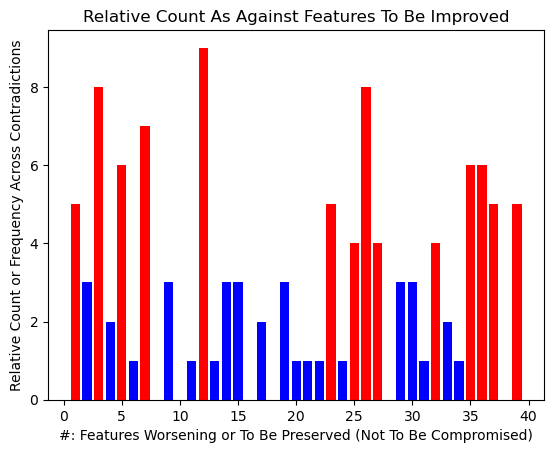
1/3 1/5 1/7 1/17 1/35 1/37 2/4 2/11 2/12 2/35 3/1 3/12 3/14 3/23 3/25 3/26 3/27 3/29 3/32 3/33 3/39 4/2 4/25 4/27 5/1 5/9 5/12 5/26 5/27 6/29 7/1 7/9 7/12 7/26 7/32 7/35 7/37 9/5 9/7 9/26 10/26 10/29 11/2 12/1 12/3 12/23 12/35 12/36 13/20 14/5 14/25 14/26 14/39 15/34 15/36 15/37 17/23 19/12 19/36 20/13 21/12 22/39 23/3 23/7 23/12 23/27 23/31 25/3 25/14 25/17 25/36 26/3 26/5 26/7 26/9 26/19 26/30 26/32 26/33 26/35 26/37 26/39 27/4 27/23 27/39 29/3 29/5 29/6 30/26 30/36 30/37 31/24 32/1 32/3 32/7 33/12 33/15 34/15 35/2 35/3 35/5 35/7 35/19 35/21 35/36 36/12 36/19 36/23 36/25 36/30 36/35 37/7 37/15 37/26 37/30 37/32 39/14 39/22
EXAMPLE: The primary purpose of shock absorbers is to enhance ride comfort, vehicle stability, and handling. Shock absorbers, also known as dampers, are crucial components of a vehicle’s suspension system. Their primary purpose is to dampen and control the oscillations and vibrations of the vehicle’s springs, which are set into motion by uneven road surfaces. Without shock absorbers, a vehicle’s suspension would allow it to bounce excessively after encountering bumps, resulting in an uncomfortable ride.
Contradiction (30/37, 33/15): Ensure that the vehicle’s wheels always maintain contact with the road with stability and comfort in case of uneven surfaces and at the same time help maintain or improve traction and control.
Solution: Shock absorbers typically consist of a piston and cylinder filled with hydraulic fluid. The piston moves up and down inside the cylinder as the vehicle encounters bumps or irregularities in the road. When the wheel hits a bump, the shock absorber compresses, resisting the upward movement of the wheel. As the wheel moves downward, the shock absorber extends, controlling the speed of the rebound. The movement of the piston through the hydraulic fluid generates heat, effectively converting kinetic energy (motion) into thermal energy (heat). The dissipation of energy helps to stabilize the vehicle by preventing excessive bouncing or swaying. They minimize body roll and sway during cornering, enhancing overall stability and safety. Achieving a smooth ride can lead to reduced vehicle stability, especially on uneven surfaces. Shock absorbers balance the need for a smooth ride with the requirement for stable and controlled vehicle dynamics. The application of shock absorbers aligns with many principles such as “Nesting” , “Pneumatics and Hydraulics” and “Parameter Changes.” By controlling the dissipation of energy over time, shock absorbers help maintain a balance between ride comfort and vehicle stability. Shock absorbers play a critical role in providing a comfortable and controlled ride by managing the energy generated during vehicle motion.