
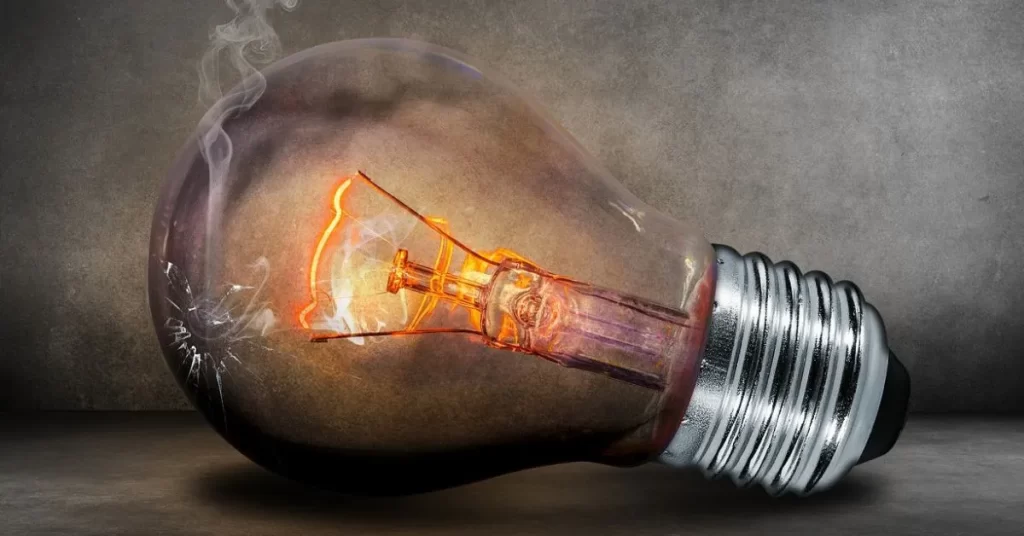
39: INERT ENVIRONMENT (A) Replace a normal environment with an inert one (B) Introduce a neutral substance or inert additives into an object (or system) or its environment (C) Carry out process (partially or fully) in a neutral or natural or calm or non-distractive or unbiased (free from undesired elements) environment.
EXAMPLE : Electric Bulbs (using Argon), Sound Absorbing Panels, Dampers, using fire retarding substances in or around objects prone to fire, Increasing the volume of powdered detergent by adding inert ingredients, Electron-beam welding in vacuum, Vacuum Packing
SYNONYMS: Calm Environment, Inert Atmosphere, Design for Environmental Sustenance
ACB:
“Inert Environment” principle refers to the concept of isolating a system or component from its external environment, particularly from factors that might negatively affect its performance or functionality. The term “inert” in this context implies an environment that does not introduce unwanted or disruptive elements into the system. The principle suggests creating conditions where a system or component is shielded or isolated from external influences that could have a detrimental impact. This could include protection from extreme temperatures, corrosive substances, electromagnetic interference, and other harmful factors. For Instance: Traditional incandescent light bulbs typically contain a filament made of tungsten enclosed in a glass bulb filled with an inert gas. The inert gas used in incandescent bulbs is usually argon. The purpose of the inert gas is to slow down the evaporation of the tungsten filament and extend the lifespan of the bulb. The filament in incandescent bulbs is made of tungsten. When the bulb is turned on, the filament heats up due to the flow of electric current. As the tungsten filament heats up, it becomes incandescent, emitting visible light. However, tungsten has a high melting point, and under normal conditions, it would evaporate quickly. To address the evaporation issue, the bulb is filled with an inert gas, commonly argon. Argon is chemically inert, meaning it doesn’t readily react with other elements, and it helps slow down the evaporation of the tungsten filament. The presence of the inert gas helps to maintain the integrity of the tungsten filament, allowing the incandescent bulb to have a longer lifespan compared to a vacuum-sealed bulb.
By introducing neutral substances or additives into objects, engineers and designers can enhance their properties, protect them from environmental factors, and extend their lifespan, improving their overall performance and durability. Introducing a neutral substance or additives into an object involves incorporating inert, protective, or antioxidant coatings or additives to enhance the object’s properties or protect it from external factors. Here’s how this process works:
Identify Object and Requirements: Determine the object or material that requires enhancement or protection and identify the specific requirements or challenges it faces. This could include factors such as corrosion, oxidation, wear and tear, or exposure to harsh environments. Select Neutral Substance or Additives: Choose neutral substances or additives that are compatible with the object’s composition and properties, as well as with the desired application requirements. Examples include inert gases (such as nitrogen or argon), protective coatings (such as polymer coatings or metal plating), or antioxidant additives (such as stabilizers or inhibitors). Design Application Method: Determine the most suitable method for applying the chosen substance or additives to the object. This could involve techniques such as spraying, dipping, brushing, or incorporating additives during manufacturing processes. Apply Coatings or Additives: Apply the selected coatings or additives to the object according to the chosen application method. Ensure thorough coverage and adherence to the object’s surface to achieve the desired level of protection or enhancement.
Monitor Performance: Monitor the performance of the object over time to assess the effectiveness of the applied coatings or additives. This may involve conducting tests, inspections, or evaluations to measure factors such as corrosion resistance, oxidation resistance, wear resistance, or other relevant properties. Iterate and Improve: Based on the performance evaluation, make any necessary adjustments or improvements to the coating or additive formulation, application method, or other factors to optimize the object’s performance and durability.
Examples of how this principle can be applied include: Protective Coatings: Applying a polymer coating to metal surfaces to prevent corrosion or oxidation, such as using epoxy coatings on steel structures exposed to harsh environments. Inert Gas Atmospheres: Introducing inert gases, such as nitrogen or argon, into storage containers or packaging to displace oxygen and prevent oxidation or spoilage of sensitive materials or products. Antioxidant Additives: Incorporating antioxidant additives into plastics, polymers, or lubricants to inhibit degradation caused by exposure to heat, light, or oxygen, prolonging their lifespan and performance.
Creating an inert environment is essential in situations where the presence of reactive elements could lead to product degradation, safety hazards, or interference with desired processes. Inert atmospheres are carefully controlled to maintain stability and prevent chemical reactions that could impact the quality or integrity of materials.An inert environment refers to a space or atmosphere that lacks chemically reactive elements or substances. In such an environment, the presence of reactive gases or elements is minimized or entirely eliminated to prevent undesired chemical reactions. The term “inert” is used to describe substances or environments that do not readily react with other substances under normal conditions. An inert environment typically involves the absence or minimal presence of chemically reactive gases such as oxygen, which is known to support combustion and oxidation reactions. The goal of creating an inert environment is to prevent or minimize undesired chemical reactions. This is particularly important in situations where reactive substances need to be protected or where specific processes require a controlled and stable environment.
Inert gases, such as nitrogen, argon, and helium, are commonly used to create inert atmospheres. These gases are chemically stable and do not readily react with other substances under normal conditions. In the food packaging industry, inert environments are created using gases like nitrogen or carbon dioxide to extend the shelf life of perishable goods by reducing oxidation and spoilage. Inert gases such as argon are used in welding to prevent oxidation of metals during the welding process. Some chemical reactions require inert environments to ensure the purity of the reaction and prevent unintended side reactions. In the production of electronic components, inert environments may be used to protect sensitive materials from oxidation and contamination. Nitrogen is sometimes used to inflate tires to create a stable and inert atmosphere inside the tire, reducing pressure fluctuations and minimizing oxidation-related issues.
Designing an inert environment often involves stabilizing the conditions within which a system operates. This stability can contribute to better reliability, predictability, and performance. The principle encourages minimizing external interference to ensure the system functions as intended. By isolating the system from external disturbances, engineers aim to improve the system’s efficiency and reduce the likelihood of failure. Creating an inert environment can lead to improved performance and longevity of a system. This is particularly relevant in situations where external factors could degrade the system over time. The principle may involve controlling and regulating the operating conditions of a system to optimize its performance. This can be achieved by minimizing variations and disturbances from the external environment. In some cases, achieving an inert environment may involve physical barriers or protective coatings, while in other cases, it may involve the use of advanced materials or technologies to mitigate external influences. For instance: Creating comfortable living spaces within urban environments while mitigating the impact of external noise from traffic, construction, or other urban activities. Soundproofing materials in residential buildings help maintain a comfortable living environment by minimizing the intrusion of external noise.
The development of sound barriers has evolved over time, and there isn’t a single individual credited with inventing the concept. The need for noise mitigation near residential areas led to the widespread adoption of sound barriers in urban planning and infrastructure development. The implementation of sound barriers became more prominent in the mid-to-late 20th century as urbanization and transportation infrastructure expanded. Researchers and engineers continuously work on improving the design and effectiveness of sound barriers to better address the challenges of noise pollution. In various regions, different types of sound barriers may be employed based on local regulations, construction requirements, and environmental considerations. The goal is to strike a balance between effective noise reduction, aesthetics, and cost-effectiveness.
The technology we are referring to is often known as a “sound barrier” or “noise barrier.” These barriers are designed to mitigate and absorb sound, particularly in areas with high traffic or frequent train passages close to residential areas. They are constructed to reduce the impact of noise pollution on nearby homes and communities. Sound barriers are typically constructed using materials with sound-absorbing properties. Common materials include concrete, metal, wood, or composite materials designed to absorb or reflect sound waves. The design of sound barriers may include features such as perforations, varying surface textures, or absorptive layers. These elements are strategically incorporated to enhance the barrier’s effectiveness in reducing sound transmission. The height of sound barriers is an important factor. Taller barriers can effectively block and absorb sound, especially when positioned between noise sources (e.g., highways, railways) and residential areas. Sound barriers are strategically placed along roads, highways, or railways to create a physical barrier between the noise source and the affected community.
Sound barriers reflect a portion of the incoming sound waves away from the protected area. The reflective surfaces of the barrier can redirect sound energy away from homes and residential spaces. The materials used in sound barriers are chosen for their ability to absorb sound energy. Absorption occurs when sound waves are converted into heat energy within the material, reducing the overall sound level. In addition to absorbing and reflecting sound, sound barriers also serve to block the line of sight between the noise source and the affected area. This visual obstruction can contribute to a psychological reduction in perceived noise.
In the food packaging industry, Modified Atmosphere Packaging (MAP) systems replace the normal atmospheric air inside a food package with a modified or inert atmosphere. The typical gases used for modification include nitrogen, carbon dioxide, and sometimes a small amount of oxygen, creating a controlled and inert environment inside the package. MAP systems introduce inert gases into the packaging environment to displace the normal atmospheric air. Nitrogen, for example, is often used as an inert gas to prevent oxidative reactions, maintaining the freshness and quality of the packaged food. MAP systems help extend the shelf life of packaged food by replacing the normal environment with an inert one, reducing the impact of external factors on food degradation. By maintaining an inert atmosphere, MAP systems contribute to the preservation of food quality and freshness, allowing consumers to recover the intended characteristics of the packaged products over an extended period. The inert environment created by MAP systems is temporary and specific to the packaging process. Once the packaging is sealed, the inert atmosphere remains in place until the consumer opens the package.
In normal atmospheric conditions, nitrogen is widely recognized for creating environments with low chemical reactivity. An inert environment is one in which the atmosphere lacks reactive or chemically active elements that could lead to undesired reactions or degradation of materials. Nitrogen, in its molecular form (N2), is chemically stable and does not readily participate in most chemical reactions under normal conditions. Nitrogen molecules consist of two nitrogen atoms (N2) bound together by a strong triple bond. This bond is difficult to break under normal conditions, rendering nitrogen chemically stable. Nitrogen is often referred to as an inert gas because, in its molecular form, it does not react with many substances. This makes nitrogen suitable for creating environments where chemical reactions need to be minimized or prevented. Nitrogen does not support combustion, and it is not readily involved in oxidation or reduction reactions. It remains relatively inert in the presence of common atmospheric conditions. Nitrogen is non-corrosive and does not react with many materials, making it suitable for applications where materials need to be protected from oxidation or corrosion. Nitrogen is used in packaging to create an inert atmosphere, reducing the oxidation and degradation of perishable goods. Nitrogen is used to inflate tires, as it provides a stable and inert environment within the tire, reducing pressure fluctuations and minimizing oxidation-related issues. Nitrogen is employed in various industrial processes to create inert atmospheres, preventing unwanted reactions and ensuring the stability of materials.
The pressurization system is crucial for the comfort and well-being of passengers and crew during flights. It allows aircraft to operate at higher altitudes, where the air is thinner, without causing discomfort or health issues associated with low cabin pressure. In aircraft, maintaining cabin pressure at a comfortable and safe level is crucial for the well-being of passengers and crew, especially during high-altitude flights where external atmospheric pressure is significantly lower. Aircraft are designed with pressurization systems to regulate and control the air pressure inside the cabin. The fuselage of the aircraft is a sealed structure designed to withstand the stresses associated with pressurization. It is constructed with materials and engineering that can withstand the pressure differential between the inside and outside of the aircraft. The aircraft is equipped with an outflow valve, which is a controlled opening in the fuselage. The outflow valve is responsible for releasing air from the cabin to maintain the desired pressure.
The pressurization system includes air compressors that draw in bleed air from the aircraft engines or the auxiliary power unit (APU). This compressed air is then directed into the cabin. Sensors continuously monitor the cabin altitude, ensuring that the pressurization system maintains a safe and comfortable pressure level. The pressurization system works to maintain a specific cabin altitude, which is the equivalent altitude inside the aircraft. The goal is to keep the cabin altitude at a level that is comfortable for passengers and crew, usually equivalent to an altitude of around 6,000 to 8,000 feet (1,829 to 2,438 meters). The pressurization system is often automated and controlled by a dedicated computer. The system adjusts the outflow valve position based on input from the cabin altitude sensors. As the aircraft climbs or descends, the system adjusts the pressure to maintain a relatively constant cabin altitude.
During descent and landing, the pressurization system gradually allows cabin pressure to equalize with the external atmospheric pressure. This prevents a sudden change in pressure when the aircraft doors are opened upon landing. Aircraft are equipped with safety features to handle emergency scenarios. In the event of a pressurization failure or loss of cabin pressure, oxygen masks are deployed for passengers and crew to ensure they have access to breathable air at high altitudes.
Carrying out the process in a vacuum involves conducting the introduction of neutral substances or additives into an object in a controlled environment where the atmospheric pressure is significantly lower than normal atmospheric pressure. Here’s how this process can be executed: Prepare Vacuum Chamber: Set up a vacuum chamber capable of creating and maintaining a low-pressure environment. The vacuum chamber should be equipped with appropriate sealing mechanisms and controls to regulate pressure levels. Load Object into Vacuum Chamber: Place the object requiring treatment or protection into the vacuum chamber. Ensure that the object is securely positioned and that there is sufficient space for the introduction of substances or additives. Evacuate Air: Begin evacuating air from the vacuum chamber using vacuum pumps or other evacuation methods. Gradually reduce the pressure inside the chamber to create a vacuum environment. Introduce Neutral Substances or Additives: Once the desired level of vacuum is achieved, introduce the neutral substances or additives into the vacuum chamber. This can be done using methods such as spraying, vapor deposition, or introducing solid materials into the chamber. Allow Treatment: Allow the treatment process to proceed while maintaining the vacuum environment. This may involve allowing the substances or additives to coat or interact with the object’s surface under reduced pressure conditions.
Monitor and Control: Continuously monitor and control the vacuum level, treatment duration, and other relevant parameters to ensure the effectiveness and consistency of the treatment process. Terminate Vacuum: Once the treatment process is complete, gradually reintroduce air into the vacuum chamber to restore normal atmospheric pressure. Ensure that the object is safely removed from the chamber once atmospheric pressure is restored. Evaluate Results: Evaluate the results of the treatment process to assess the effectiveness of the introduced substances or additives in enhancing the object’s properties or providing protection.
Carrying out the process in a vacuum offers several advantages, including: Minimizing the presence of contaminants or reactive gases that could interfere with the treatment process. Allowing for precise control over the application of substances or additives to the object’s surface. Facilitating reactions or interactions between the object and the introduced materials under controlled conditions. Overall, conducting the process in a vacuum can lead to more consistent and reliable outcomes, particularly for applications where strict environmental control is necessary.
Inert or neutral additives play a crucial role in enhancing the performance, durability, and stability of materials and products across various industries. By incorporating inert additives, manufacturers can achieve desired properties, improve processing characteristics, and extend the lifespan of their products without introducing unwanted chemical changes or reactions. Additives are substances added to materials or products in small quantities to modify or improve their properties, enhance performance, or facilitate processing. Additives can serve various functions, including stabilizing, lubricating, coloring, strengthening, or protecting the material or product. An inert or neutral additive refers to a substance that does not chemically react with the material or product it is added to and does not significantly alter its chemical composition or properties. Instead, inert additives typically provide physical or mechanical benefits without introducing chemical changes. Here are examples of inert or neutral additives and how they help:
Fillers: Fillers are inert additives commonly used to reinforce materials and improve their mechanical properties. Examples include: Calcium carbonate: Added to plastics, rubber, and adhesives to increase stiffness, reduce cost, and improve dimensional stability. Silica or talc: Used in rubber compounds, paints, and coatings to enhance abrasion resistance, stiffness, and thixotropic behavior. Antioxidants: Antioxidant additives are inert substances that inhibit or delay oxidation reactions, preventing degradation and extending the shelf life of materials or products. Examples include: Butylated hydroxytoluene (BHT) and butylated hydroxyanisole (BHA): Added to plastics, polymers, and food products to prevent oxidation-induced degradation and maintain product quality. Tocopherols (Vitamin E): Used as natural antioxidants in food products, cosmetics, and personal care products to prevent rancidity and preserve freshness. Stabilizers: Stabilizer additives are inert substances that prevent degradation or deterioration of materials due to exposure to heat, light, or other environmental factors. Examples include: UV stabilizers: Added to plastics, paints, and coatings to protect against degradation caused by ultraviolet radiation, extending product lifespan and color retention. Thermal stabilizers: Used in polymers, adhesives, and lubricants to prevent thermal degradation during processing or prolonged exposure to high temperatures. Anti-blocking Agents: Anti-blocking agents are inert substances added to materials to reduce adhesion between surfaces and prevent them from sticking together. Examples include: Silica or talc: Used as anti-blocking agents in plastic films, coatings, and packaging materials to improve handling, prevent blocking during storage or transportation, and facilitate separation of layers.
Some of the examples of operations where introducing neutral substances or additives in a vacuum environment are given below. In each of these operations, conducting the process in a vacuum environment offers advantages such as precise control over process parameters, reduced contamination, improved material quality, and enhanced performance of the final product: Thin Film Deposition: In semiconductor manufacturing or thin-film technology, various materials are deposited onto substrates to create thin films for electronic devices or optical coatings. Vacuum deposition techniques, such as physical vapor deposition (PVD) or chemical vapor deposition (CVD), are commonly used in vacuum environments to precisely control the deposition process and prevent contamination. Surface Modification: Surface treatment processes, such as plasma treatment or ion implantation, are often conducted in vacuum environments to modify the surface properties of materials. For example, introducing neutral gases or reactive species into a vacuum chamber can facilitate surface cleaning, etching, or functionalization to improve adhesion, wettability, or biocompatibility. Vacuum Metallurgy: Vacuum metallurgy processes involve melting, casting, or alloying metals under reduced pressure conditions to minimize oxidation and impurities. For instance, vacuum induction melting (VIM) or vacuum arc remelting (VAR) techniques are used in metallurgical applications to produce high-purity alloys with precise compositional control and minimal gas contamination. Coating and Surface Protection: Vacuum coating processes, such as physical vapor deposition (PVD) or chemical vapor deposition (CVD), are widely used to apply thin protective coatings onto surfaces for corrosion resistance, wear resistance, or optical enhancement. Vacuum environments prevent atmospheric contamination and ensure uniform coating thickness and adhesion. Material Synthesis: Synthesis of advanced materials, such as nanoparticles, nanocomposites, or functionalized polymers, often involves chemical reactions or physical transformations conducted in vacuum or controlled atmosphere environments. Vacuum conditions can enhance reaction kinetics, reduce impurities, and produce materials with tailored properties. Electronic Device Fabrication: Fabrication of electronic devices, such as semiconductors, microelectromechanical systems (MEMS), or organic electronics, often requires processes conducted in vacuum environments. Examples include vacuum deposition of thin-film transistors, vacuum encapsulation of OLED displays, or vacuum packaging of integrated circuits.
The bias blind spot refers to the tendency of individuals to recognize the existence of cognitive biases in others but to be less aware of or deny their own susceptibility to those biases. In other words, people tend to believe that they are less affected by biases than other individuals, even though research shows that everyone is prone to bias to some extent. The bias blind spot can hinder effective decision-making and problem-solving because it leads people to overlook their own biases, making them more vulnerable to their influence. For example, someone might acknowledge that their colleague’s judgment is influenced by confirmation bias but fail to recognize that their own judgment is similarly affected. Understanding and acknowledging the bias blind spot is crucial for improving decision-making and reducing the impact of cognitive biases. By recognizing that everyone is susceptible to biases, individuals can become more vigilant about examining their own thought processes, seeking out diverse perspectives, and implementing strategies to mitigate biases in their decision-making. These strategies may include actively considering alternative viewpoints, seeking feedback from others, and using decision-making frameworks that encourage critical thinking and objectivity.
Experimenter’s bias, also known as researcher bias or experimenter effect, refers to the unintentional influence that a researcher’s expectations or preferences can have on the outcomes of an experiment. This bias can occur at various stages of the research process, including study design, data collection, data analysis, and interpretation of results. There are several ways experimenter’s bias can manifest: Study Design: Researchers may design studies in a way that unintentionally favors certain outcomes or hypotheses. For example, they may inadvertently introduce confounding variables or biases into the experimental design that skew the results in a particular direction. Data Collection: During data collection, researchers may inadvertently influence participants’ behavior or responses through subtle cues, nonverbal communication, or unintentional reinforcement of certain behaviors. This can lead to biased data that support the researcher’s expectations. Data Analysis: Researchers may selectively analyze or interpret data in a way that confirms their hypotheses or preconceived notions, while discounting or ignoring evidence that contradicts them. This can result in biased conclusions or misleading interpretations of the results. Publication Bias: Experimenter’s bias can also influence the publication process, as researchers may be more inclined to submit or publish studies that support their hypotheses or yield statistically significant results, while neglecting studies with null or inconclusive findings.
To mitigate experimenter’s bias, researchers can take several steps: Use blind or double-blind study designs where possible, where neither the participants nor the researchers know the experimental conditions or hypotheses being tested. Standardize procedures and protocols to minimize variability and reduce the potential for unintentional bias during data collection. Pre-register studies and hypotheses to enhance transparency and accountability in the research process. Employ rigorous statistical methods and conduct robust sensitivity analyses to assess the robustness of the findings. Encourage replication studies and meta-analyses to evaluate the reliability and generalizability of research findings across different contexts and populations. By being aware of experimenter’s bias and implementing appropriate safeguards, researchers can enhance the validity, reliability, and credibility of their research findings.
1: Mass of the moving object: [’13: Stability of the object’, ’31: Harmful internal factors’]
2: Mass of the non-moving object: [’13: Stability of the object’, ’31: Harmful internal factors’, ’36: Complexity of the structure’]
3: Length of the moving object: [’22: Energy loss’]
4: Length of the non-moving object: [’13: Stability of the object’]
5: Area of the moving object: [’13: Stability of the object’, ’23: Material loss’, ’31: Harmful internal factors’]
6: Area of the non-moving object: [‘4: Length of the non-moving object’, ’17:Temperature’, ’23: Material loss’, ’30: Harmful external factors’]
7: Volume of the moving object: [’13: Stability of the object’, ’17:Temperature’, ’23: Material loss’]
8: Volume of the non-moving object: [’23: Material loss’, ’30: Harmful external factors’]
11: Tension, Pressure: [’17:Temperature’]
12: Shape: [’37: Complexity of control and measurement’]
13: Stability of the object: [‘1: Mass of the moving object’, ‘2: Mass of the non-moving object’, ‘6: Area of the non-moving object’, ‘7: Volume of the moving object’, ’16: Action time of the non-moving object’, ’22: Energy loss’, ’31: Harmful internal factors’, ’37: Complexity of control and measurement’]
15: Action time of the moving object: [’17:Temperature’, ’31: Harmful internal factors’, ’37: Complexity of control and measurement’]
16: Action time of the non-moving object: [’13: Stability of the object’]
17:Temperature: [‘5: Area of the moving object’, ‘7: Volume of the moving object’, ’11: Tension, Pressure’, ’15: Action time of the moving object’, ’26: Amount of substance’]
18: Brightness, Visibility: [’31: Harmful internal factors’]
22: Energy loss: [’13: Stability of the object’]
23: Material loss: [‘3: Length of the moving object’, ‘6: Area of the non-moving object’, ‘8: Volume of the non-moving object’, ’17:Temperature’, ’27: Reliability’]
25: Time loss: [’23: Material loss’, ’31: Harmful internal factors’]
26: Amount of substance: [’17:Temperature’, ’31: Harmful internal factors’]
27: Reliability: [’23: Material loss’]
28: Accuracy of measurement: [’31: Harmful internal factors’]
29: Accuracy of manufacturing: [’39: Productivity’]
30: Harmful external factors: [‘1: Mass of the moving object’, ‘3: Length of the moving object’, ‘6: Area of the non-moving object’, ‘8: Volume of the non-moving object’, ’10: Force’, ’33: Convenience of use’]
31: Harmful internal factors: [‘1: Mass of the moving object’, ‘2: Mass of the non-moving object’, ‘5: Area of the moving object’, ’13: Stability of the object’, ’16: Action time of the non-moving object’, ’18: Brightness, Visibility’, ’26: Amount of substance’, ’27: Reliability’, ’39: Productivity’]
33: Convenience of use: [‘6: Area of the non-moving object’, ‘8: Volume of the non-moving object’, ’30: Harmful external factors’]
36: Complexity of the structure: [‘2: Mass of the non-moving object’]
37: Complexity of control and measurement: [‘6: Area of the non-moving object’, ’12: Shape’, ’13: Stability of the object’, ’15: Action time of the moving object’]
39: Productivity: [’13: Stability of the object’, ’31: Harmful internal factors’]
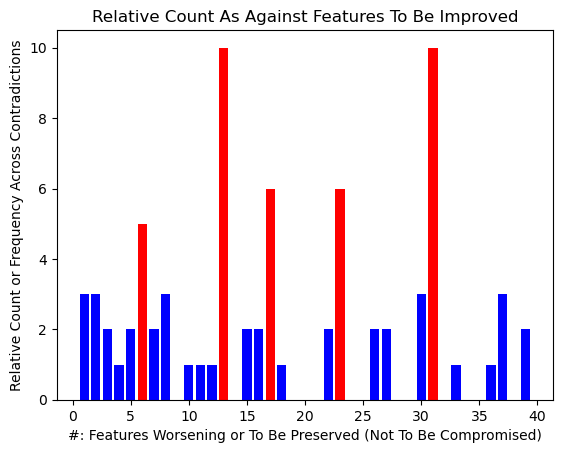
1/13 1/31 2/13 2/31 2/36 3/22 4/13 5/13 5/23 5/31 6/4 6/17 6/23 6/30 7/13 7/17 7/23 8/23 8/30 11/17 12/37 13/1 13/2 13/6 13/7 13/16 13/22 13/31 13/37 15/17 15/31 15/37 16/13 17/5 17/7 17/11 17/15 17/26 18/31 22/13 23/3 23/6 23/8 23/17 23/27 25/23 25/31 26/17 26/31 27/23 28/31 29/39 30/1 30/3 30/6 30/8 30/10 30/33 31/1 31/2 31/5 31/13 31/16 31/18 31/26 31/27 31/39 33/6 33/8 33/30 36/2 37/6 37/12 37/13 37/15 39/13 39/3
EXAMPLE: The concept of soundproofing and acoustics has been understood and applied for many years. While the technologies and materials have evolved, the fundamental principles have been in use for a long time. The specific invention or discovery of soundproofing techniques doesn’t have a single date or origin; it has been a gradual development over the years. To provide optimal acoustics for performances and prevent sound leakage. To create a controlled acoustic environment for recording music and audio. For enhancing the audio experience and preventing sound disturbances to neighboring spaces. To ensure privacy and clear communication during meetings. To reduce noise from adjacent rooms or external sources. Modern advancements in materials and technologies continue to refine and improve soundproofing solutions for various applications.
Contradictions (15/31, 22/13): Providing an immersive audio experience within a space (such as a home theater) while preventing the transmission of sound that could disturb nearby residents or spaces. Balancing the need for privacy (31) within a space (such as a theater or conference room) with the desire for transparency or openness (15). Achieving optimal acoustics within a performance space while simultaneously controlling and minimizing external noise or disturbances (22/13).
Solution: The goal is to create spaces where sound is controlled, providing an optimal environment for the intended activities. The implementation of soundproofing technologies in theaters and other spaces primarily aims to resolve contradictions related to the control and management of sound. Soundproofing technologies allow for the creation of private, acoustically controlled environments without sacrificing transparency or architectural openness.
Effective soundproofing in movie theaters is crucial to providing an immersive and undisturbed cinematic experience for the audience while preventing sound leakage that could disturb adjacent spaces. The combination of these techniques creates a controlled acoustic environment within the theater.
Soundproofing in movie theaters involves a combination of architectural design, construction materials, and acoustic treatments to create an environment that minimizes the transmission of sound both within and outside the theater. Construction of double-studded or double-layered walls helps to create a barrier that reduces sound transmission. The space or air gap between the walls adds an additional layer of insulation. Techniques such as resilient channels or isolation clips may be used to isolate the structure from the building, preventing vibrations and impact noise from traveling through the walls. Creating floating ceilings and floors using resilient materials minimizes the transmission of sound between different levels of the theater. This can involve the use of isolating materials or structural elements to decouple the ceiling and floor from the building structure. Installing high-density insulation materials in the walls, ceiling, and floor helps absorb sound and reduce the transmission of airborne noise. Common materials include fiberglass, mineral wool, and foam. Specialized doors and windows with multiple layers of glass and soundproofing materials prevent sound leakage. Effective sealing with weather stripping ensures airtight closures, minimizing sound transmission.
Strategic placement of acoustic panels on walls helps absorb sound reflections and reduces reverberation within the theater. Placing bass traps in corners absorbs low-frequency sound, preventing it from building up and causing disturbances. Carpeting helps absorb sound and reduces the impact noise created by footsteps. Soft materials like curtains and drapes also contribute to sound absorption. Installing duct silencers in the HVAC system minimizes the noise generated by ventilation and air conditioning. Using vibration isolation techniques for HVAC equipment prevents the transmission of vibrations through the building structure. Selecting seats with built-in acoustic properties, such as absorbing materials or design features, can contribute to sound control within the theater. Use of directional speakers and advanced sound systems helps focus sound toward the audience, reducing the dispersion of sound to neighboring areas.