

27: DISPOSE : (A) Replace an expensive object (or a system) with a cheap or inexpensive one (with or without introducing multiple copies), compromising required and/or other properties (i.e., longevity, durability)
EXAMPLE: Diapers, Disposable Plastic or Paper Tableware/Cups/Containers, Mousetraps, Match Sticks, Disposable Cameras/Pens, Ice Box (instead of a refrigerator), Disposable Medical Supplies (Sanitized Papers/Tissues/Wipes, Face Masks, Gloves etc), Batteries, Toothbrush, Ear Plugs, Filters, Cameras, Razors etc
SYNONYMS: Inexpensive Short-Lived Objects, Cheap Disposable, Disposables, Use and Throw, Cheap Short-Lived Objects,
ACB:
The “Inexpensive, Short-Lived Objects” principle refers to a concept where instead of investing in durable and long-lasting components, materials, or systems, one deliberately designs or utilizes items that are inexpensive and have a short operational lifespan. This principle is often employed to address specific engineering or design challenges by introducing a deliberate limitation on the longevity or durability of certain elements. The primary focus is on minimizing costs by opting for materials or components that are economical to produce, even if they have a shorter lifespan. The principle encourages simplifying designs and components, avoiding unnecessary complexity or durability that may increase costs.
For Instance : Disposable Cameras: After capturing a set number of photos, disposable cameras are often discarded. The film inside the disposable camera can be processed to retrieve the captured images. Single-Use Medical Instruments: Instruments used in certain medical procedures are often discarded after a single use. Efforts may involve designing instruments that can be safely sterilized and reused, reducing medical waste. Single-Use Plastic Packaging: Packaging is discarded after the product is unpacked. Efforts involve recovering and recycling plastic waste to reduce environmental impact. Disposable Diapers: Used diapers are discarded. The trend includes the development of biodegradable or compostable diapers to reduce environmental impact. Disposable Coffee Cups: After use, disposable coffee cups are discarded. Initiatives focus on recovering and recycling paper-based cups to reduce environmental impact.
Disposable items are products intended for one-time or limited use, typically designed to be discarded after use. These items are often convenient, practical, and designed for specific purposes. Short-lived objects may be replaced rather than repaired, reducing maintenance efforts and associated costs. Short-lived objects allow for easier adaptation to new technologies or upgrades since they can be replaced without significant cost implications. While emphasizing shorter lifespans, there’s a potential drawback related to increased waste. Sustainable practices may involve considerations for recycling or disposal. In rapidly advancing fields, using short-lived objects can facilitate quicker integration of emerging technologies without being constrained by long-lasting components. In situations where the durability of components is uncertain or subject to rapid change, opting for inexpensive and short-lived objects can be a risk mitigation strategy.
At an abstract level, the “Inexpensive, Short-Lived Objects” principle represents a deliberate design choice to prioritize cost-effectiveness and adaptability over durability and longevity. This principle encourages the intentional use of materials, components, or systems that are affordable to produce and have a limited operational lifespan. The abstract interpretation involves a strategic decision to sacrifice long-term durability for advantages such as reduced costs, simplified designs, and enhanced adaptability to changing conditions. Opting for inexpensive materials or components to minimize production costs and resource expenditures. Emphasizing the ability to quickly adapt to changes, upgrades, or emerging technologies without being burdened by long-lasting and potentially obsolete components. Focusing on simplicity in design and construction to avoid unnecessary complexity and associated costs. Acknowledging that short-lived objects may be replaced rather than repaired, leading to potential savings in maintenance and repair expenses.
Managing risks associated with uncertainties in technology, market conditions, or product requirements by choosing components with a shorter lifespan. Balancing economic considerations with environmental concerns, recognizing that a shorter lifespan may lead to increased waste and considering sustainable practices. Embracing the capacity to quickly integrate new technologies or upgrades due to the replaceability of short-lived objects.
The “Inexpensive, Short-Lived Objects” principle can be applied to resolve various business and technical contradictions. Balancing the need for cost-efficient production with the desire for products that have a long lifespan. Opting for inexpensive materials and components with a shorter lifespan to reduce production costs. Struggling to quickly adapt to changing market demands while being committed to long-term investments in durable products. Choosing short-lived objects that can be easily replaced or upgraded to meet evolving market needs. Balancing the need for competitive pricing with the desire to use high-quality, durable components.
Prioritizing cost-effectiveness by using less expensive and shorter-lived materials without compromising basic functionality. The tension between the need for rapid product development cycles and the desire for products with a longer lifespan. Embracing short-lived objects to facilitate quicker product development cycles and technological updates. The challenge of creating systems or products that are adaptable to change while using long-lasting components. Designing systems with short-lived components to enhance adaptability and flexibility.
Balancing the desire for simplified, easy-to-maintain designs with the use of complex, durable components. Choosing less complex, inexpensive components that align with a simplified design approach. The tension between minimizing maintenance efforts and using components with long operational lifespans. Introducing short-lived components to simplify maintenance tasks and reduce associated costs. Struggling to keep up with rapid technological advancements while investing in long-lasting technology. Employing short-lived objects to facilitate easier integration of new technologies and upgrades. Addressing environmental concerns related to the extended lifespan of products. Introducing short-lived objects with considerations for recycling and environmental sustainability.
King Camp Gillette is credited with the invention of the first safety razor. The concept of the safety razor involves a disposable razor blade that is attached to a handle. King Camp Gillette patented the safety razor design in 1901. The key innovation was the use of a thin, double-edged, disposable blade that could be easily replaced when it became dull i.e. intentionally creating objects or components that are expected to be replaced frequently due to wear and tear. The Gillette Safety Razor Company, founded by Gillette, began mass-producing these razors in 1903. Initially, the razors were sold at a low cost, with the idea that the company would make a profit from selling replacement blades. The disposable blade concept was revolutionary. Prior to this, razors were often not very safe, and honing or sharpening blades was a common practice. Gillette’s invention made shaving safer, more convenient, and more affordable for a wider population.
The safety razor consists of a handle and a disposable, double-edged blade. The blade is attached to the razor head, which is designed to provide a safe shaving experience. When the blade becomes dull, it can be easily replaced with a new one. The safety razor design has stood the test of time and remains a popular choice for many individuals who prefer a traditional shaving experience. The concept of using disposable blades ensures a sharp cutting edge with each replacement, reducing the need for frequent sharpening. Despite the advent of electric shavers and cartridge razors, many people appreciate the simplicity, effectiveness, and cost efficiency of the safety razor. The safety razor design addresses safety concerns with its protective head and provides a convenient way to replace dull blades. The disposable blade concept ensures that users can easily and affordably replace blades without the need for sharpening. By using cheap and short-living objects, resources are used more efficiently, as there is less waste of materials and energy in the production process. It promotes simplicity in design by focusing on the functionality of the object rather than its long-term durability.
In the printing industry, ink cartridges are often designed to be replaced regularly, following the principle of cheap and short living objects. Certain types of packaging, utensils, and containers are designed to be inexpensive and used for a short period before disposal. It is about balancing the need for durability with the need for cost efficiency with the goal of minimizing costs. Critical systems or components may require a different approach to ensure reliability and safety. Additionally, the environmental impact of disposable items should be carefully considered in the design process.
Disposition Effect is the bias observed in financial decision-making and refers to the tendency of investors to sell assets that have increased in value (winners) and hold onto assets that have decreased in value (losers). In other words, individuals tend to “dispose” of winning investments too early and hold onto losing investments for too long. The disposition effect can lead to suboptimal investment outcomes by causing investors to realize gains prematurely and hold onto losses in the hope of a rebound.
1: Mass of the moving object: [’14: Strength’, ’27: Reliability’, ’28: Accuracy of measurement’, ’30: Harmful external factors’, ’32: Convenience of manufacturing’, ’34: Convenience of repair’]
2: Mass of the non-moving object: [’14: Strength’, ’16: Action time of the non-moving object’, ’34: Convenience of repair’]
4: Length of the non-moving object: [’32: Convenience of manufacturing’]
6: Area of the non-moving object: [’30: Harmful external factors’]
7: Volume of the moving object: [’30: Harmful external factors’]
8: Volume of the non-moving object: [’30: Harmful external factors’]
9: Speed: [’27: Reliability’, ’34: Convenience of repair’, ’37: Complexity of control and measurement’]
10: Force: [’14: Strength’]
11: Tension, Pressure: [’15: Action time of the moving object’, ’31: Harmful internal factors’]
13: Stability of the object: [’15: Action time of the moving object’, ’18: Brightness, Visibility’, ’20: Energy consumption of the non-moving object’, ’21: Power’, ’25: Time loss’, ’31: Harmful internal factors’]
14: Strength: [‘2: Mass of the non-moving object’, ’15: Action time of the moving object’, ’26: Amount of substance’, ’28: Accuracy of measurement’, ’29: Accuracy of manufacturing’, ’34: Convenience of repair’, ’37: Complexity of control and measurement’]
15: Action time of the moving object: [’11: Tension, Pressure’, ’14: Strength’, ’23: Material loss’, ’29: Accuracy of manufacturing’, ’32: Convenience of manufacturing’, ’33: Convenience of use’, ’34: Convenience of repair’]
16: Action time of the non-moving object: [‘2: Mass of the non-moving object’, ’23: Material loss’, ’27: Reliability’]
17:Temperature: [’32: Convenience of manufacturing’, ’33: Convenience of use’, ’35: Adaptability’, ’37: Complexity of control and measurement’]
18: Brightness, Visibility: [’13: Stability of the object’]
19: Energy consumption of the moving object: [’27: Reliability’, ’30: Harmful external factors’, ’36: Complexity of the structure’]
20: Energy consumption of the non-moving object: [‘2: Mass of the non-moving object’, ’13: Stability of the object’, ’23: Material loss’]
21: Power: [‘2: Mass of the non-moving object’, ’23: Material loss’]
22: Energy loss: [’23: Material loss’]
23: Material loss: [’15: Action time of the moving object’, ’16: Action time of the non-moving object’, ’20: Energy consumption of the non-moving object’, ’21: Power’, ’22: Energy loss’, ’34: Convenience of repair’]
24: Information loss: [’33: Convenience of use’]
26: Amount of substance: [‘2: Mass of the non-moving object’, ’32: Convenience of manufacturing’, ’36: Complexity of the structure’, ’37: Complexity of control and measurement’, ’39: Productivity’]
27: Reliability: [’16: Action time of the non-moving object’, ’19: Energy consumption of the moving object’, ’30: Harmful external factors’, ’33: Convenience of use’, ’37: Complexity of control and measurement’, ’38: Level of automation’]
28: Accuracy of measurement: [’22: Energy loss’, ’36: Complexity of the structure’]
29: Accuracy of manufacturing: [‘2: Mass of the non-moving object’, ’14: Strength’, ’15: Action time of the moving object’]
30: Harmful external factors: [‘1: Mass of the moving object’, ‘6: Area of the non-moving object’, ‘8: Volume of the non-moving object’, ’19: Energy consumption of the moving object’, ’27: Reliability’]
31: Harmful internal factors: [’11: Tension, Pressure’, ’13: Stability of the object’, ’37: Complexity of control and measurement’]
32: Convenience of manufacturing: [‘2: Mass of the non-moving object’, ‘4: Length of the non-moving object’, ’12: Shape’, ’15: Action time of the moving object’, ’17:Temperature’, ’18: Brightness, Visibility’, ’19: Energy consumption of the moving object’, ’21: Power’, ’36: Complexity of the structure’]
33: Convenience of use: [’17:Temperature’, ’24: Information loss’, ’27: Reliability’]
34: Convenience of repair: [‘1: Mass of the moving object’, ‘2: Mass of the non-moving object’, ’15: Action time of the moving object’, ’23: Material loss’]
35: Adaptability: [’17:Temperature’, ’38: Level of automation’]
36: Complexity of the structure: [’19: Energy consumption of the moving object’, ’26: Amount of substance’, ’32: Convenience of manufacturing’, ’33: Convenience of use’]
37: Complexity of control and measurement: [‘1: Mass of the moving object’, ’12: Shape’, ’14: Strength’, ’17:Temperature’, ’24: Information loss’, ’26: Amount of substance’, ’27: Reliability’]
38: Level of automation: [’21: Power’, ’27: Reliability’, ’35: Adaptability’, ’37: Complexity of control and measurement’]
39: Productivity: [‘2: Mass of the non-moving object’, ’37: Complexity of control and measurement’]
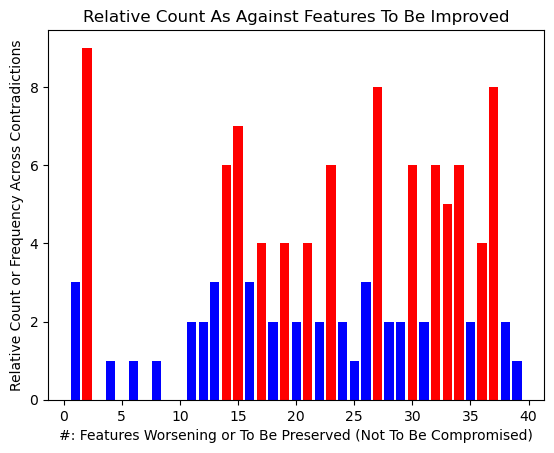
1/14 1/27 1/28 1/30 1/32 1/34 2/14 2/16 2/34 4/32 6/30 7/30 8/30 9/27 9/34 9/37 10/14 11/15 11/31 13/15 13/18 13/20 13/21 13/25 13/31 14/2 14/15 14/26 14/28 14/29 14/34 14/37 15/11 15/14 15/23 15/29 15/32 15/33 15/34 16/2 16/23 16/27 17/32 17/33 17/35 17/37 18/13 19/27 19/30 19/36 20/2 20/13 20/23 21/2 21/23 22/23 23/15 23/16 23/20 23/21 23/22 23/34 24/33 26/2 26/32 26/36 26/37 26/39 27/16 27/19 27/30 27/33 27/37 27/38 28/22 28/36 29/2 29/14 29/15 30/1 30/6 30/8 30/19 30/27 31/11 31/13 31/37 32/2 32/4 32/12 32/15 32/17 32/18 32/19 32/21 32/36 33/17 33/24 33/27 34/1 34/2 34/15 34/23 35/17 35/38 36/19 36/26 36/32 36/33 37/1 37/12 37/14 37/17 37/24 37/26 37/27 38/21 38/27 38/35 38/37 39/2 39/37
EXAMPLE: The basic problem that is to be solved is the need for convenient and accurate monitoring of blood glucose levels in individuals with diabetes. People with diabetes must regularly measure their blood glucose levels to manage their condition effectively. Glucose test strips exemplify an inexpensive and disposable technical system that significantly improves the convenience of blood glucose monitoring for individuals with diabetes. Simultaneously, the reliability of measurements is increased through the disposability, accuracy, and consistency of these test strips, contributing to effective diabetes management.
Contradiction (33/27): Improve the convenience of use (33) of the diagnostics while also increasing or not compromising on the reliability (27)
Solution: One example of an inexpensive disposable technical system where the convenience of use is improved while also increasing reliability is the glucose test strip used in blood glucose monitoring devices for diabetes management. Glucose test strips are designed to be user-friendly, allowing individuals with diabetes to easily apply a small blood sample to the strip using a lancet. The test strips provide rapid results, allowing users to monitor their blood glucose levels in a matter of seconds. This quick feedback enhances the overall convenience of self-monitoring. Glucose test strips are small and portable, making them easy to carry, store, and use anywhere. This portability contributes to the convenience of managing diabetes on the go.
Modern glucose test strips are engineered for high accuracy, providing reliable measurements of blood glucose levels. This accuracy is crucial for individuals to make informed decisions about insulin dosage and overall diabetes management. The disposable nature of these test strips ensures consistent performance for each use, eliminating the risk of contamination or degradation that could impact the reliability of results. Since the test strips are disposable, there is a lower risk of contamination from residual blood or other substances. This contributes to the reliability of measurements and reduces the potential for inaccurate readings. Disposable test strips eliminate the possibility of cross-contamination between different users, ensuring that each individual receives accurate and personalized results.