

11: CUSHIONING IN ADVANCE (BEFOREHAND CUSHIONING, Emergency Measures, Fallback Options, Design for Failures): (A) Compensate for the relatively low reliability of an object (or system) with emergency measures (or fallback or countermeasure or back-up) prepared in advance (B) Incorporate a preemptive measure or protective feature into a design to avoid or minimize potential issues that may arise during the operation or use of a system.
EXAMPLE: Plastic coating for liquid containers, Back-up Parachutes, Spares, Fire Extinguishers, Air Bags, Quarantine, Vaccination, Immunity Enhancing Drugs, Impact Resistance Packaging, Redundant Parts, Data Back-up, Power Bank, Magnetic Anti-Theft Tags, Emergency Oxygen Masks in Aircrafts.
SYNONYMS: Beforehand Cushioning, Softening, Error-Proofing, Mistake-Proofing, Failsafe, Emergency Measures, Fallback Options, Design for Failures. Compensate for the relatively low reliability of an object with emergency measures (or fallback or countermeasures) prepared in advance
ACB:
“Cushioning in advance” or “Beforehand Cushioning” is a concept that suggests introducing a buffering or cushioning element to a system in anticipation of potential future problems or impacts. The goal is to prevent or mitigate negative effects before they occur. In practical terms, this involves incorporating a preemptive measure or protective feature into a design to avoid or minimize potential issues that may arise during the operation or use of a system. Consider the design of a fragile electronic device, such as a smartphone. The device is susceptible to damage if dropped, leading to issues like a cracked screen. The device is vulnerable to damage from impacts, particularly when dropped. Incorporate features like shock-absorbing materials, air pockets, or protective casing into the design of the smartphone. These features act as a cushioning mechanism that absorbs the impact energy in the event of a fall, reducing the risk of damage. Some smartphones are designed with impact-resistant cases that include materials like silicone or polymers that absorb shock upon impact. This beforehand cushioning helps protect the device from damage during accidental drops. Spell-checking tools automatically scan the text for spelling errors. They compare the words in the document against a dictionary, highlighting or suggesting corrections for words that do not match recognized spellings. In addition to spelling errors, advanced spell-checkers also detect certain grammatical errors, such as incorrect verb forms, tense usage, or subject-verb agreement. This helps users maintain grammatical accuracy in their writing. Auto-correction features automatically replace misspelled words with the most likely correct alternatives. This can be particularly helpful for quickly fixing errors while typing, reducing the need for manual corrections.
“Compensate for the relatively low reliability or failure of an object, its operations, or actions, with emergency measures prepared in advance” suggests preparing contingency plans or backup systems in anticipation of potential failures or malfunctions in a technical system. By pre-planning and implementing emergency power generation systems, facilities can compensate for the low reliability of primary power sources and maintain continuity of operations during unexpected outages or failures. This proactive approach helps minimize downtime, prevent data loss, and ensure the safety and well-being of personnel and patients in critical environments. By implementing emergency measures ahead of time, engineers can mitigate the impact of system failures and ensure continuity of operations.
Emergency Power Generation System: In critical infrastructure facilities such as hospitals, data centers, and telecommunications hubs, maintaining continuous power supply is essential. To compensate for the relatively low reliability of primary power sources, these facilities often incorporate emergency power generation systems, such as backup generators or uninterruptible power supply (UPS) systems. These emergency systems are designed to automatically activate in the event of a power outage or failure of the primary power source. Backup generators, for example, are equipped with sensors and control systems that detect power loss and initiate startup procedures to provide electricity to essential equipment and systems. Similarly, UPS systems use batteries or flywheels to provide immediate power backup while generators start up, ensuring uninterrupted operation of critical systems.
“Compensate for the harmful effects or actions on the environment caused by the system” refers to implementing measures to mitigate or offset the negative impacts that a technical system may have on the surrounding environment. By treating wastewater before it is released into rivers, lakes, or oceans, wastewater treatment plants help protect aquatic ecosystems, safeguard public health, and ensure compliance with environmental regulations. This proactive approach to environmental management demonstrates how technical systems can compensate for the harmful effects on the environment caused by human activities.This involves identifying and addressing environmental concerns associated with the system’s operation, with the goal of minimizing ecological damage and promoting sustainability.
Wastewater Treatment Plant: A wastewater treatment plant is an example of a technical system that compensates for the harmful effects on the environment caused by human activities, such as industrial processes and urban development. These plants are designed to treat and purify wastewater before it is discharged back into the environment, thereby mitigating the pollution and ecological damage that would otherwise result from the release of untreated sewage. Wastewater treatment plants utilize various processes, including physical, chemical, and biological treatment methods, to remove contaminants and pollutants from wastewater. This includes removing solids through sedimentation, breaking down organic matter through biological processes, and disinfecting the water to eliminate pathogens. Additionally, some advanced wastewater treatment plants incorporate technologies such as membrane filtration, ultraviolet disinfection, and nutrient removal systems to further enhance treatment efficiency and reduce environmental impact.
The beforehand cushioning feature helps prevent or minimize damage to the system in situations that could potentially lead to negative consequences. By addressing potential issues in advance, the reliability and durability of the system are improved. It’s essential to strike a balance in design so that the beforehand cushioning doesn’t compromise other aspects of the system, such as weight, size, or functionality. The effectiveness of the cushioning mechanism needs to be thoroughly tested and validated to ensure it provides the intended protection. Applying the “Cushioning in advance” inventive principle can lead to innovative solutions that enhance the resilience and durability of systems by proactively addressing potential challenges before they become critical issues. Traffic alert systems use real-time data and sensors to provide drivers with information about traffic conditions, road closures, accidents, and other relevant updates. This helps drivers make informed decisions and avoid potential hazards or delays. Adaptive cruise control, blind-spot monitoring, and rear cross-traffic alert systems often rely on radar technology to detect and warn the driver about potential dangers.
Airbags in cars are designed to inflate rapidly in the event of a collision, providing a cushioning effect to protect occupants from injury. When a collision occurs, sensors in the car detect the impact. These sensors measure various parameters such as deceleration, force, and angle of impact. The sensor data is processed by the car’s onboard computer, which analyzes the severity and type of impact. If the impact exceeds a certain threshold, the airbag system is activated. This usually involves igniting a small explosive charge, which rapidly inflates the airbag. The airbag inflates within milliseconds, cushioning the occupants and preventing them from hitting hard surfaces like the steering wheel, dashboard, or windows. The inflated airbag provides a soft barrier between the occupants and the interior of the car, reducing the risk of injury from impact forces. The design of airbag systems exemplifies the principle of “cushion in advance” because it anticipates the need for protection in the event of a collision and prepares for it beforehand. By deploying rapidly and inflating to provide a cushioning effect, airbags help to mitigate the severity of injuries sustained by occupants during a crash.
Neglect of probability is a cognitive bias where individuals tend to ignore or underestimate the probability of certain events occurring when making decisions. Instead, they may rely on heuristics or mental shortcuts that do not accurately reflect the statistical likelihood of outcomes. Prospect theory, which is a behavioral economic theory, suggests that people tend to weigh potential losses more heavily than potential gains, leading to biases in decision-making related to probability. Additionally, the availability heuristic, which is the tendency to judge the likelihood of events based on their availability in memory, can also contribute to neglect of probability.
For example, someone might underestimate the risk of a rare but severe event, such as a natural disaster, because it has not occurred recently or is not easily recalled from memory. Similarly, individuals might overestimate the likelihood of winning a lottery or experiencing a rare positive outcome because such events are highly salient and vivid in their minds. To overcome the neglect of probability bias, individuals can educate themselves about basic principles of probability and statistics to better understand the likelihood of different outcomes and make more rational and informed decisions that account for the true likelihood of different outcomes.
One notable incident involving airbag deployment (cushioning in advance) issues occurred with certain Honda vehicles equipped with Takata airbags. Takata airbags were found to be defective, leading to numerous injuries and fatalities worldwide. In some cases, the airbags deployed with excessive force, causing shrapnel from the inflator to rupture and spray into the vehicle cabin. One tragic example occurred in 2014 when a woman driving a Honda Accord was involved in a minor collision in California. The collision was not severe enough to warrant airbag deployment, but the Takata airbag in her vehicle deployed with such force that it ruptured and sprayed metal fragments into the cabin, resulting in her death. This incident, along with numerous others linked to Takata airbags, led to one of the largest automotive recalls in the history, affecting millions of vehicles from various manufacturers worldwide. It underscored the importance of identifying and addressing airbag defects promptly to prevent serious injuries and fatalities.
There are incidents that highlight the importance of robust engineering, effective feedback and safety mechanisms in the hotel and entertainment industry. In both the cases as given below, lack of proper safety features, inadequate emergency response, and failures in engineering contributed to tragic consequences. Since these incidents, there has been a heightened emphasis on safety standards, building codes, and emergency preparedness in public spaces, including hotels and entertainment venues: (i) On November 21, 1980, a fire broke out in the MGM Grand Hotel and Casino, Las Vegas, Nevada, USA., resulting in the death of 85 people. The fire started due to an electrical fault in a restaurant, and inadequate fire safety measures, such as the lack of sprinklers and effective communication systems, contributed to the severity of the incident. The MGM Grand fire led to changes in fire safety regulations and building codes, emphasizing the importance of proper engineering and safety measures in hotel structures. (ii) On February 20, 2003, a fire occurred during a rock concert at The Station nightclub, West Warwick, Rhode Island, USA., resulting in 100 fatalities and numerous injuries. The fire started when pyrotechnics used during the performance ignited flammable soundproofing foam around the stage. Inadequate fire safety measures, including the lack of sprinklers and proper exits, contributed to the high number of casualties. The Station nightclub fire led to increased awareness of fire safety in public venues, influencing regulations and emergency response procedures.
At an abstract level, the concept of “Beforehand Cushioning” involves proactively introducing protective or mitigating measures in a system to anticipate and counteract potential negative impacts or problems before they occur. This principle aims to build resilience into a system by incorporating features that absorb shocks, prevent damage, or address challenges preemptively. Essentially, it is about being prepared for potential issues by incorporating protective measures in advance. It involves take measures like Proactive Risk Mitigation: Identifying potential risks or challenges that a system may face and taking proactive steps to mitigate them before they manifest. Preemptive Protection: Introducing elements within the system that act as a cushion or buffer against potential disruptions, shocks, or adverse events. Enhancing Robustness: Strengthening the overall robustness and reliability of the system by integrating features that anticipate and handle uncertainties or adverse conditions. Minimizing Negative Impacts: Reducing the likelihood and severity of negative consequences by preparing the system to handle stressors or unforeseen circumstances. Strategic Design: Incorporating design elements or components strategically to provide a safety net for the system, preventing or minimizing the impact of undesirable events.
In practical terms, this inventive principle can be applied across various fields and industries. For example, in engineering, it may involve designing structures with built-in shock absorbers to withstand earthquakes. In software development, it could mean implementing error-checking mechanisms to catch potential issues before they lead to system failures. At its core, “Beforehand Cushioning” encourages a forward-thinking and preventive approach to system design and management. Auto braking systems, also known as automatic emergency braking (AEB), use sensors to detect potential collisions and can automatically apply the brakes to avoid or mitigate an impact. This technology is designed to enhance overall safety by preventing or reducing the severity of frontal collisions. Parking sensors, often utilizing ultrasonic or radar technology, help drivers navigate tight spaces by providing alerts when the vehicle is in proximity to obstacles. This aids in preventing collisions while parking and contributes to overall safety. ADAS encompasses a range of safety features, including lane departure warning, forward collision warning, and drowsiness detection. These systems use various sensors and cameras to monitor the vehicle’s surroundings and provide warnings or interventions to enhance safety. Modern car seatbelt systems often include a crucial safety feature known as a seatbelt pre-tensioner. The purpose of a seatbelt pre-tensioner is to enhance the effectiveness of seatbelts during a collision by rapidly retracting the seatbelt to reduce slack and secure the occupant in a safer seating position.
In a context of business it could be a contradiction between expanding market share vs. potential economic downturn. A company that aims to expand its market share by entering new regions or markets might face a contradiction between the desire for expansion and the potential risks associated with economic downturns in unfamiliar markets. In terms of Beforehand Cushioning, it could imply conducting thorough market research and implementing a phased market entry strategy. The company could establish partnerships with local businesses, conducts pilot projects, and monitors economic indicators. Additionally, the company could maintain a financial cushion by allocating resources for potential losses during the initial phase of market expansion. By entering markets cautiously, the company cushions itself against the impact of economic downturns or unforeseen challenges. The phased approach could allows the company to adapt its strategies based on real-time feedback and market conditions. Anticipating potential issues helps in proactively introducing measures to minimize their impact. Whether in engineering or business, this approach enhances resilience and the ability to navigate uncertainties effectively.
The term “Poka Yoke” was coined by Japanese engineer Shigeo Shingo in the 1960s. Shingo was an influential figure in the development of the Toyota Production System (TPS), which is a production methodology that emphasizes the systematic elimination of waste and continuous improvement. Poka-yoke is a Japanese term that translates to “mistake-proofing” or “error-proofing.” . The primary goal of poka-yoke is to improve the quality and reliability of a process by eliminating defects or errors at the source. The term itself is a combination of two Japanese words: Poka (ポカ): This can be translated as “inadvertent mistake” or “error.” Yoke (よけ): This means “avoidance” or “prevention.”
Shigeo Shingo advocated for the implementation of simple, effective devices or mechanisms in the production process that would prevent human errors or defects from occurring. Poka Yoke techniques involve designing processes and systems in a way that makes it almost impossible for errors to happen, or if they do occur, they are immediately detected and corrected. The philosophy of Poka Yoke aligns with broader principles of lean manufacturing and quality improvement, emphasizing proactive measures to prevent defects rather than relying solely on inspection or correction after the fact. Poka-yoke principles can be applied in various industries beyond manufacturing, such as healthcare, software development, and service industries, to enhance quality, reduce errors, and improve overall process efficiency. The term and its associated principles have become integral to discussions on quality management and continuous improvement methodologies. It refers to a set of techniques and approaches used in manufacturing and process design to prevent errors or mistakes before they occur or to immediately detect and correct them if they do happen. . Key features of poka-yoke include:
User-Friendly: Poka-yoke designs take into consideration the perspective of the workers or users to create solutions that are easy to understand and use.
The mechanism deployed on luggage trolleys at airports is often referred to as a “dead man’s brake” or a “dead man’s handle.” It is a safety feature designed to ensure that the trolley remains under control and doesn’t roll away unintentionally. The handle on the luggage trolley needs to be pulled down or held in a specific position for the trolley to move. This is the active state when the trolley is allowed to roll. The concept is similar to a dead man’s switch, where the operator needs to actively engage or hold a control for the equipment to function. In this case, the handle serves as the control. If the handle is released, or if the hands are taken off the handle, the system engages the brake or stops the trolley. This ensures that the trolley doesn’t continue moving on its own when not under direct control. The dead man’s brake system gives the user immediate control over the trolley’s movement. If there’s a need to stop suddenly or if the user loses control, releasing the handle brings the trolley to a halt.
The primary purpose of this safety feature is to prevent accidents caused by uncontrolled trolleys. It’s particularly important in busy airport environments where luggage trolleys need to be maneuvered through crowds and various obstacles. The system is designed to be user-friendly, requiring a simple action (holding the handle down) to keep the trolley in motion. This simplicity encourages users to comply with the safety feature. The implementation of dead man’s brakes or handles on luggage trolleys aligns with the broader theme of incorporating safety features in equipment used in public spaces. It enhances the safety of both users and those around them, contributing to a smoother and more secure experience in busy environments like airports.
Immediate Feedback: The goal is to provide immediate feedback when an error occurs, allowing for quick correction and preventing the continuation of the process with a mistake.
Both the treadmill safety key and lawnmower safety bar serve as safety mechanisms designed to quickly stop the respective devices in case of an emergency or when the user/operator is unable to maintain control. The safety key in a treadmill is a crucial safety feature designed to prevent accidents and injuries. It acts as an emergency stop mechanism. The safety key is typically a small, magnetic key that clips onto the user’s clothing. The other end is inserted into a designated slot on the treadmill console. When attached, the key keeps the power circuit closed, allowing the treadmill to function normally. If the user slips, falls, or encounters any issue requiring an immediate stop, the safety key is pulled away from the console. This action breaks the power circuit, causing the treadmill motor to stop instantly.
The lawnmower safety bar is a safety feature commonly found on walk-behind lawnmowers. It serves to stop the mower’s engine when released. Typically located on the handle of the lawnmower, the safety bar is designed to be easily accessible to the person operating the mower. The safety bar must be held down by the operator while mowing. When released, it interrupts the electrical circuit, cutting power to the lawnmower’s engine. Releasing the safety bar causes the lawnmower’s engine to stop almost instantly. This is useful in situations where the operator loses control or needs to stop the mower suddenly. The safety bar is a preventive measure, ensuring that the lawnmower comes to a swift stop when the operator is not in control, preventing accidents and injuries.
The automatic locking mechanism in wheelchair wheels takes advantage of the principle of inertia. When the wheelchair is not in motion, the locking system engages, preventing the wheels from moving freely. The potential physcial contradiction addressed is the need for a wheelchair to be easily movable when in use (allowing user mobility) and the need for stability and prevention of unintentional movement when not in use.
Prevention of Mistakes: Poka-yoke focuses on preventing mistakes from occurring rather than detecting and fixing them later in the process.
On January 19,2024, at least 12 schoolchildren, in the age group of 10-13 years, and two teachers died after a boat overturned in Harni Lake of Vadodara, Gujrat, India, during a school picnic. While the boat had a capacity to carry 16 passengers, police said it had 34 occupants — 30 students and four teachers — at the time of the incident. HOw can such an incident be prevented using poka yoke The tragic incident where a boat carrying schoolchildren overturned due to overloading, emphasizes the importance of implementing safety measures to prevent such accidents. Poka Yoke, a concept from Lean manufacturing that focuses on mistake-proofing or error prevention, can be applied to prevent incidents like these. For instance, Poka Yoke measures that could be considered:
(i) Implement a physical constraint that prevents exceeding the maximum capacity of the boat. For example, the boat’s design could include a physical barrier or marking indicating the maximum number of passengers allowed. (ii) Integrate an automated counting system that monitors the number of passengers boarding the boat. This system could sound an alarm or prevent the boat from starting if the passenger count exceeds the safe limit. (iii) Use clear visual indicators, such as color-coding or signage, to communicate the maximum capacity of the boat. This can help both operators and passengers easily identify the safe passenger limit. (iv) Conduct regular training programs for boat operators, teachers, and students to create awareness about the importance of adhering to the maximum capacity limits. Emphasize the potential risks and consequences of overloading.
(v) Develop and implement checklists and protocols for school trips, including specific guidelines for boarding boats. Ensure that teachers and chaperones are trained to follow these protocols diligently like implement a strict policy requiring all passengers, especially students, to wear life jackets while on the boat. Ensure that life jackets are available in sufficient quantities and sizes for all passengers. Conduct visual checks before the boat departs to ensure that every passenger, including students and teachers, is wearing a properly fitted life jacket. This can be part of the boarding process. Establish designated points for the distribution of life jackets near boarding areas. Assign responsible individuals, such as boat operators or teachers, to oversee the distribution and ensure that everyone is equipped.
(vi) Implement technology solutions, such as RFID tags or electronic ticketing systems, to automate the counting process and prevent boarding when the maximum capacity is reached. (vii) Conduct regular inspections of boats to ensure that they comply with safety standards and are equipped with the necessary Poka Yoke features. This can include checking for physical constraints and the proper functioning of automated counting system. Regularly inspect and maintain life jackets to ensure they are in good condition. Replace any damaged or worn-out life jackets promptly.
(viii) Provide teachers, chaperones, and boat operators with training on emergency response procedures in the event of an incident. This includes evacuation protocols and first aid training. Provide training sessions on the correct use of life jackets. Ensure that teachers, students, and any other individuals accompanying the students are familiar with how to wear and secure life jackets properly.
(ix) Enforce strict policies regarding boat capacities, and implement consequences for non-compliance. This can include disciplinary actions or the suspension of future trips for those who violate safety guidelines (x) Ensure that parents are well-informed about school trips, including details about transportation safety. Obtain written consent from parents and communicate the importance of adhering to safety measures.
The outlet in the sink, located at the top and right below the pipe, serves as a preventive mechanism to avoid overflow. This feature is designed to address the potential issues of water overflow that may occur due to a blocked drain or if the tap is not closed. In the event of a blockage in the drainpipe, water may accumulate in the sink. The outlet at the top acts as an emergency drainage point. Instead of allowing the water to overflow onto the countertop or floor, it directs the excess water through this outlet. If the tap is left open, water will continue to flow into the sink. In cases where the sink is filling up rapidly, the outlet provides an additional path for water to escape, preventing overflow. The hole acts as a protective mechanism to avoid potential water damage and mess in the surrounding area. Without this feature, if the sink were to fill up unexpectedly due to a blockage or an unclosed tap, the water could overflow onto the countertop, creating a mess and potentially causing damage.
The outlet functions as an automatic drainage system, allowing water to escape before it reaches a critical level. This is particularly useful in scenarios where the user may not be actively monitoring the sink, such as when the tap is left open unintentionally. Many sinks are designed with this feature, and it is often a standard part of sink design in kitchens and bathrooms. It adds an extra layer of safety and helps prevent inconvenient and potentially damaging situations. The outlet in the sink, positioned below the pipe at the top, is a proactive measure to avoid overflow scenarios. It provides a controlled pathway for excess water to drain out in case of a blockage or an open tap, protecting the surrounding area from water damage and ensuring a safer and more convenient user experience.
The mechanism preventing household appliances from operating with an open door is a safety and control feature designed to ensure user safety and proper functioning of the appliance. This control function is a crucial aspect of many household appliances, and it serves several purposes. Preventing appliances from operating with an open door helps ensure the safety of users. Certain appliances, such as ovens, washing machines, and dishwashers, may involve potentially hazardous elements or moving parts. Operating them with an open door could lead to accidents or injuries. The control function maintains the integrity of the appliance’s intended processes. For example, in an oven, cooking or baking processes require a closed environment to achieve the desired temperature and cooking conditions. Allowing the appliance to operate with an open door would disrupt these processes.
In appliances with moving parts or rotating elements, such as washing machines or dryers, operating with an open door could lead to accidents. The control function ensures that the appliance comes to a halt if the door is opened, preventing injuries and damage. Operating certain appliances with an open door could lead to energy wastage. For instance, running a dishwasher with an open door might compromise water pressure and detergent efficiency. The control function helps maintain energy efficiency by allowing the appliance to function optimally with a closed door. The control function also contributes to the longevity of the appliance’s components. Running the appliance with an open door might strain or damage certain parts, reducing the overall lifespan of the appliance.
Safety regulations and standards often mandate that certain appliances must incorporate features to prevent operation with an open door. Manufacturers implement these control functions to ensure compliance and user safety. The control function preventing household appliances from operating with an open door is a critical safety feature that safeguards users, maintains process integrity, prevents accidents, promotes energy efficiency, and contributes to the durability of the appliance’s components. This mechanism aligns with principles of user safety, appliance functionality, and industry standards
Simplicity: The solutions implemented through poka-yoke are often simple, straightforward, and easy to implement. They don’t rely on complex technologies but rather on foolproof mechanisms.
The key card-activated time switch used in hotel rooms is a clever energy-saving mechanism designed to ensure efficient use of electricity. This system involves a key card slot or holder inside the room, and its operation is tied to the presence of the guest’s key card. When a guest inserts their key card into the designated slot or holder inside the room, it activates the energy supply to the room. This is often used to power lights, air conditioning, and other electrical devices. The system is designed to detect the presence of the key card within the holder. As long as the key card is in place, the energy supply to the room remains active, allowing the guest to use the facilities. When the guest leaves the room and takes the key card with them, the system detects the absence of the key card. After a predetermined period of time, which may vary by hotel, the energy supply to the room is automatically deactivated.
The primary purpose of this system is to conserve energy when the room is unoccupied. By automatically turning off lights, air conditioning, and other electrical devices when the guest is not in the room, the hotel can significantly reduce energy consumption. Implementing key card-activated time switches helps hotels reduce their electricity bills. Since energy is only consumed when the room is occupied, the hotel can achieve cost savings and contribute to environmental sustainability. The system also promotes awareness among guests about the importance of energy conservation. When guests understand that removing their key card will turn off the lights and devices, they are more likely to practice energy-efficient behavior. Once a new guest checks in and inserts their key card, the system resets and activates the energy supply for the new occupant. This ensures a seamless and efficient transition between guests. This energy-saving solution is a practical example of how technology can be used to promote sustainability and reduce environmental impact in the hospitality industry. It aligns with the broader trend of incorporating smart and eco-friendly systems in buildings and accommodations to create more resource-efficient and environmentally conscious spaces.
The examples such as online course registration systems preventing errors in course selection and online platforms blocking the selection of overlapping courses or tickets, align with the “Preventive Action” or “Anticipatory Action.” This principle involves taking proactive measures to prevent potential issues or errors before they occur. It focuses on anticipating problems and implementing solutions to eliminate or mitigate them in advance. The system provides instantaneous feedback to students, preventing errors in course selection by notifying them if they’ve chosen an incorrect course number. The system automatically prevents the scheduling of overlapping courses, ensuring that students don’t encounter conflicts in their class schedules. Similarly, the online platform uses a user-friendly layout to prevent users from selecting conflicting options, ensuring that they cannot book tickets for overlapping events. This enhances accuracy by avoiding mistakes in the selection process. Improves efficiency by eliminating the need for manual verification and correction. Enhances user experience by providing real-time feedback and preventing frustration. This principle aligns with the TRIZ philosophy of resolving contradictions by preventing or eliminating problems rather than addressing them after they occur. It encourages the implementation of anticipatory measures to enhance system reliability and user satisfaction.
Example: (a) Designing components in a way that they only fit together in the correct orientation. (b) Using different shapes or keys to ensure that components or parts can only be assembled in the correct sequence. (c) Using colors to differentiate between similar components or to indicate correct assembly. (d) Providing clear labels or signs to guide users in the correct procedures. (e) Sensors that detect the presence or absence of components. (f) Counters that ensure the correct number of steps or actions are completed in a process. (g) Providing checklists to guide users through a process step-by-step. (h) Including clear and detailed instructions in documentation. (i) Confirmation dialog boxes that ask users to verify their intentions before executing critical actions. (j) Auto-correction features that identify and rectify errors in real-time. etc
The use of a gel sole in a shoe is an example of several principles, and it addresses specific purposes and contradictions. The gel sole provides additional cushioning and comfort to the wearer, aligning with this principle of “Cushioning” or “Softening.” Introducing a gel sole represents a change in the material properties of the shoe’s sole, addressing comfort and impact absorption. This aligns with the principle of “Parameter Change.” The primary purpose of a gel sole in a shoe is to enhance comfort by providing additional cushioning and support to the feet. Gel soles are effective at absorbing shocks and reducing the impact on the feet, making them suitable for activities that involve prolonged standing or walking. One potential contradiction in shoe design is the trade-off between providing sufficient support for the feet and ensuring comfort. The gel sole helps address this by offering a balance between support and cushioning. Another contradiction may arise between the need for impact protection and the desire for flexibility in shoe design. The gel sole can provide impact protection without compromising overall flexibility. In short, the use of a gel sole in a shoe demonstrates the application of TRIZ principles such as “Cushioning” and “Parameter Change.” It addresses contradictions related to comfort, support, and impact absorption in shoe design.
“Design for failure” is an engineering and design approach that involves intentionally creating systems or products with the expectation that some components may fail during their lifecycle. It is a proactive approach to system design that acknowledges the inevitability of failures and seeks to minimize their impact through redundancy, fault tolerance, monitoring, and automated recovery mechanisms. This approach contributes to the creation of highly reliable and resilient systems that can operate effectively in dynamic and unpredictable environments. The goal is to design in a way that minimizes the impact of failures and ensures that the overall system continues to function or can be easily restored. This concept is particularly relevant in the context of complex systems, such as software applications, cloud computing architectures, or distributed systems, where failures are inevitable. By anticipating and planning for failures, designers can create more robust, resilient, and fault-tolerant systems. “Design for failure” aligns with the principles of reliability engineering and is often associated with achieving high availability and system stability. Key aspects of “Design for failure” include:
There have been several incidents in the manufacturing industry where failures in systems, engineering, or safety measures led to significant consequences. One notable example is the Ford Pinto case/controversy (1970s). The Ford Pinto case serves as a cautionary example of the potential consequences when safety concerns are not adequately addressed in the manufacturing industry. It underscores the importance of robust engineering, effective communication channels, and ethical decision-making in ensuring the safety of products. In the aftermath of the controversy, there was increased awareness of corporate responsibility, product safety, and the need for transparency in the manufacturing and automotive industries.
The Ford Pinto was a subcompact car produced by Ford in the 1970s. The controversy arose due to safety concerns related to the design of the fuel tank. The Pinto had a design flaw where its fuel tank was susceptible to rupturing in rear-end collisions. This defect was known to Ford during the car’s development. The controversy stems from allegations that Ford management was aware of the safety issues but proceeded with production without implementing necessary safety improvements. The decision not to address the fuel tank vulnerability was influenced by cost-benefit analyses that prioritized financial considerations over safety. The lack of effective feedback mechanisms and prioritization of financial considerations over safety led to several incidents of Pinto fuel tanks catching fire in rear-end collisions. Deaths and injuries resulted from these incidents. The Ford Pinto case had significant legal repercussions for the company. It highlighted the ethical and legal responsibilities of manufacturers to prioritize consumer safety. Ford faced lawsuits, and the case contributed to changes in product liability laws and regulations.
A parachute is an example of Beforehand Cushioning. Cushioning involves introducing an intermediary or buffer to absorb or distribute impact forces, thereby preventing harm or damage. In the case of a parachute, the canopy creates air resistance that slows down the descent, acting as a cushion against the force of gravity. This principle aligns with the concept of providing a gradual and controlled landing to reduce the impact on the person using the parachute. The invention of the parachute is attributed to the Italian Renaissance artist and inventor Leonardo da Vinci. While da Vinci sketched and conceptualized various designs for a parachute-like device in his notebooks, there is no historical evidence to suggest that he ever built or tested a functional parachute during his lifetime. Da Vinci’s sketches, however, laid the groundwork for later developments in parachute design. The first documented parachute jump was not made until much later in history. André-Jacques Garnerin, a Frenchman, performed the first successful parachute descent from a hot air balloon on October 22, 1797. Garnerin’s parachute was a rudimentary design made of silk, and he descended safely to the ground.
A parachute operates on the principle of air resistance or drag. When a person or object is falling through the air, the parachute slows down the descent by creating air resistance. The parachute consists of a large, usually round or square canopy made of lightweight and durable fabric, such as nylon or silk. The canopy is attached to a harness worn by the person using the parachute. As the person deploys the parachute, the canopy expands and captures a large volume of air. The air trapped within the canopy creates significant drag, which counteracts the force of gravity pulling the person downward. This increased air resistance slows down the descent, allowing for a safer and more controlled landing. Parachutes have been instrumental in saving countless lives in various situations, including military operations, aviation emergencies, and extreme sports. In military contexts, parachutes have been used for personnel drops, rescue missions, and emergency escapes from aircraft. Parachutes are standard safety equipment for skydivers and BASE jumpers, providing a means of controlled descent during recreational activities.
Redundancy: Incorporating redundancy in critical components or systems to ensure that if one part fails, another can take over seamlessly. This can be achieved through backup servers, redundant data storage, or failover mechanisms. Fault Tolerance: Designing systems to gracefully handle faults or errors without causing a complete system failure. This involves implementing error-handling mechanisms, graceful degradation, and the ability to isolate and recover from faults. Monitoring and Diagnostics: Implementing robust monitoring systems that continuously track the health and performance of components. This allows for early detection of potential issues, enabling proactive responses or automated interventions. Automated Recovery: Designing systems that can automatically recover from failures without human intervention. This may involve automated backups, system restarts, or failover to redundant components. Isolation of Failures: Ensuring that failures in one part of the system do not cascade and affect the entire system. This may involve partitioning systems, implementing firewalls, or using microservices architecture. Regular Testing: Conducting regular and rigorous testing, including failure testing or “chaos engineering,” to simulate real-world failure scenarios and assess how well the system can handle them. Documentation and Training: Providing comprehensive documentation and training for maintenance personnel to quickly identify and address failures. This includes clear documentation of system architecture, failure modes, and recovery procedures.
The 401(k) plan was introduced in the United States in 1978 through the Revenue Act of 1978. It was named after the section of the Internal Revenue Code (Section 401, Subsection k) that describes these plans. The primary purpose is to provide individuals with a tax-advantaged way to save for retirement (beforehand cushioning). An employer-sponsored retirement savings plan that allows employees to contribute a portion of their pre-tax earnings to a dedicated retirement account. Employers may also make contributions, and there are different types of 401(k) plans, such as traditional and Roth 401(k)s. Employers often offer 401(k) plans as part of their employee benefits package to attract and retain talent. Contributions are made with pre-tax dollars, reducing taxable income in the year of contribution. Some employers match a portion of employee contributions, increasing the overall savings. Funds in the account can grow tax-deferred until withdrawal. It helps address the issue of people not saving enough for retirement. Provides a tax-advantaged way for individuals to save for retirement. The effectiveness is often measured by the accumulation of savings over time and the ability of individuals to maintain their desired lifestyle in retirement.
The EPF in India and 401(k) plans in the U.S. are designed similarly to help individuals save for retirement, but they have different histories, structures, and regulatory frameworks. The variations reflect the distinct economic and legal contexts of the two countries. The Employee Provident Fund (EPF) in India and the 401(k) plan in the United States are both retirement savings schemes, but they have different structures or features (parameter changes), and histories. The Employee Provident Fund (EPF) in India was introduced through the Employees’ Provident Funds and Miscellaneous Provisions Act, 1952. The EPF Act came into effect on March 4, 1952, and the Employees’ Provident Fund Organization (EPFO) was established to administer the scheme. EPF is a mandatory, government-managed retirement savings scheme for employees in the organized sector. Both employers and employees contribute a fixed percentage of the employee’s salary to the EPF account. A portion of the employee’s basic salary and dearness allowance is contributed to the EPF. The employer also contributes an equal amount to the EPF account. Employee contributions to EPF are eligible for tax deductions under Section 80C of the Income Tax Act. Interest earned and withdrawals from the EPF are generally tax-free. EPF can be withdrawn upon retirement, resignation, or in specific cases, such as buying a house or in the event of prolonged unemployment. EPF is mandatory for eligible employees in India, with contributions made by both the employer and the employee.
A 401(k) plan in the U.S. is often voluntary, with employees choosing to participate and make contributions, and employers may or may not match those contributions. EPF is a government-managed scheme with oversight from the EPFO. 401(k) plans are typically managed by private financial institutions, and the government sets the regulatory framework. While both involve employer and employee contributions, the contribution structures and rates can differ. In EPF, the contribution rates are fixed by law. EPF has specific rules for withdrawals for purposes like buying a house or medical emergencies. 401(k) plans may allow for hardship withdrawals, but they often come with penalties. Both EPF and 401(k) plans provide tax advantages. In the case of 401(k), contributions are made with pre-tax dollars, and in EPF, contributions are tax-deductible.
Life insurance is a financial product that provides a payout to the designated beneficiaries upon the death of the insured person or after a specified period. It is a contract between the policyholder and the insurance company, where the policyholder pays regular premiums to keep the policy active. Life insurance serves various purposes, including providing financial protection to dependents, covering outstanding debts, and serving as an investment or savings tool in certain types of policies. At an abstract level, life insurance shares some similarities with retirement savings schemes like EPF (Employee Provident Fund) and 401(k) plans: One of the primary purposes of life insurance is to provide financial protection to the dependents of the insured in the event of their death. The policy payout, known as the death benefit, helps the beneficiaries cover living expenses, debts, and other financial obligations. While the primary goal of retirement savings plans is to accumulate funds for retirement, they can also provide financial protection. In the case of unforeseen circumstances, such as disability, some retirement plans may allow for early withdrawals or loans. Some types of life insurance, such as whole life or universal life insurance, have a savings or investment component. These policies accumulate cash value over time, which can be accessed by the policyholder during their lifetime. hese plans are specifically designed for long-term savings. Contributions made by employees and employers accumulate over time, generating investment returns and building a fund that can be used in retirement.
The death benefit paid to beneficiaries is typically tax-free. Additionally, the cash value growth in certain types of life insurance policies may enjoy tax-deferred status. Contributions to retirement plans are often made with pre-tax dollars, providing immediate tax advantages. The investment growth is also tax-deferred until withdrawals are made in retirement. Policyholders designate beneficiaries who receive the death benefit. This allows for the targeted distribution of funds to specific individuals. While not exactly the same, retirement plans allow individuals to designate beneficiaries who may inherit the remaining funds in the account in the event of the account holder’s death. While life insurance and retirement savings plans have these common elements, it’s crucial to note that they serve distinct financial purposes. Life insurance primarily focuses on providing protection against the financial impact of premature death, while retirement savings plans are designed to accumulate funds for post-employment years. Individuals often use a combination of financial products to meet their diverse financial goals and needs.
1: Mass of the moving object: [’27: Reliability’, ’34: Convenience of repair’]
2: Mass of the non-moving object: [’34: Convenience of repair’]
5: Area of the moving object: [’13: Stability of the object’]
7: Volume of the moving object: [’27: Reliability’]
9: Speed: [’27: Reliability’]
10: Force: [’11: Tension, Pressure’, ’34: Convenience of repair’]
11: Tension, Pressure: [’33: Convenience of use’]
13: Stability of the object: [‘5: Area of the moving object’]
14: Strength: [’27: Reliability’, ’32: Convenience of manufacturing’, ’34: Convenience of repair’]
15: Action time of the moving object: [’27: Reliability’]
18: Brightness, Visibility: [’28: Accuracy of measurement’]
19: Energy consumption of the moving object: [’27: Reliability’]
22: Energy loss: [’27: Reliability’]
27: Reliability: [‘4: Length of the non-moving object’, ‘9: Speed’, ’12: Shape’, ’14: Strength’, ’18: Brightness, Visibility’, ’19: Energy consumption of the moving object’, ’21: Power’, ’22: Energy loss’, ’28: Accuracy of measurement’, ’29: Accuracy of manufacturing’, ’34: Convenience of repair’, ’38: Level of automation’]
28: Accuracy of measurement: [’27: Reliability’, ’34: Convenience of repair’]
29: Accuracy of manufacturing: [’27: Reliability’]
30: Harmful external factors: [’35: Adaptability’]
32: Convenience of manufacturing: [’13: Stability of the object’, ’34: Convenience of repair’, ’37: Complexity of control and measurement’]
34: Convenience of repair: [‘1: Mass of the moving object’, ‘2: Mass of the non-moving object’, ‘7: Volume of the moving object’, ’10: Force’, ’14: Strength’, ’15: Action time of the moving object’, ’27: Reliability’, ’32: Convenience of manufacturing’, ’36: Complexity of the structure’]
35: Adaptability: [’30: Harmful external factors’]
37: Complexity of control and measurement: [’13: Stability of the object’, ’32: Convenience of manufacturing’]
38: Level of automation: [’27: Reliability’]
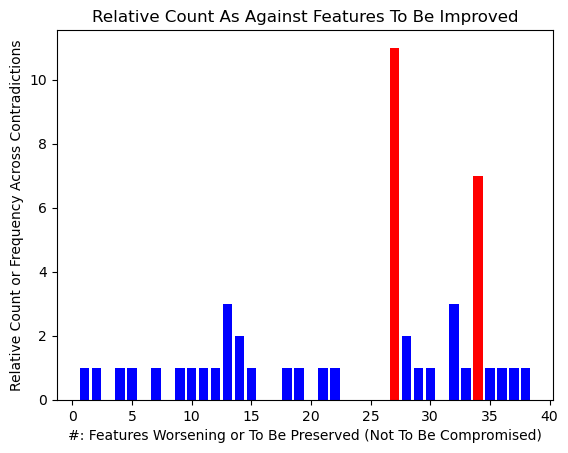
1/27 1/34 2/34 5/13 7/27 9/27 10/11 10/34 11/33 13/5 14/27 14/32 14/34 15/27 18/28 19/27 22/27 27/4 27/9 27/12 27/14 27/18 27/19 27/21 27/22 27/28 27/29 27/34 27/38 28/27 28/34 29/27 30/35 32/13 32/34 32/37 34/1 34/2 34/7 34/10 34/14 34/15 34/27 34/32 34/36 35/30 37/13 37/32 38/27
EXAMPLE : In a manufacturing facility, a critical machine is susceptible to damage or malfunction in the event of sudden power outages. The contradiction is between ensuring the reliability of the equipment and the risk of power interruptions.
Contradiction (27/21): Ensuring Equipment Reliability (27) vs. Potential Power Outages (21)
Solution: Implementing an Uninterruptible Power Supply (UPS) system that provides a temporary power source in case of electrical grid failures. The UPS system is designed to automatically kick in when a power outage occurs, allowing the machine to continue running or to shut down gracefully. This proactive measure acts as a cushion against the negative impact of sudden power disruptions. The machine’s reliability is enhanced as it can continue operations during brief power outages. By cushioning the equipment against sudden power losses, potential damage or data loss is minimized.