

8: COUNTERWEIGHT: (A) Compensate the weight of an object (or system) by combining or merging with another object (or system) that provides a lifting or counterbalancing or supporting forces, (B) Compensate for the weight of an object (or system), with the forces present in the external environment (e.g., use aerodynamic, hydrodynamic, buoyancy and other forces) to provide a lift or counterbalancing force.
EXAMPLE: Advertising (hydrogen/helium filled) Air Balloons, Magnetic Levitation, Floating Paint Brush, Racing Cars with rear wing, Hydrofoils in Ships, Life Saving Floats, Using Foaming Agents (into a bundle of logs to make it float better)
SYNONYMS: Anti-weight, Counterbalance, Weight compensation, Buoyancy, Inteaction with environment – Aerodynamics, Hydrodynamics, Lift, Magnetic Levitation, Weight Reduction, Floating Structures.
ACB:
The inventive principle of anti-weight or counterweight involves countering or neutralizing the weight or gravitational force acting on an object. It suggests methods to make an object lighter or provide mechanisms to counteract its weight, enabling easier handling, transportation, or manipulation. The anti-weight inventive principle is crucial for optimizing efficiency, enhancing mobility, and addressing challenges associated with heavy objects. By employing creative solutions to counteract or minimize gravitational forces, this principle contributes to advancements in transportation, construction, and various fields where weight reduction is essential.
The inventive principle of anti-weight or counterweight involves countering or neutralizing the weight or gravitational force acting on an object. It suggests methods to make an object lighter or provide mechanisms to counteract its weight, enabling easier handling, transportation, or manipulation. The anti-weight inventive principle is crucial for optimizing efficiency, enhancing mobility, and addressing challenges associated with heavy objects. By employing creative solutions to counteract or minimize gravitational forces, this principle contributes to advancements in transportation, construction, and various fields where weight reduction is essential.
Magnetic levitation (maglev) technology was invented in the early 20th century. However, practical applications, especially in transportation, began to take shape later. Hermann Kemper, a German engineer, received a patent for a magnetic levitation train concept in 1934. Eric Laithwaite, a British engineer, made significant contributions to maglev technology in the 1960s. He developed the first full-scale working model of a maglev train. The first commercial implementation of maglev technology for high-speed transportation occurred in Japan. The Central Japan Railway Company (JR Central) developed and introduced the SCMaglev (Superconducting Maglev) train. The first segment of the SCMaglev test track opened in 1997, and extensive testing has taken place since then.
The implementation of maglev technology varies by region, and ongoing research and development continue to explore its potential applications. Japan is a pioneer in maglev technology. The SCMaglev train, known for its high speeds and smooth levitation, has been tested on the Yamanashi Maglev Test Line. China has developed and implemented its maglev technology. The Shanghai Maglev Train, which connects Pudong International Airport to the city center, is one of the most well-known maglev lines in operation. Germany has also been involved in maglev development. The Transrapid maglev system was tested on the Emsland Test Facility track. However, commercial implementation has been limited. South Korea has explored maglev technology for transportation, and there have been proposals for maglev train projects.
Maglev trains can achieve very high speeds, significantly reducing travel time between cities. Maglev trains operate without physical contact with tracks, resulting in a smoother and quieter ride compared to traditional trains. With fewer moving parts and no contact between the train and the track, maglev systems generally require lower maintenance. Maglev trains levitate above the tracks, minimizing friction and wear on the infrastructure. Maglev systems can be more energy-efficient than traditional rail systems, especially at high speeds.
When dealing with the weight of an object, two strategies can be employed. First, merge the object with other items that provide lift, effectively offsetting the weight. Second, make the object interact with the environment by utilizing aerodynamic, hydrodynamic, buoyancy, or other forces to counteract its weight. These strategies illustrate inventive ways to overcome the weight of objects, either by merging them with other buoyant elements or by exploiting environmental forces to create lift. The examples highlight the versatility of these principles in various fields, from transportation (ships, aircraft) to creative advertising solutions.
(A) Merging with Other Objects: Injecting a foaming agent into a bundle of logs to make it more buoyant, allowing it to float better. Enhancing the buoyancy of an object by incorporating lightweight materials or structures. Interacting with the Environment: Ex: Designing aircraft wings with a shape that reduces air density above the wing, creating lift. Leveraging aerodynamics to generate lift, enabling heavier-than-air flight. Inflatable structures in aerospace or lightweight inflatable support systems. Using inflatable components to displace air and reduce the net weight of an object. Reducing Intrinsic Weight i.e. Utilizing lightweight materials or advanced engineering to minimize the inherent weight of an object. Ex: Lightweight construction materials in aerospace or automotive industries.
(B) Using External Forces: Ex: Incorporating hydrofoils on a ship to lift it out of the water, reducing drag. Employing hydrodynamic principles to counteract the weight of the ship and improve its efficiency. Employing magnetic forces to levitate an object, overcoming gravitational pull. Ex: Maglev trains or magnetic levitation devices.
(C) Combining Internal and External Forces: Ex: Using helium balloons to support advertising signs, combining the principles of buoyancy and merging with lift-providing objects. Enhancing the visibility of signage through a creative combination of buoyancy and external lift.
The use of kites or sails to tow ships is a practice known as “kite towing” or “sail-assisted propulsion.” This method involves harnessing the power of the wind to provide additional thrust to the ship, reducing its reliance on traditional engine power. A large kite or sail is attached to the ship. The kite is often aerodynamically designed to capture wind energy efficiently. When the ship is at a suitable angle to the wind, the kite or sail captures the force of the wind. The aerodynamic shape and design of the kite or sail help convert wind energy into forward thrust. As the wind exerts force on the kite or sail, it creates a traction force that pulls the ship forward. This additional force complements the ship’s engine power, helping to propel it. The ship’s crew or automated control systems adjust the angle and position of the kite or sail to optimize the capture of wind energy and maintain stability.
One of the primary benefits of kite towing is increased fuel efficiency. By harnessing wind power, ships can reduce their reliance on fossil fuels, leading to cost savings and environmental benefits. Wind-assisted propulsion contributes to lower carbon emissions, supporting sustainability efforts in the maritime industry. Kite towing can help extend a ship’s range by supplementing traditional propulsion methods. This is particularly useful for long-haul voyages. Ships equipped with kite towing systems have increased operational flexibility. They can choose when to deploy the kite based on wind conditions, optimizing their energy usage. With less reliance on traditional engines, the wear and tear on engine components can be reduced, potentially leading to lower maintenance costs. Kite towing addresses the contradiction between the desire for fuel efficiency and the need for sufficient propulsion power. By harnessing wind energy, ships can achieve both goals. It addresses the contradiction between reducing environmental impact (lower emissions) and maintaining efficient maritime operations.
Anti-weight, at an abstract level, refers to the conceptual and practical strategies employed to counteract or mitigate the influence of gravitational forces acting on an object. It involves innovative approaches aimed at reducing the effective weight of an object, facilitating its manipulation, transportation, or deployment. This inventive principle encompasses methods such as leveraging buoyancy, harnessing aerodynamic lift, utilizing magnetic forces, employing inflatable structures, and optimizing material characteristics to achieve weight reduction. The abstract concept of anti-weight encourages creative thinking to overcome gravitational challenges and enhance the efficiency and mobility of objects in various applications and industries.
In a business context, the application of anti-weight involves finding innovative ways to alleviate burdens, reduce constraints, and enhance overall efficiency, ultimately contributing to the resolution of inherent contradictions. Reducing Operational Costs: Implement lightweight, energy-efficient technologies, and streamlined processes to counteract the financial burden. Enhancing Workplace Productivity: Introduce anti-weight measures such as task prioritization, automation, and ergonomic designs to alleviate the burden on employees. Improving Supply Chain Efficiency: Utilize anti-weight strategies like lean inventory management, digital tracking, and agile supply chain practices to reduce the burden of excessive stock. Market Expansion: Apply anti-weight tactics by focusing on niche markets, innovative marketing approaches, and strategic partnerships to overcome resource limitations. Adaptation to Change: Embrace anti-weight principles by fostering a culture of agility, encouraging continuous learning, and implementing adaptable organizational structures. Customer Satisfaction: Apply anti-weight techniques like customer feedback systems, personalized services, and efficient complaint resolution processes to manage customer expectations effectively.
Voice Assistants:The “Tip of the Tongue” bias refers to the phenomenon where a person is unable to recall a specific word or piece of information, even though they are confident that they know it and feel like it’s on the “tip of their tongue.” This bias can occur when the brain struggles to retrieve a word from memory, despite having a sense of familiarity with it. In technical systems design, the Tip of the Tongue bias may manifest in user interfaces or search functionalities. Mitigating the impact of the Tip of the Tongue bias in technical systems, improving user experience and increasing the likelihood of successful information retrieval and interaction. For example:
Search Engines: Users may experience the Tip of the Tongue bias when using search engines to find specific information or resources online. Even if they remember key details about the topic they’re searching for, they may struggle to recall the exact keywords needed to retrieve relevant results. Autocomplete Suggestions: In user interfaces with autocomplete or predictive text features, the Tip of the Tongue bias may occur when users start typing a query or message. The system may offer suggestions based on partial input, but users may still have difficulty selecting the correct option if the desired word or phrase eludes them. Voice Assistants: When interacting with voice-controlled systems like virtual assistants, users may experience the Tip of the Tongue bias when trying to articulate their requests verbally. They may know what they want to ask or command but struggle to find the right words to convey their intent accurately.
To mitigate the impact of the Tip of the Tongue bias in technical systems design, developers can implement several strategies: Predictive Text Algorithms: Enhance autocomplete and search functionalities with advanced algorithms that analyze user input and provide more accurate suggestions based on context, previous interactions, and common search patterns. Natural Language Processing (NLP): Implement NLP techniques to improve the understanding of user queries and commands in voice-controlled systems. By interpreting natural language more effectively, these systems can better anticipate user needs and provide relevant responses. User Feedback Mechanisms: Incorporate mechanisms for users to provide feedback on search results, autocomplete suggestions, or voice recognition accuracy. This feedback can help refine and improve the system’s performance over time, reducing instances of the Tip of the Tongue bias. Error Handling and Recovery: Design user interfaces with clear error messages and prompts to assist users when they encounter difficulties. Provide alternative pathways for users to refine their queries or input if they experience the Tip of the Tongue bias.
The “Absentmindedness Bias” refers to a cognitive bias where individuals overlook or forget to consider certain information or factors when making decisions or judgments. It often occurs when individuals are preoccupied, distracted, or fail to pay sufficient attention to relevant details. In technical systems design, absentmindedness bias can lead to oversights or errors that impact the functionality, usability, or safety of the system. Here are a few examples of how absentmindedness bias might manifest and its implications in technical systems: User Interface Design: When designing user interfaces for software applications or websites, absentmindedness bias may lead designers to overlook important usability considerations. For example, they may forget to include clear navigation cues or fail to anticipate users’ needs, resulting in a frustrating or confusing user experience. Safety Systems: In complex technical systems such as automotive safety systems or industrial control systems, absentmindedness bias among engineers or operators could result in critical safety features being overlooked or improperly configured. This could lead to accidents or malfunctions with serious consequences. Software Development: During the software development process, absentmindedness bias among programmers or quality assurance testers may result in coding errors or overlooked edge cases. These oversights could lead to software bugs, security vulnerabilities, or compatibility issues that affect the performance of the system.
To mitigate the impact of absentmindedness bias in technical systems design, consider the following counterweight or counter absentmindedness strategies: Checklists and Protocols: Implement checklists or standardized protocols to ensure that all relevant considerations are systematically addressed during the design, development, and testing phases of a project. These checklists can help mitigate the risk of overlooking important details. User Testing and Feedback: Conduct thorough user testing and gather feedback from real users to identify usability issues or oversights in the system design. By involving end-users in the design process, designers can uncover potential sources of absentmindedness bias and address them proactively. Automated Checks and Alerts: Implement automated checks and alerts within technical systems to detect and notify users or administrators about potential oversights or errors. For example, software tools can perform static code analysis to identify coding errors or security vulnerabilities before deployment. Training and Awareness: Provide training and raise awareness among designers, engineers, and other stakeholders about the importance of attention to detail and mindfulness in technical system design. By fostering a culture of diligence and accountability, organizations can reduce the likelihood of absentmindedness bias impacting system performance or safety.
By incorporating these counterweight strategies into the design and development process, organizations can minimize the risk of absentmindedness bias and improve the overall quality and reliability of technical systems.
1: Mass of the moving object: [‘3: Length of the moving object’, ‘9: Speed’, ’10: Force’, ’35: Adaptability’]
2: Mass of the non-moving object: [’10: Force’, ’23: Material loss’, ’27: Reliability’]
3: Length of the moving object: [‘1: Mass of the moving object’, ‘9: Speed’, ’11: Tension, Pressure’, ’12: Shape’, ’13: Stability of the object’, ’14: Strength’, ’19: Energy consumption of the moving object’]
4: Length of the non-moving object: [‘8: Volume of the non-moving object’, ’21: Power’]
8: Volume of the non-moving object: [‘4: Length of the non-moving object’]
9: Speed: [‘3: Length of the moving object’, ’14: Strength’, ’19: Energy consumption of the moving object’, ’32: Convenience of manufacturing’]
10: Force: [‘1: Mass of the moving object’, ’23: Material loss’]
12: Shape: [‘1: Mass of the moving object’]
13: Stability of the object: [’38: Level of automation’]
14: Strength: [‘1: Mass of the moving object’, ‘3: Length of the moving object’, ‘9: Speed’]
19: Energy consumption of the moving object: [‘9: Speed’]
21: Power: [‘1: Mass of the moving object’]
26: Amount of substance: [’38: Level of automation’]
27: Reliability: [‘1: Mass of the moving object’, ‘2: Mass of the non-moving object’, ’10: Force’, ’35: Adaptability’]
32: Convenience of manufacturing: [‘9: Speed’, ’38: Level of automation’]
33: Convenience of use: [’15: Action time of the moving object’, ’27: Reliability’]
35: Adaptability: [‘1: Mass of the moving object’, ’12: Shape’, ’27: Reliability’]
37: Complexity of control and measurement: [’27: Reliability’]
38: Level of automation: [’18: Brightness, Visibility’]
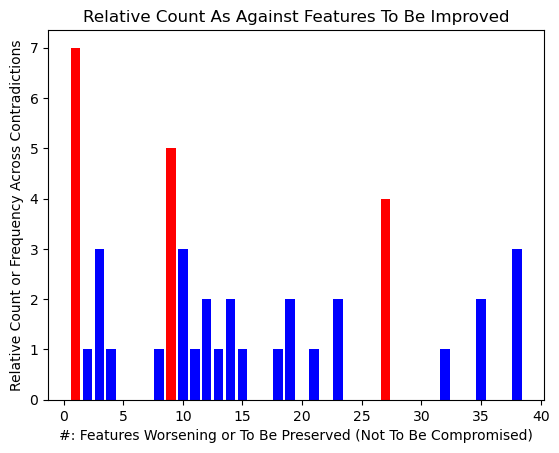
1/3 1/9 1/10 1/35 2/10 2/23 2/27 3/1 3/9 3/11 3/12 3/13 3/14 3/19 4/8 4/21 8/4 9/3 9/14 9/19 9/32 10/1 10/23 12/1 13/38 14/1 14/3 14/9 19/9 21/1 26/38 27/1 27/2 27/10 27/35 32/9 32/38 33/15 33/27 35/1 35/12 35/27 37/27 38/18
EXAMPLE: Enhance the quality of learning content in a Learning Management System (LMS) by solving the Contradiction in Learning Management Software of improving the Quality of Learning Content vs. Loading Speed. Increasing content quality might lead to larger file sizes, potentially slowing down the loading speed of the platform. The application of counter-weight principles in learning management software addresses the contradiction between the quality of learning content and the loading speed of the platform, ensuring a seamless and enriched learning experience.
Contradictions (9/32, 33/27): Increase the speed of content access and also improving the reliability or quality of the content distribution.
Solution: CDNs are networks of servers strategically located around the world. When content is hosted in a CDN, it is distributed across multiple servers in various geographic locations. This distribution helps reduce the physical distance between the user and the server, minimizing latency. When a user accesses content, the CDN serves the content from the server that is closest to the user’s location. This proximity results in faster loading times because data has a shorter distance to travel.
In a Learning Management System (LMS), hosting content in Content Delivery Networks (CDNs) is an external environment that can significantly reduced the load on the LMS server and improve the speed of access with reliability for users. Implementing a smart content optimization system can counter balance the required load with the desire for high-quality content with fast loading times. Upgrading learning materials can include high-resolution videos and interactive simulations. Integrating a content optimization algorithm that can dynamically compress and optimize the multimedia content based on the user’s device and internet speed can also serve the purpose of counterweight.
Users experience high-quality learning materials without sacrificing loading speed, as the system intelligently adapts content delivery for optimal performance. CDNs use load balancing techniques to distribute the incoming traffic efficiently across multiple servers. This ensures that no single server is overwhelmed with requests, preventing performance bottlenecks. CDNs cache content at their edge servers. When a user requests a piece of content that has already been cached, the CDN delivers it directly from the edge server without retrieving it from the origin server. This reduces the load on the origin server and accelerates content delivery. Hosting content externally, especially in a well-established CDN, enhances the overall reliability of the system.
CDNs often have redundant servers and built-in failover mechanisms, ensuring that content remains accessible even if one or more servers experience issues. DNs offer scalability by automatically scaling resources to handle varying levels of traffic. This is particularly beneficial for online learning platforms that may experience fluctuations in user activity. Users from different parts of the world experience similar performance levels because CDNs have a global presence. This ensures a consistent and reliable user experience regardless of the user’s location. CDNs often provide additional security features, such as Distributed Denial of Service (DDoS) protection and secure sockets layer (SSL) encryption, contributing to a secure and trustworthy learning environment. By leveraging CDNs and external hosting environments, LMS platforms can provide a seamless and efficient learning experience, offering faster access to content and improved reliability for users across the globe.