

20. CONTINUITY OF USEFUL ACTION (Steady Useful Action): (A) Carry out an action without a break. All parts of the objects should constantly operate at a full (optimal utilization) capacity or load, at all the time (B) Remove (or reduce) idle or intermittent or non-productive action or effects (or motion or work or steps) or harmful factors
EXAMPLE: Flywheel, 24 Hours Pharmacy, UPS, Park- n-Fly, Revolving Doors, Digital Media with Random Access (instead of linear), Automated Reconciliation, Self-Loading Rifles, Self-Winding Watches, Automatic Sliding or Revolving Doors, Drill With Cutting Edges (working in forward as well as backward direction), Printing Both The Sides of a Paper (without manual intervention), Automatic Faucets, Smart Thermostats, Continuous Inkjet Printers, Solar Powered Street Lights/Water Pumps etc, ATMs, Utilitty (Water, Electricity etc) Services, Fire/Intrusion Suppression or Detection Systems, Vaccination etc.
SYNONYMS: Steady Useful Action, Continuity of Intended or Required Action
ACB:
Several systems and services must be available 24 hours a day to meet continuous demand, ensure safety, and support critical functions. The need for 24-hour availability is driven by factors such as public safety, global interconnectedness, business continuity, and societal expectations. These systems and services play crucial roles in maintaining the functioning and well-being of communities and industries : Police, fire departments, surveillance or monitoring services, security hospitals, clinics, power, water, buses, trains, telecommunication, internet services, banking etc to respond to unforeseen events and emergencies or to support continued businesses or productions processes. Continuous production processes in many industries, need to run non-stop to meet the demand and maintain efficiency.
The “Continuity of Useful Action” suggests that for optimal system performance, it is beneficial to ensure the continuous or uninterrupted action of a process or system without any breaks. The goal is to maintain a constant useful effect or functionality without interruptions. Here’s a more detailed explanation: This principle emphasizes the importance of sustaining a useful action or effect continuously to enhance the efficiency and reliability of a system. The principle encourages the design and improvement of systems in a way that minimizes or eliminates downtime, interruptions, or breaks in the useful action or functionality. Systems should provide a constant and reliable performance without variations, ensuring a steady output of the desired result.
Continuous processes often result in less energy loss compared to systems with intermittent or stop-and-start actions. This aligns with the efficiency and conservation of resources. The principle suggests identifying and addressing periods of idle time or inactivity within a process, aiming for a more continuous and productive operation. Applying this principle might involve redesigning a process to eliminate delays or pauses, incorporating automation to ensure a constant workflow, or using feedback control systems to maintain a consistent output. Improved efficiency, reduced energy consumption, enhanced reliability, and the elimination of unnecessary downtime are among the benefits associated with the “Continuity of Useful Action” principle.
The principle is often used in conjunction with other TRIZ tools and concepts to address specific engineering or problem-solving challenges, such as the Ideal Final Result (IFR) and the Contradiction Matrix. In essence, the “Continuity of Useful Action” principle encourages engineers and problem solvers to seek solutions that enable continuous, uninterrupted, and reliable operation of systems, leading to improved overall performance and efficiency.
The “Continuity of Useful Action” resolve contradictions and improve both business and technical aspects. Here are examples of contradictions that can be addressed by emphasizing continuity of useful action. Implement predictive maintenance strategies and condition monitoring to ensure continuous operation while minimizing unplanned downtime. Design and implement continuous processes that minimize start-up and shutdown energy costs, ensuring a more efficient and sustained operation. Optimize production processes to run continuously, reducing the occurrence of production stoppages and minimizing waste generated during start-ups and shutdowns. Integrate modular and flexible components that allow for continuous adaptation and evolution without introducing unnecessary complexity. Establish continuous innovation pipelines and agile development processes to ensure a steady flow of new products without compromising time-to-market goals.
Implement continuous manufacturing processes with tight feedback control systems to maintain high precision without increasing costs associated with stoppages and adjustments. Implement continuous improvement programs, training initiatives, and ergonomic work designs to maintain high employee satisfaction levels while minimizing labor-related disruptions. Develop self-monitoring systems and condition-based maintenance approaches to ensure continuous reliability while minimizing unscheduled maintenance disruptions.
The distribution of gas in communities through pipelines rather than individual cylinders is a system known as natural gas distribution. Natural gas is extracted from underground reservoirs. The gas undergoes processing to remove impurities and ensure it meets safety standards. The processed natural gas is then transported through pipelines, which form an extensive network. Gas is distributed directly to residential, commercial, and industrial consumers through a network of pipelines. Traditional cylinders have a limited capacity, and users may run out of gas, causing interruptions. The natural gas distribution system provides a continuous and uninterrupted supply to consumers, addressing the contradiction of continuous availability. Handling and replacing gas cylinders can be inconvenient and pose safety risks. Piped natural gas eliminates the need for manual handling of cylinders. Consumers receive a constant supply without the hassle of cylinder replacement. Transporting and replacing numerous gas cylinders can be inefficient. A centralized distribution system is more efficient as it eliminates the need for frequent deliveries and reduces transportation-related energy consumption. Frequent cylinder replacements can incur additional costs. Natural gas distribution can be more cost-effective in the long run, as it eliminates the need for individual cylinder purchases and deliveries.
The transition from individual gas cylinders to a centralized natural gas distribution system aligns with the principles such as “Continuity of Useful Action” and “Dynamicity”. The distribution system optimizes the efficiency, safety, and cost-effectiveness of gas supply by transitioning from a localized and fragmented (dynamic, pay per use) approach to a more centralized and systemic (always available) solution. The natural gas distribution system addresses various contradictions related to gas supply, safety, convenience, and cost, providing a more efficient and continuous gas supply to communities.
A revolving door in hotel entrances serves several purposes, including energy efficiency, security, and customer convenience. It helps maintain a controlled environment, especially in terms of air conditioning efficiency. Revolving doors limit the amount of outdoor air that enters the building when people come in or go out. Unlike traditional hinged doors, revolving doors create a compartmentalized entry space, preventing large volumes of outdoor air from rushing into the building. Revolving doors provide a comfortable and controlled transition for guests entering or exiting the hotel. The revolving mechanism allows people to move through the entrance at a steady pace without being directly exposed to outdoor weather conditions. When hinged doors are opened, a significant amount of conditioned indoor air can escape, and outdoor air can penetrate the building. This can lead to increased energy consumption for both heating and cooling systems. Revolving doors help minimize this energy loss by keeping the indoor air contained.
Hotels often have distinct temperature zones, such as air-conditioned lobbies and conditioned guest room areas. Revolving doors contribute to maintaining these zones by preventing the swift exchange of air between the interior and exterior, thus assisting in temperature control. By minimizing the ingress of outdoor air, revolving doors assist heating, ventilation, and air conditioning (HVAC) systems in maintaining consistent indoor temperatures. This contributes to overall HVAC efficiency and can lead to energy savings.
Revolving doors also contribute to security by providing controlled access. Additionally, they help reduce noise from the outside environment, creating a quieter and more comfortable atmosphere within the hotel. Apart from their functional benefits, revolving doors often contribute to the overall aesthetic appeal of the hotel entrance. They can add a touch of elegance and sophistication to the building’s design. Revolving doors in hotel entrances act as a barrier to uncontrolled outdoor airflow, helping to maintain indoor environmental conditions efficiently. This is particularly important in regions with varying weather conditions, as it helps hotels conserve energy, provide a comfortable atmosphere for guests, and ensure that HVAC systems operate effectively.
Watches that run on solar power typically utilize a solar cell or photovoltaic (PV) cell to convert light energy into electrical energy, which is then used to power the watch. These watches are designed to be energy-efficient and are equipped with rechargeable batteries that store the converted solar energy. The watch’s face is equipped with a solar cell, often located beneath the transparent dial. This solar cell consists of photovoltaic materials that generate an electric current when exposed to light, typically sunlight or artificial light. When the watch is exposed to light, the solar cell converts the incoming light energy into electrical energy. This process is facilitated by the photovoltaic materials, such as silicon, within the solar cell. The electrical energy generated by the solar cell is directed to a rechargeable battery, usually a lithium-ion or lithium-ion polymer battery. This battery acts as an energy storage unit, storing the converted solar energy for later use.
The watch is equipped with an energy management system that regulates the flow of electrical energy between the solar cell and the rechargeable battery. This system ensures that the battery is charged when there is sufficient light and that the watch operates efficiently. Solar-powered watches often have a power reserve feature, allowing them to continue functioning even when not exposed to light for a certain period. This means that the watch can still operate in low-light conditions or when it’s not worn for a while.
Because solar watches continuously recharge their batteries with exposure to light, they can operate for long periods without the need for battery replacement or external charging. This makes them a sustainable and maintenance-free option compared to traditional watches with disposable batteries. By harnessing the power of light, solar watches offer a reliable and eco-friendly alternative to traditional watches that rely on chemical batteries. They exemplify a sustainable approach to timekeeping, reducing the environmental impact associated with disposable batteries and frequent replacements.
The continued influence effect refers to the persistent influence of misinformation or discredited information even after it has been corrected or debunked. It occurs when people continue to rely on or believe false information despite being presented with corrective evidence. The phenomenon highlights the challenge of correcting misinformation effectively and underscores the enduring impact it can have on individuals’ beliefs, attitudes, and behaviors. If one does not propagate useful actions and information about them, it gives a scope for an external stimuli to create a false belief or stick to misinformation despite the system no longer exhibiting the issues that once existed and non-existent of fixed in the system.An example of this scenario can be seen in the context of software updates and patches.
Addressing the continued influence effect requires strategic communication and education efforts aimed at effectively correcting misinformation. Providing clear, concise, and credible corrective information, repeated over time if necessary, can help counteract the persistent influence of misinformation. Additionally, promoting critical thinking skills and media literacy can empower individuals to evaluate information critically and resist the influence of misinformation in the future. Consider a software company that releases updates and patches to address security vulnerabilities, bugs, or performance issues in its products. Despite releasing these updates and providing information about their importance and the benefits they offer, some users may fail to propagate this useful information to others, leading to a lack of awareness or understanding among certain user groups. Now, suppose an external stimulus, such as a cybersecurity threat or a software bug exploit, arises that exploits a vulnerability present in older versions of the software. Although the company has already released updates that address this vulnerability, users who are unaware of or have not applied the updates may continue to believe that the issue exists in the system. This false belief or adherence to outdated information persists despite the fact that the vulnerability has been patched and is no longer present in the updated software. In this example, the failure to propagate useful actions, such as applying software updates, and information about them creates a gap in awareness and understanding among users. This gap leaves room for external stimuli, such as cybersecurity threats or exploits, to reinforce false beliefs or misinformation about the system’s current state, leading to continued adherence to outdated information despite the availability of a solution.
Several factors contribute to the continued influence effect: Initial Processing: When people encounter misinformation, it often leaves a lasting impression on their memory, influencing their subsequent beliefs and judgments. Even after corrective information is provided, the initial exposure to misinformation can still shape their perceptions and attitudes. Confirmation Bias: Individuals may selectively attend to information that aligns with their preexisting beliefs or attitudes while disregarding contradictory evidence. Confirmation bias can lead people to discount or ignore corrective information that challenges their existing views, reinforcing the continued influence of misinformation. Source Credibility: The credibility of the source presenting corrective information can influence its effectiveness in dispelling misinformation. If the source is perceived as untrustworthy or biased, people may be less likely to accept the corrective information, allowing the misinformation to persist. Memory Distortion: Memory is fallible and subject to distortion over time. People may misremember or selectively recall information in a way that reinforces their existing beliefs, even if those beliefs are based on misinformation. Memory distortion can contribute to the continued influence effect by perpetuating false beliefs despite exposure to corrective evidence. Emotional Impact: Misinformation often evokes emotional responses, which can strengthen its influence on individuals’ beliefs and attitudes. Corrective information may be less emotionally salient or persuasive, making it less effective in counteracting the emotional impact of misinformation. Repetition and Familiarity: Repeated exposure to misinformation can increase its familiarity and perceived validity, making it more resistant to correction. Even if people are later exposed to corrective information, the initial exposure to misinformation may still exert a lingering influence on their beliefs.
By implementing certain strategies, individuals, organizations, and society as a whole can work together to mitigate the continued influence effect and promote the dissemination of accurate information. It requires a concerted effort to cultivate critical thinking skills, foster media literacy, and cultivate a commitment to truth and accuracy in information sharing and communication. Overcoming the continued influence effect, where misinformation persists despite corrective efforts, requires targeted strategies aimed at effectively addressing cognitive biases, enhancing critical thinking skills, and promoting accurate information dissemination. Here are several approaches to stop or mitigate the continued influence effect:
Provide Clear and Timely Corrections: Deliver corrections promptly after misinformation is identified, preferably in the same format and through the same channels as the original misinformation. Clearly articulate the correct information and provide evidence to support it. Repetition of correct information over time can help reinforce accurate beliefs and counteract the influence of misinformation. Conduct thorough audits and assessments of legacy objects or systems to identify any misinformation or outdated practices that may be present. Once identified, provide clear and accurate corrective information to dispel myths or misconceptions. Ensure that documentation and training materials related to legacy objects or systems are accurate and up-to-date. Update user manuals, guides, and training programs to reflect current best practices and to address any misinformation that may exist. Facilitate knowledge sharing among stakeholders involved with legacy objects or systems. Encourage open communication channels, such as forums, workshops, or meetings, where individuals can share insights, experiences, and lessons learned to correct misinformation and promote accurate understanding.
Use Trusted Sources: Utilize credible and trustworthy sources to deliver corrective information. People are more likely to accept corrections from sources they perceive as reliable and authoritative. Leveraging experts, fact-checking organizations, and reputable institutions can enhance the credibility of corrective messages and increase their effectiveness in dispelling misinformation.
Frame Corrective Information Positively: Present corrective information in a positive and affirming manner rather than focusing solely on debunking false beliefs. Highlighting common ground or shared values can help bridge ideological divides and foster receptivity to accurate information. Emphasize the importance of accuracy and truth-seeking as virtues worth pursuing.
Appeal to Emotions and Values: Tailor corrective messages to resonate with the emotions and values of the target audience. Appeal to empathy, compassion, and altruism to foster understanding and engagement with corrective information. Connect the importance of accurate information to broader societal goals, such as public health or community well-being. Foster a culture of critical thinking and skepticism within the organization to help individuals evaluate information critically and discern fact from fiction. Encourage questioning of assumptions, verification of sources, and validation of claims to prevent the propagation of misinformation.
Address Cognitive Biases: Educate individuals about common cognitive biases, such as confirmation bias and the illusory truth effect, which contribute to the continued influence effect. Encourage critical thinking and skepticism by teaching techniques for evaluating information critically, verifying sources, and distinguishing fact from opinion or speculation. Establish change management processes to facilitate the removal of legacy objects or systems and the adoption of updated or alternative solutions. Clearly communicate the reasons for the changes, address concerns or resistance from stakeholders, and provide support and resources for the transition. Continuously monitor and evaluate the impact of efforts to remove legacy objects or systems and address misinformation. Collect feedback from stakeholders, assess the effectiveness of corrective actions, and make adjustments as needed to ensure ongoing improvement.
Provide Alternative Explanations: Offer alternative explanations or narratives that provide context and nuance to complex issues. By presenting a range of perspectives and acknowledging uncertainty or ambiguity where appropriate, individuals can develop a more nuanced understanding of complex topics and be less susceptible to misinformation. Offer training programs and educational initiatives to help stakeholders understand the rationale behind removing legacy objects or systems and to familiarize them with updated practices or technologies. Address any misconceptions or resistance through targeted education and awareness campaigns.
Promote Media Literacy: Invest in media literacy education programs that teach individuals how to critically evaluate information encountered in various media formats, including social media, news articles, and online videos. Equip people with the skills to identify misinformation, assess the credibility of sources, and navigate information ecosystems effectively.
Foster a Culture of Fact-Checking: Cultivate a culture of fact-checking and truth-seeking within communities, organizations, and institutions. Encourage individuals to fact-check information before sharing it and to challenge misinformation when they encounter it. Emphasize the importance of intellectual humility and openness to revising beliefs in light of new evidence.
By implementing these strategies, technical systems can overcome the continued influence effect and adapt to changing environments, emerging technologies, and evolving user needs. This can result in more efficient, resilient, and innovative systems that better serve their intended purposes. The continued influence effect, while often discussed in the context of human cognition and information processing, can also apply to technical systems and their functioning. In technical systems, this phenomenon can manifest in several ways:
Persistent Use of Outdated Technology: In technical fields, there may be a tendency to continue using outdated technologies or methodologies, even after newer and more efficient alternatives become available. This could be due to factors such as organizational inertia, resistance to change, or a lack of awareness about the benefits of newer technologies. Reliance on Legacy Systems: Technical systems may rely on legacy infrastructure or software that has been in place for a long time. Despite the availability of newer and more advanced systems, organizations may continue to use these legacy systems due to factors such as cost constraints, compatibility issues, or concerns about disrupting existing operations.
Resistance to Innovation: The continued influence effect can lead to resistance to innovation within technical systems. Individuals or organizations may be hesitant to adopt new technologies or approaches, even if they offer significant benefits, because they are accustomed to existing practices or are skeptical about the effectiveness of the new innovations. Misinformation in Technical Decision-Making: In technical decision-making processes, misinformation or outdated beliefs can influence choices about system design, implementation, or maintenance. For example, engineers or designers may rely on outdated data or assumptions when making decisions, leading to suboptimal outcomes or inefficiencies in the system.
To address the continued influence effect in technical systems and improve their functioning, several strategies can be employed: Promote a Culture of Continuous Learning: Encourage individuals and organizations to stay informed about advancements in their field and to be open to new ideas and approaches. Foster a culture of curiosity, experimentation, and learning to counteract the tendency to rely on outdated information. Invest in Research and Development: Allocate resources to research and development efforts aimed at exploring new technologies, methodologies, and innovations. By investing in cutting-edge research and experimentation, organizations can stay ahead of the curve and avoid falling behind due to the continued influence of outdated practices.
Provide Training and Education: Offer training programs and educational opportunities to help individuals update their skills and knowledge. Provide access to resources, such as workshops, seminars, or online courses, that cover the latest developments in the field and promote best practices in technical decision-making. Encourage Collaboration and Knowledge Sharing: Facilitate collaboration and knowledge sharing among stakeholders in technical systems. Encourage interdisciplinary collaboration and communication to foster exchange of ideas, insights, and best practices across different domains and disciplines.
Awareness of choice-supportive bias is crucial in technical systems and problem-solving contexts to promote objective evaluation, decision-making, and performance assessment. By recognizing and mitigating this bias, individuals can strive for more rational and evidence-based approaches to problem-solving, innovation, and system evaluation.
Choice-supportive bias, also known as post-purchase rationalization or selective memory, is a cognitive bias that leads individuals to retroactively ascribe positive attributes to choices they have made, leading them to perceive their chosen option more favorably than it objectively deserves. This bias often occurs after a decision has been made and is influenced by factors such as confirmation bias and cognitive dissonance reduction. Here’s how choice-supportive bias might manifest in technical systems or problem-solving contexts:
Product or System Evaluation: After selecting a particular technical product or system solution, individuals may exhibit choice-supportive bias by emphasizing its positive attributes while downplaying or rationalizing any shortcomings. This bias can affect post-purchase evaluations and lead individuals to perceive their chosen option as superior, even if objectively better alternatives exist. Howerv, rationalizing and defending wrong chosen solutions, may inadvertently make one settle for a suboptimal outcome rather than exploring alternative approaches that may offer greater benefits or efficiencies. This can result in missed opportunities for optimization and improvement in technical systems or processes.
Project Management and Decision-Making: In project management or decision-making processes involving technical solutions, individuals may exhibit choice-supportive bias by justifying their chosen course of action, even in the face of evidence suggesting potential drawbacks or risks. This bias can hinder objective evaluation and decision-making, potentially leading to suboptimal outcomes. Software or Technology Adoption: When adopting new software or technology solutions, individuals may display choice-supportive bias by emphasizing the benefits and advantages of the chosen system while overlooking or rationalizing any difficulties or inefficiencies encountered during implementation. This bias can influence perceptions of system usability and effectiveness. Troubleshooting and Problem-Solving: In troubleshooting technical problems or addressing system failures, individuals may exhibit choice-supportive bias by attributing any successful resolutions or workarounds to their chosen approach or methodology, even if alternative solutions may have been equally or more effective. This bias can affect problem-solving strategies and hinder innovation.
Post-purchase rationalization, also known as buyer’s remorse, is a cognitive bias where individuals justify a purchase decision after the fact, particularly if they experience doubts or regrets about the decision. This rationalization involves focusing on the positive aspects of the purchase while downplaying or ignoring any negative aspects. In the context of technical systems or problem-solving, post-purchase rationalization can manifest in several ways: Solution Implementation: After selecting and implementing a technical solution to a problem, individuals may engage in post-purchase rationalization by emphasizing the benefits and advantages of the chosen solution. They may focus on successful outcomes or positive feedback while overlooking any challenges or limitations encountered during implementation. Investment of Resources: When significant time, effort, or resources have been invested in a particular technical solution, individuals may feel compelled to justify their investment by rationalizing its effectiveness or dismissing alternative options. This rationalization helps alleviate doubts or regrets about the decision to commit resources to the chosen solution. Confirmation Bias: Individuals may selectively seek out information or feedback that confirms their belief in the effectiveness of the chosen solution while discounting or ignoring evidence that suggests otherwise. This confirmation bias reinforces post-purchase rationalization by reinforcing positive perceptions of the chosen solution.
Avoidance of Regret: Post-purchase rationalization may be driven by a desire to avoid feelings of regret or disappointment about the chosen solution. By focusing on the perceived benefits and successes of the solution, individuals seek to minimize any feelings of regret or dissatisfaction they may experience. Overcoming Cognitive Dissonance: Post-purchase rationalization helps individuals resolve any cognitive dissonance or discomfort they may feel about their decision by reaffirming the wisdom of their choice and minimizing any doubts or uncertainties. Addressing post-purchase rationalization in technical problem-solving requires fostering a culture of critical evaluation, openness to feedback, and a willingness to reconsider initial assumptions or decisions. By encouraging individuals to objectively evaluate the effectiveness and suitability of chosen solutions, teams can mitigate the influence of post-purchase rationalization and promote more effective problem-solving outcomes.
The hot hand fallacy refers to the mistaken belief that a person who has experienced a series of successes is more likely to continue being successful in subsequent attempts. Conversely, it suggests that a person who has experienced a series of failures is more likely to continue failing in future attempts. The hot hand fallacy is a cognitive bias that leads people to believe that a person who has experienced success in a particular endeavor, such as making a series of successful shots in basketball, is more likely to continue experiencing success in the future. In other words, individuals perceive a “hot streak” or a period of above-average performance as evidence that the individual is on a roll and will continue to perform well. However, research has shown that the hot hand fallacy is just that—a fallacy. Studies in sports, gambling, and other domains have consistently failed to find evidence supporting the notion of a hot hand. Instead, performance in these situations tends to follow random patterns or is influenced by factors such as skill level, fatigue, or opponent strategy, rather than any streak of “hot” or “cold” performance.
The hot hand fallacy can have significant implications, particularly in sports betting, gambling, and financial markets, where individuals may erroneously believe that past success predicts future performance. Understanding this cognitive bias is important for making informed decisions based on realistic assessments of probabilities and risks. The concept of the hot hand fallacy was popularized by a seminal paper published in 1985 titled “The Hot Hand in Basketball: On the Misperception of Random Sequences” by Thomas Gilovich, Robert Vallone, and Amos Tversky. The authors examined the belief that basketball players who have made several consecutive successful shots are more likely to continue making shots in the future, and conversely, that players who have missed several shots in a row are more likely to continue missing. The term “hot hand fallacy” was coined to describe this belief, which suggests that success or failure in a sequence of events follows a streak-like pattern. However, the authors found no statistical evidence to support the existence of a hot hand in basketball. They concluded that performance in basketball shooting is largely random and influenced by factors such as skill level, defense, and shot selection, rather than any streak-based momentum. Since then, the concept of the hot hand fallacy has been studied in various contexts beyond basketball, including gambling, financial markets, and decision-making. Research has consistently shown that humans tend to perceive patterns and streaks in random sequences, even when none exist—a phenomenon known as pattern recognition bias or apophenia. The hot hand fallacy highlights the importance of critical thinking and statistical analysis in evaluating performance and making decisions. It serves as a cautionary tale against attributing success or failure to streaks or patterns without rigorous evidence to support such claims.
System justification refers to the cognitive process by which individuals rationalize and defend existing social, economic, and political systems, structures, and inequalities. It involves the tendency to uphold and support the status quo, even when it may be disadvantageous to certain groups or individuals. Key characteristics of system justification include: Preservation of the Status Quo: System justification involves the tendency to maintain and justify existing societal arrangements, norms, and power structures, even in the face of evidence suggesting their inequity or inefficiency. This can manifest as a reluctance to challenge authority or advocate for change. Belief in Fairness and Legitimacy: Individuals engage in system justification because they perceive existing social systems as fair, legitimate, and justifiable. They may believe that inequalities are natural or necessary for societal functioning, or they may endorse ideologies that justify the status quo. Psychological Motivations: System justification is driven by various psychological motivations, including the desire for stability, security, and coherence. People may rationalize inequalities or injustices to reduce cognitive dissonance, alleviate feelings of uncertainty, or maintain a positive sense of identity and belonging within their social group. Socioeconomic and Political Factors: System justification is influenced by socioeconomic and political factors, such as socialization, group identity, economic interests, and exposure to ideological messages. Individuals may internalize and endorse system-justifying beliefs as a result of their socialization within dominant cultural narratives and institutions. Consequences for Social Change: System justification can have implications for efforts to challenge and reform existing social systems and structures. It can hinder collective action, social movements, and advocacy for social justice by legitimizing inequalities and undermining efforts to address systemic issues.
Examples of system justification include: Individuals endorsing beliefs such as “the rich deserve their wealth” or “inequalities are necessary for economic growth” to justify existing economic disparities. Members of privileged social groups denying or downplaying the existence of systemic racism or sexism to maintain their own sense of fairness and legitimacy. Citizens expressing support for authoritarian leaders or policies that restrict civil liberties in the name of national security or social order. Recognizing the presence of system justification is important for understanding how individuals perceive and respond to social inequalities and injustices. By acknowledging the psychological mechanisms and ideological processes that underlie system justification, advocates for social change can develop strategies to challenge dominant narratives, foster critical consciousness, and promote collective efforts toward a more equitable and just society.
The observer effect, in the context of psychology and social sciences, refers to the phenomenon where the presence of an observer alters the behavior or responses of the subjects being observed. This effect suggests that individuals may modify their behavior when they are aware of being watched, leading to results that may not accurately reflect their natural behavior or responses in the absence of observati on. The observer effect can manifest in various ways: Hawthorne Effect: One common example is the Hawthorne effect, which was observed in studies conducted at the Hawthorne Works plant in the 1920s. Researchers found that productivity increased among workers when they were aware that they were being observed, regardless of changes in work conditions or incentives. This suggested that the mere presence of researchers and the attention given to workers influenced their behavior. Research Settings: In research studies, participants may alter their behavior or responses when they know they are being observed, leading to biased or inaccurate results. This is particularly relevant in observational studies or experiments where the researcher’s presence may affect participants’ natural behavior. Social Interactions: In everyday life, individuals may behave differently in social situations when they are aware of being observed. For example, people may be more self-conscious or conform to social norms when they are in the presence of others, leading to changes in their behavior. Surveillance and Monitoring: In surveillance or monitoring contexts, such as security cameras or performance evaluations, the knowledge of being observed can influence individuals’ behavior. This can have both positive effects, such as encouraging adherence to rules or standards, and negative effects, such as inducing stress or anxiety.
Understanding the observer effect is important for researchers, practitioners, and individuals alike, as it highlights the need to consider the potential influence of observation on behavior and responses. Researchers may employ various strategies to mitigate the observer effect, such as minimizing the visibility of observers, using covert observation methods, or employing double-blind procedures where neither the observer nor the participants are aware of the study’s hypotheses.
The observer-expectancy effect, also known as the experimenter-expectancy effect or observer effect, is a cognitive bias where the expectations or biases of a researcher or observer inadvertently influence the behavior or responses of study participants. This effect can occur when researchers, consciously or unconsciously, communicate their expectations to participants through verbal or nonverbal cues, leading participants to behave in a way that aligns with those expectations. Key aspects of the observer-expectancy effect include: Self-Fulfilling Prophecy: The observer-expectancy effect can create a self-fulfilling prophecy, where the expectations of the researcher influence the behavior of participants, thereby confirming the researcher’s initial expectations. For example, if a researcher expects participants to perform well on a task, they may inadvertently provide subtle cues or reinforcement that boost participants’ confidence and performance. Biased Observation and Interpretation: Researchers affected by the observer-expectancy effect may selectively attend to or interpret data in a way that confirms their expectations, while discounting or ignoring evidence that contradicts those expectations. This can lead to biased observations and interpretations of study outcomes.
Impact on Research Findings: The observer-expectancy effect can distort research findings and compromise the validity and reliability of study results. If researchers’ expectations influence participant behavior or responses, it becomes difficult to determine whether observed effects are genuine or simply artifacts of the researchers’ biases. Mitigating the Effect: To mitigate the observer-expectancy effect, researchers can employ various strategies, such as blinding or double-blinding procedures, where neither the researchers nor the participants are aware of the experimental conditions or hypotheses. Additionally, researchers can use standardized protocols, objective measures, and independent observers to reduce the influence of researcher biases on study outcomes. The observer-expectancy effect highlights the importance of maintaining objectivity and minimizing biases in research settings to ensure the integrity and credibility of scientific investigations. By being aware of this bias and implementing appropriate safeguards, researchers can enhance the validity and reliability of their findings.
Normalcy Bias: Normalcy bias is a cognitive bias where individuals underestimate the likelihood of a disaster or crisis occurring because they believe that things will continue to function as they normally have in the past. In the context of designing a technical system, this bias might lead designers to overlook potential vulnerabilities or failure modes, assuming that the system will continue to operate smoothly under all conditions. This could result in inadequate contingency planning or risk mitigation strategies, leaving the system vulnerable to unexpected disruptions or failures. Similarly, when solving technical problems, individuals affected by normalcy bias may fail to adequately prepare for worst-case scenarios, leading to delays or inefficiencies in problem-solving efforts. To mitigate this bias, designers and problem solvers should adopt a proactive approach to risk management, considering a range of potential scenarios and developing contingency plans to address them.
1: Mass of the moving object: [’25: Time loss’]
2: Mass of the non-moving object: [’25: Time loss’]
9: Speed: [’22: Energy loss’]
10: Force: [’35: Adaptability’]
15: Action time of the moving object: [’25: Time loss’]
16: Action time of the non-moving object: [’25: Time loss’, ’39: Productivity’]
21: Power: [’25: Time loss’, ’36: Complexity of the structure’]
25: Time loss: [‘1: Mass of the moving object’, ‘2: Mass of the non-moving object’, ’15: Action time of the moving object’, ’16: Action time of the non-moving object’, ’21: Power’]
26: Amount of substance: [‘7: Volume of the moving object’]
35: Adaptability: [’10: Force’]
36: Complexity of the structure: [’21: Power’]
39: Productivity: [’16: Action time of the non-moving object’, ’21: Power’]
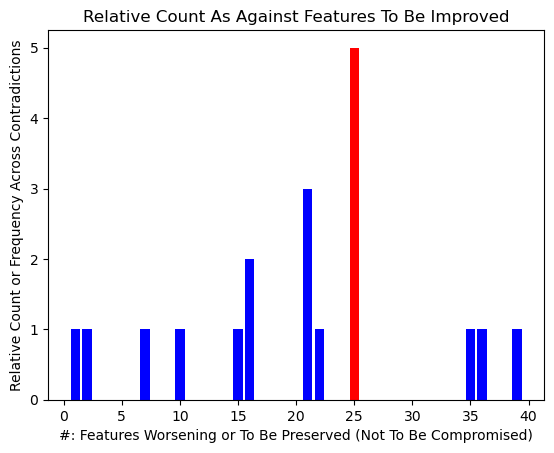
1/25 2/25 9/22 10/35 15/25 16/25 16/39 21/25 21/36 25/1 25/2 25/15 25/16 25/21 26/7 35/10 36/21 39/16 39/21
EXAMPLE: For systems like computers and servers, a sudden loss of power can result in data loss or corruption. A UPS provides sufficient power for these systems to shut down properly, preventing data loss and ensuring the continuity of data integrity. A UPS is designed to provide a continuous and uninterrupted power supply in the event of a power outage. The uninterrupted power supply is a continuity of useful action that is crucial to maintaining the functionality and reliability of various systems.
Contradiction: 21: Power: [’25: Time loss’, ’36: Complexity of the structure’]
Solution: UPS systems aim to provide a continuous power supply, addressing the contradiction between the need for uninterrupted power and the potential occurrence of power outages (time loss). A UPS ensures a constant flow of electrical power to initiate proper shutdown procedures, preventing data loss or corruption during unexpected power interruptions. When a power outage occurs, the UPS seamlessly transitions to its backup power source, typically a battery. This transition is swift and automatic, ensuring a continuous and uninterrupted power supply to connected devices. UPS systems stabilize voltage include surge protection features, regulate power quality, and protect connected equipment from voltage fluctuations, contributing to the reliability of electronic devices. UPS systems optimize efficiency while managing battery discharge cycles to balance the need for energy conservation and prolonged battery life. It is designed for seamless and quick transitions to backup power. The goal is to provide a continuous and reliable power supply while mitigating the risks associated with power-related challenges.