

32. CHANGING COLOR (USE OF COLORS, COLOR CHANGES, Change Optical or Visual Properties or Appearance): (A) Change the color of an object (or system) or its environment (from fixed mono color to fixed multi-color to variable multi-color to use of variable spatial-temporal full spectrum colors matching with the changing environment), (B) Change the degree of translucency of an object (or system) or its environment (from fixed opaque to fixed partially translucent to fixed partially transparent to fixed fully transparent to variable spatial temporal transparency), (C) Use color additives to observe an object (or system) or process which is difficult to see (or observe) otherwise employ emissive or luminescent traces or trace atoms if such colored additives are already used in the object (or system)
SYNONYMS: Use of Color, Change Optical or Visual Properties or Appearance.
EXAMPLES: Camouflage, Photo Chromatic Glass, Traffic Signals, Safe Lights in Photographic Dark Rooms, Bandage, Water Curtains (with color additives), Fluorescent Signs or Additives, UV Spectroscopy, Use of Colored Tags/Labels/Status
ACB:
The “Change Color” inventive principle refers to the concept of altering the color of an object or substance to enhance performance, increase visibility, or achieve other specific objectives. It encourages creative thinking about how color alterations can bring about improvements or solve specific problems in various domains.
Modifying color can serve functional purposes beyond the aesthetics. Use color-changing materials for traffic signs that adapt to ambient lighting conditions. For example, signs could appear brighter during low light conditions or change color in response to weather conditions. Packaging materials that change color based on the freshness of the contents. This could involve color changes indicating the expiration of the product or changes in temperature that might affect its quality. Clothing made from thermochromic fabrics that change color based on body temperature. This could be used in sports apparel to indicate exertion levels or in healthcare for monitoring patients’ body temperatures. Bandages with color-changing indicators that react to the pH levels of a wound, providing visual cues about the healing process. This could help healthcare professionals assess the status of a wound without removing the bandage. Exterior paint that changes color based on temperature or sunlight intensity. Darker colors could be used in colder weather to absorb more heat, while lighter colors could be used in warmer weather to reflect sunlight and reduce cooling needs. Labels on parts or products that change color during different stages of manufacturing. This visual cue can help workers quickly identify completed or inspected items, reducing errors and streamlining the production process. Enhance visibility and usability in emergencies. Fire extinguishers with color-changing indicators to show whether they have been used or are still fully charged. This helps users identify operational extinguishers in an emergency. Soil sensors with color-changing indicators based on moisture levels. The color change could signal when plants need watering, aiding in indoor gardening and plant care.
The Von Restorff effect, also known as the isolation effect, is a principle in psychology that describes the phenomenon where items that are distinctive or stand out from their surrounding context are more likely to be remembered. Use of colors can help distinquish one part to be immediately spotted or identified as different from the rest. Using distinctive colors, shapes, or symbols for safety-critical elements can draw attention to them and ensure that operators or users are aware of their importance. By making critical functions or alerts visually distinct, users can quickly locate and access them, reducing the risk of errors and improving usability.
At an abstract level, it involves modifying the color of an object or substance as a strategic solution to bring about improvements in functionality, performance, or user experience. Changing the color of an object to enhance its visibility, recognition, or perception. Modifying the color of safety signs, labels, or indicators to ensure they are easily noticed in different environmental conditions. Using color changes as a dynamic way to convey information or status. Incorporating color-changing elements in smart devices or systems to indicate different states or conditions, providing real-time feedback to users. Adjusting the color of an object in response to environmental changes or stimuli. Developing materials that change color based on temperature, humidity, or sunlight to optimize performance in varying conditions.
Employing color changes as a visual representation of change, progress, or transformation. Using color shifts in visual interfaces, progress bars, or indicators to represent stages of completion, encouraging user engagement. Using color modifications to indicate specific events, issues, or alerts. Incorporating color-changing features in warning systems, where a color shift signals the occurrence of a critical event or the need for attention. Using color variations to signify temperature changes and facilitate control. Creating materials or devices that change color with temperature fluctuations, aiding in temperature monitoring and control. Utilizing color changes to evoke emotional responses or enhance mood. Designing environments, products, or interfaces that adapt their color schemes to create atmospheres conducive to specific emotions or activities. Incorporating color changes as part of interactive user interfaces. Developing interactive displays, touchscreens, or user interfaces where color variations provide feedback, response, or engagement in response to user actions. Employing color changes for identification or branding purposes. Designing products or packaging with color-changing elements to differentiate between versions, batches, or brands. Using color shifts to indicate changes in biological or chemical states. Creating color-changing indicators in medical diagnostics or environmental monitoring systems to detect specific biological markers or chemical reactions.
The principle can be applied to resolve various technical and business contradictions by leveraging the visual and functional aspects of color: Visibility vs. Stealth in Military Applications i.e. need for visibility in certain conditions and stealth in others. Develop materials that can change color based on the environment, providing adaptive camouflage for military equipment. Monitoring temperature without invasive sensors. Create materials that change color with temperature variations, offering a visual indication of the heat generated in electronic devices. Conveying battery status without draining power. Design battery indicators that change color based on the remaining charge, providing users with a visual representation without activating power-consuming displays. Monitoring structural integrity without intrusive inspections. Integrate color-changing materials into structures that respond to stress or damage, offering a visual cue for maintenance needs. Continuous health monitoring without invasive devices. Develop fabrics with embedded sensors that change color based on physiological parameters, providing non-intrusive health monitoring.
The principle of “Changing Colors” demonstrates its versatility in addressing a wide range of contradictions, offering innovative solutions in both technical and business contexts. The application of color changes can provide subtle yet effective ways to convey information, enhance user experiences, and optimize various processes. In business it could be interpreted as offering customized products while maintaining a standardized brand image. Utilize customizable packaging or product elements that change color to reflect individual preferences while preserving overall brand identity. Communicating pricing changes without overwhelming customers. Implement color changes in digital interfaces or price tags to subtly indicate shifts in pricing, improving customer awareness without bombarding them with notifications. Balancing transparency with data overload in supply chain tracking. Use color-coded indicators in supply chain management systems to represent different stages, allowing for quick visual assessments without overwhelming users with detailed information. Monitoring productivity without creating a stressful environment. Implement color-changing indicators in workplace systems to subtly signal productivity levels, promoting self-awareness without causing undue stress. Enhancing customer engagement without intrusive tactics. Deploy smart mirrors or interactive displays that change color based on customer interactions, creating an engaging and dynamic shopping experience. Ensuring quality without disrupting production flow. Integrate color-changing indicators into production lines to highlight potential quality issues, enabling quick visual inspections without halting the entire process.
The Six Thinking Hats is a method developed by Edward de Bono that encourages parallel thinking as a way to improve decision-making, problem-solving, and creativity in group discussions. Each “hat” represents a different perspective or thinking style, and participants are metaphorically asked to put on and take off these hats to explore a variety of viewpoints. The use of different colors for each hat helps create a visual and symbolic distinction between the modes of thinking. The Six Thinking Hats method helps overcome the challenges of traditional thinking, where conflicting viewpoints can hinder effective decision-making. By assigning specific roles and perspectives to each hat, the method promotes structured and comprehensive exploration of a problem or decision. It encourages a shift from adversarial thinking to collaborative thinking, leading to a more balanced and well-rounded consideration of the subject at hand. The use of colors makes the method visually distinct and aids in quickly identifying the current mode of thinking in a discussion. The structured approach of the Six Thinking Hats helps teams avoid unproductive arguments, fosters creativity, and facilitates a more holistic exploration of complex issues. It provides a framework for generating ideas, evaluating options, and making well-informed decisions.Here’s what each color represents:
White Hat (Facts and Information): This hat focuses on facts, information, and data. Participants wearing the White Hat strive to be objective, neutral, and factual, presenting only what is known or needs to be known. Purpose is to gather and assess information, identify gaps in knowledge, and clarify the current situation. Red Hat (Emotions and Feelings): The Red Hat symbolizes emotions, intuition, and gut feelings. Participants wearing the Red Hat express their emotions and feelings without the need for justification or reasoning. The purpose is to acknowledge and explore emotions, personal reactions, and intuitive responses to a situation. Black Hat (Critical and Judgmental Thinking): The Black Hat represents critical thinking, caution, and judgment. Participants wearing the Black Hat focus on potential risks, downsides, and negative aspects. The purpose is to critically analyze and identify potential problems, risks, or drawbacks, helping to mitigate or address them. Yellow Hat (Optimistic Thinking): The Yellow Hat signifies optimistic thinking, positivity, and benefits. Participants wearing the Yellow Hat focus on exploring opportunities, advantages, and positive aspects. The purpose is to encourage optimistic thinking, identify potential benefits, and find constructive solutions or opportunities. Green Hat (Creative Thinking): The Green Hat symbolizes creativity, innovation, and new ideas. Participants wearing the Green Hat generate and explore creative solutions without judgment. The purpose is to stimulate creative thinking, brainstorm new ideas, and explore possibilities. Blue Hat (Control and Process Thinking): The Blue Hat represents control, organization, and process thinking. Participants wearing the Blue Hat guide and manage the thinking process, ensuring that the discussion is productive and on track. The purpose is to oversee and organize the thinking process, set agendas, manage time, and direct the focus of the discussion.
The color-coded squeeze bottles for ketchup and mustard in restaurants serve a practical and user-friendly purpose. The use of distinct colors, such as yellow for mustard and red for ketchup, provides a clear visual differentiation between the two condiments. This is especially important in scenarios where the bottles are opaque, and customers cannot see the contents directly. Color coding simplifies the condiment selection process for customers. By associating specific colors with particular condiments, users can quickly identify and choose the desired sauce without the need for reading labels or inspecting the contents. The color-coded system serves as a visual warning that helps prevent accidental mix-ups. Customers and restaurant staff can easily recognize the intended condiment by the color of the squeeze bottle, reducing the likelihood of applying the wrong sauce to their food. For restaurant staff, color-coded bottles save time and reduce the chances of errors when refilling or organizing condiment stations. Staff members can swiftly identify and replenish specific condiments based on color. In essence, the color-coded squeeze bottles for ketchup and mustard exemplify a simple yet effective design strategy that enhances user experience, reduces the potential for mistakes, and contributes to the overall efficiency of condiment dispensing in a restaurant setting.
The introduction of color indicators on shaving blade handles to signify wear or the need for replacement is a relatively recent innovation, and multiple companies have adopted this feature. While it’s challenging to pinpoint a specific company or date for the inception of this concept, it became more widespread in the 21st century. Brands such as Gillette and Schick have incorporated such indicators into their razor designs.
The color indicator typically involves a strip or portion on the razor handle that changes color or fades over time as the blade is used. The change in color serves as a visual cue to the user that the blade is becoming dull and may need replacement. It enhances user awareness by providing a visible signal when the blade is no longer as sharp. Regular replacement of blades ensures users have a consistently sharp blade for an optimal shaving experience. Dull blades can cause irritation and nicks, so the color indicator promotes safer shaving practices. It is about balancing the desire for a sharp blade with the need for user safety. The color indicator helps users replace blades before they become excessively dull. It is about balanacing the blade lifespan by extended usage with respect to the goal of maintaining a high-quality shave. The indicator guides users to replace blades at the right time for an effective shave.
The use of wristbands in dental or medical practices serves as an effective means of patient identification and communication among staff members. When a patient arrives for a dental appointment, they are provided with a wristband that includes essential information. This information may include the patient’s name, appointment details, and any specific treatment or procedures they are scheduled to undergo. The wristband often contains barcodes or QR codes that are unique to each patient and their specific appointment. These codes encode relevant information about the patient’s treatment plan. Dental staff, including dentists, dental hygienists, and administrative personnel, are equipped with handheld scanners or devices that can read the barcodes or QR codes on the wristbands.
By scanning the patient’s wristband, dental staff can instantly retrieve information about the patient’s scheduled treatment, procedures, or any special considerations. This information may include details about whether the patient is there for a routine cleaning, cavity fill, or other specific dental services. The use of wristbands facilitates efficient communication among different staff members within the dental practice. It ensures that everyone involved in the patient’s care is aware of the planned treatments and can provide the necessary support. The wristband system helps minimize the risk of errors related to patient identification and treatment plans. It ensures that the right patient receives the right care and that dental professionals have access to accurate and up-to-date information.
Implementing wristbands streamlines the workflow within the dental practice by providing a quick and reliable method for accessing patient information. This contributes to a more organized and efficient patient care process. From the patient’s perspective, the use of wristbands contributes to a smoother and more personalized experience. It shows that the dental practice is attentive to individual patient needs and is committed to providing organized and quality care. The use of wristbands in dental practices exemplifies a practical and te chnology-driven solution for patient identification and communication. It enhances the overall efficiency of dental care processes and contributes to a positive experience for both patients and dental staff.
The use of visual indicators for medication adherence is an important strategy to help individuals manage complex medication regimens effectively. Patients with complicated medication regimens, involving multiple medications taken at different times and on specific days, face challenges in maintaining adherence to their prescribed schedule. Visual indicators can take the form of color-coded pill organizers, digital reminders, or other systems that provide a clear visual cue about whether a specific dose has been taken. For example, a pillbox with compartments for each day and time may have a color-changing feature or a movable indicator to mark completion.
Visual indicators help patients track their medication intake on a daily and time-specific basis. For instance, a distinctive visual cue for Thursday lunchtime pills ensures that patients can easily verify whether they have taken the correct medication at the designated time. Visual indicators act as a safeguard against medication errors. They reduce the risk of accidentally skipping a dose or taking a duplicate dose by providing a tangible and visible signal of medication administration. Patients feel more empowered and in control of their health when they have a visual aid to support their medication management. The indicator serves as a reminder, helping individuals take an active role in their own healthcare.
Managing a complex medication routine can be stressful. Visual indicators alleviate anxiety by offering a quick and reliable way for patients to confirm whether they have taken their medication as prescribed. Patients can use visual indicators to communicate more effectively with healthcare providers about their medication adherence. This information is valuable for medication adjustments, identifying potential issues, or recognizing the need for additional support. Modern technologies, such as smart pill dispensers with visual and audible reminders, further enhance the effectiveness of visual indicators. These devices may connect to mobile apps or online platforms to provide real-time adherence data to both patients and healthcare professionals. In essence, visual indicators play a crucial role in simplifying the management of complex medication regimens. They offer a practical and user-friendly solution to enhance patient adherence, reduce the risk of errors, and contribute to better health outcomes.
The spotlight effect is a cognitive bias where individuals tend to overestimate the extent to which others notice or pay attention to their appearance, behavior, or actions in social situations. This bias leads people to believe that they are the center of attention and that others are more observant of their actions and appearance than they actually are. Exaggerated Self-Consciousness: Individuals experiencing the spotlight effect tend to be overly self-conscious and preoccupied with their own behavior, appearance, or performance in social settings. They may feel as though they are constantly under scrutiny by others, leading to feelings of anxiety or self-doubt. Selective Attention: People affected by the spotlight effect may selectively focus on aspects of themselves that they perceive as being noticeable or attention-grabbing, such as physical flaws, social awkwardness, or mistakes in speech or behavior. They may exaggerate the significance of these aspects and believe that others are similarly fixated on them. Overestimation of Visibility: Individuals experiencing the spotlight effect tend to overestimate the extent to which their actions or appearance are noticed by others. They may believe that their mistakes or imperfections are more apparent to others than they actually are, leading to feelings of embarrassment or self-consciousness. Impact on Behavior: The spotlight effect can influence behavior by causing individuals to modify their actions or appearance in an attempt to manage the impression they believe they are making on others. This may involve excessive self-monitoring, avoidance of social situations, or efforts to conceal perceived flaws or shortcomings.
Examples of the spotlight effect include: A student feeling self-conscious about a minor blemish on their face and believing that everyone they encounter is noticing and judging them for it. A public speaker becoming anxious and self-conscious about making a small mistake during a presentation, believing that the audience is focusing on the error. A job applicant feeling overly scrutinized by interviewers and becoming nervous about their appearance or mannerisms during the interview process. The spotlight effect can have implications for social interactions, self-esteem, and well-being. By recognizing and understanding this bias, individuals can develop strategies to mitigate its impact, such as practicing self-compassion, reframing negative thoughts, and focusing on present-moment experiences rather than perceived judgments from others.
In designing user interfaces for technical systems such as software applications or websites, designers must consider users’ cognitive biases, including the spotlight effect. Users may feel self-conscious or overly aware of their interactions with the interface, leading to concerns about making mistakes or being judged by others. Designers can mitigate this by creating interfaces that are intuitive, forgiving, and provide clear feedback to users. Users may feel more vulnerable or exposed when interacting with systems that collect personal data or monitor their behavior. Designers should prioritize transparency, consent, and user control to address users’ concerns and minimize feelings of self-consciousness. Implement feedback mechanisms that provide users with clear, immediate feedback on their actions. For example, highlight selected elements when clicked, recent page visited, recent searched words or keyword, provide tooltips or contextual help messages, and offer confirmation messages for completed actions to reassure users that their interactions are being understood and acknowledged. Empower users by providing them with control over their interactions and decisions within the system. Offer customization options, settings, and preferences that allow users to tailor the experience to their preferences and comfort level.
Identifiable Victim Effect: The identifiable victim effect is the tendency for individuals to show greater empathy or concern for specific individuals or identifiable victims compared to abstract or statistical victims. In a technical context, this bias might lead designers or engineers to prioritize features or solutions that address the needs of specific user groups or individuals while overlooking broader systemic issues or disparities. When solving technical problems, individuals might focus on addressing immediate or visible symptoms rather than underlying root causes, leading to temporary or superficial solutions.
1: Mass of the moving object: [’18: Brightness, Visibility’, ’37: Complexity of control and measurement’]
2: Mass of the non-moving object: [’17:Temperature’, ’18: Brightness, Visibility’, ’33: Convenience of use’]
3: Length of the moving object: [’18: Brightness, Visibility’, ’28: Accuracy of measurement’]
4: Length of the non-moving object: [’28: Accuracy of measurement’, ’29: Accuracy of manufacturing’]
5: Area of the moving object: [’18: Brightness, Visibility’, ’19: Energy consumption of the moving object’, ’21: Power’, ’28: Accuracy of measurement’, ’29: Accuracy of manufacturing’]
6: Area of the non-moving object: [’21: Power’, ’27: Reliability’, ’28: Accuracy of measurement’]
8: Volume of the non-moving object: [’25: Time loss’]
9: Speed: [’28: Accuracy of measurement’, ’29: Accuracy of manufacturing’, ’33: Convenience of use’]
12: Shape: [’17:Temperature’, ’18: Brightness, Visibility’, ’28: Accuracy of measurement’, ’29: Accuracy of manufacturing’, ’32: Convenience of manufacturing’, ’33: Convenience of use’, ’38: Level of automation’]
13: Stability of the object: [’17:Temperature’, ’18: Brightness, Visibility’, ’21: Power’, ’26: Amount of substance’, ’33: Convenience of use’]
14: Strength: [’32: Convenience of manufacturing’, ’33: Convenience of use’, ’35: Adaptability’]
17:Temperature: [‘2: Mass of the non-moving object’, ’12: Shape’, ’13: Stability of the object’, ’18: Brightness, Visibility’, ’28: Accuracy of measurement’]
18: Brightness, Visibility: [‘1: Mass of the moving object’, ‘2: Mass of the non-moving object’, ‘3: Length of the moving object’, ‘5: Area of the moving object’, ’12: Shape’, ’13: Stability of the object’, ’17:Temperature’, ’19: Energy consumption of the moving object’, ’20: Energy consumption of the non-moving object’, ’21: Power’, ’28: Accuracy of measurement’, ’29: Accuracy of manufacturing’, ’31: Harmful internal factors’, ’36: Complexity of the structure’, ’37: Complexity of control and measurement’]
19: Energy consumption of the moving object: [’28: Accuracy of measurement’, ’38: Level of automation’]
20: Energy consumption of the non-moving object: [’18: Brightness, Visibility’]
21: Power: [‘6: Area of the non-moving object’, ’13: Stability of the object’, ’28: Accuracy of measurement’, ’29: Accuracy of manufacturing’]
22: Energy loss: [’18: Brightness, Visibility’, ’25: Time loss’, ’28: Accuracy of measurement’, ’33: Convenience of use’]
23: Material loss: [‘2: Mass of the non-moving object’, ’33: Convenience of use’]
24: Information loss: [‘9: Speed’, ’25: Time loss’, ’32: Convenience of manufacturing’]
25: Time loss: [‘8: Volume of the non-moving object’, ’22: Energy loss’, ’24: Information loss’, ’28: Accuracy of measurement’, ’34: Convenience of repair’, ’37: Complexity of control and measurement’]
26: Amount of substance: [’34: Convenience of repair’]
27: Reliability: [‘6: Area of the non-moving object’, ’18: Brightness, Visibility’, ’28: Accuracy of measurement’, ’29: Accuracy of manufacturing’]
28: Accuracy of measurement: [‘1: Mass of the moving object’, ‘4: Length of the non-moving object’, ‘5: Area of the moving object’, ‘6: Area of the non-moving object’, ‘7: Volume of the moving object’, ‘9: Speed’, ’10: Force’, ’11: Tension, Pressure’, ’12: Shape’, ’13: Stability of the object’, ’14: Strength’, ’15: Action time of the moving object’, ’18: Brightness, Visibility’, ’19: Energy consumption of the moving object’, ’21: Power’, ’22: Energy loss’, ’25: Time loss’, ’26: Amount of substance’, ’34: Convenience of repair’, ’37: Complexity of control and measurement’, ’39: Productivity’]
29: Accuracy of manufacturing: [‘1: Mass of the moving object’, ‘4: Length of the non-moving object’, ‘5: Area of the moving object’, ‘7: Volume of the moving object’, ‘9: Speed’, ’12: Shape’, ’18: Brightness, Visibility’, ’19: Energy consumption of the moving object’, ’21: Power’, ’22: Energy loss’, ’25: Time loss’, ’26: Amount of substance’, ’27: Reliability’, ’33: Convenience of use’, ’39: Productivity’]
30: Harmful external factors: [’18: Brightness, Visibility’]
31: Harmful internal factors: [’18: Brightness, Visibility’]
32: Convenience of manufacturing: [’14: Strength’, ’24: Information loss’]
33: Convenience of use: [’11: Tension, Pressure’, ’13: Stability of the object’, ’14: Strength’, ’23: Material loss’, ’29: Accuracy of manufacturing’, ’34: Convenience of repair’, ’36: Complexity of the structure’]
34: Convenience of repair: [‘5: Area of the moving object’, ’21: Power’, ’22: Energy loss’, ’25: Time loss’, ’39: Productivity’]
35: Adaptability: [’14: Strength’, ’30: Harmful external factors’]
36: Complexity of the structure: [’29: Accuracy of manufacturing’]
37: Complexity of control and measurement: [’11: Tension, Pressure’, ’25: Time loss’, ’28: Accuracy of measurement’]
38: Level of automation: [’12: Shape’, ’18: Brightness, Visibility’, ’19: Energy consumption of the moving object’, ’27: Reliability’]
39: Productivity: [’29: Accuracy of manufacturing’, ’34: Convenience of repair’]
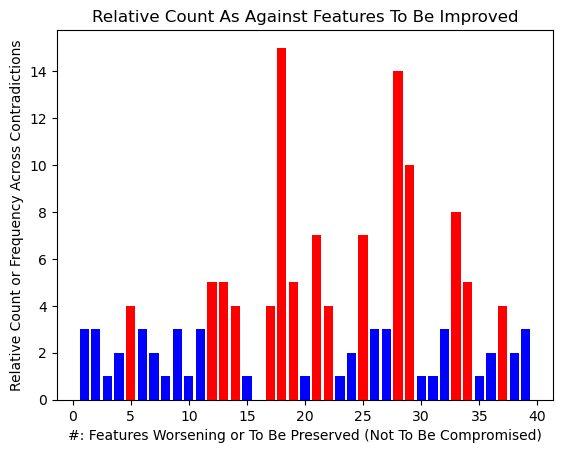
1/18 1/37 2/17 2/18 2/33 3/18 3/28 4/28 4/29 5/18 5/19 5/21 5/28 5/29 6/21 6/27 6/28 8/25 9/28 9/29 9/33 12/17 12/18 12/28 12/29 12/32 12/33 12/38 13/17 13/18 13/21 13/26 13/33 14/32 14/33 14/35 17/2 17/12 17/13 17/18 17/28 18/1 18/2 18/3 18/5 18/12 18/13 18/17 18/19 18/20 18/21 18/28 18/29 18/31 18/36 18/37 19/28 19/38 20/18 21/6 21/13 21/28 21/29 22/18 22/25 22/28 22/33 23/2 23/33 24/9 24/25 24/32 25/8 25/22 25/24 25/28 25/34 25/37 26/34 27/6 27/18 27/28 27/29 28/1 28/4 28/5 28/6 28/7 28/9 28/10 28/11 28/12 28/13 28/14 28/15 28/18 28/19 28/21 28/22 28/25 28/26 28/34 28/37 28/39 29/1 29/4 29/5 29/7 29/9 29/12 29/18 29/19 29/21 29/22 29/25 29/26 29/27 29/33 29/39 30/18 31/18 32/14 32/24 33/11 33/13 33/14 33/23 33/29 33/34 33/36 34/5 34/21 34/22 34/25 34/39 35/14 35/30 36/29 37/11 37/25 37/28 38/12 38/18 38/19 38/27 39/29 39/34
EXAMPLE: pH testing strips often involve colorless indicators that change color based on the pH of a solution. However, interpreting subtle color changes accurately can be challenging, especially for individuals with color vision deficiencies. Users can make quick and accurate pH assessments by observing the color changes, reducing the likelihood of errors in interpretation.
Contradiction (28/37): Improve the accuracy of measurements.(28). Avoid increasing the complexity of the measurement system (37).
Solution: Application of Changing Colors Principle: introduce color changes as visual indicators to enhance measurement accuracy without adding complexity.
Solution: Develop pH testing strips with indicators that change to easily distinguishable and contrasting colors representing different pH levels. Users can easily identify distinct color changes, leading to more accurate pH readings without the need for precise color discrimination. The introduction of easily distinguishable colors simplifies the interpretation process, making it more user-friendly for a broader audience. The incorporation of distinctive colors does not increase the complexity of the pH testing strips or the interpretation process. The use of contrasting colors accommodates individuals with color vision deficiencies, ensuring a more inclusive and accurate measurement experience. pH testing strips enhances measurement accuracy without introducing complexity. The strategic use of colors makes the system more accessible, user-friendly, and efficient in obtaining accurate pH readings.